
About Charles V. Chapin
Lived 1856 – 1941 (aged 85). Charles V. Chapin was an American physician.
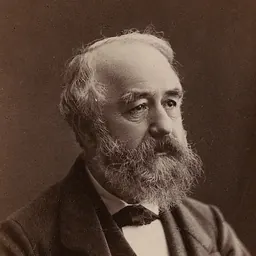
Charles Value Chapin (January 17, 1856 – January 31, 1941) was an American pioneer in public health research and practice during the Progressive Era. He was superintendent of health for Providence, Rhode Island between 1884 and 1932. He established one of the earliest municipal public health laboratories in 1888, and the Providence City Hospital for contagious diseases in 1910. Chapin taught at Brown University and Harvard. In 1927 he served as president of the American Public Health Association and as the first president of the American Epidemiological Society.
His main fields of operation were working in the bacteriological laboratory, organizing public health measures, and publicizing urgent public health needs. He was an active proponent of the germ theory of disease, studying infectious diseases and their implications for public health. Chapin is credited with planting "the roots of quality in public health". Chapin's report also documents the speed at which laboratory services had become an important part of the public health system.
Chapin attended Mowry and Goff School then Brown University, graduating in 1876. He began his medical education at New York's College of Physicians and Surgeons, then transferred to Bellevue Hospital Medical College, where he studied under Edward Gamaliel Janeway. Chapin retired as superintendent of health in 1932. Chapin established one of the earliest municipal public health laboratories in 1888 in Providence. He regarded it as an essential tool for public health, stating "The diagnostic laboratory is the most essential part of the machinery for the control of communicable diseases. Without it municipality and state can do nothing." Chapin also helped to establish the Providence City Hospital in 1910 to focus solely on the treatment of contagious diseases. Chapin tracked the incidence of smallpox in the United States between 1895 and 1912, compiling a detailed outline that considered patterns of transmission and severity of variants of the disease. He strongly criticized America's failure to engage in widespread vaccination, comparing the minor discomfort of being vaccinated to the months-long recovery from a "mild" (non-lethal) case of smallpox. He also pointed out the dangers of ignoring milder variants of a disease and failing to vaccinate when more serious variants could develop.
Cholera epidemics Cholera epidemics threatened Providence several times during the 1880s; Chapin's response was to make personal inspections of every home and tenement in the city to remedy problems. Chapin continued to promote precautions against influenza into December, while cases were declining, to avoid another wave of infection. He reported on gymnastics and sports. Chapin lectured at the Harvard-MIT School from 1913 to 1922, and at the Harvard School of Hygiene from 1923 to 1931. Chapin led successful community hygiene practices to combat the pandemic flu of 1918 at Providence. By 1910 his book Municipal Sanitation in the United States (1901) was the standard text on urban public health. Two more classic works were The Sources and Modes of Infection (1910) and A Report on State Public Health Work Based on a Survey of State Boards of Health (1915). Six of his papers were in the category of public-health administration, five were in communicable diseases and five were published in epidemiology and vital statistics. Later review found five of the papers particularly noteworthy, including The Fetich of Disinfection (1906), and Studies in Air and Contact Infection at the Providence City Hospital (1911). These two contained the basic tenets of the Sources and Modes of Infection cited above. He published on the administrative and resource aspects of the public's health, in How Should We Spend the Health Appropriation? (1913). He taught that diseases come from germs, carried by persons or animals and not things, and that they are spread by contact, food, and animal carriers. His emphasis on contact at close range, for example through touching, exchange of bodily fluids, and large respiratory droplets, would shape the next 100 years of infectious disease control. However, Chapin minimized the idea of airborne transmission of smaller particles in part because of its similarity to the idea of dangerous stinks in miasma theory. In rejecting miasma theory, Chapin largely ignored the public health implications of pollution in the air and water supply, and hazardous chemicals, where germs were not involved.
Chapin inspired others to evaluate all of the collective efforts of community hygiene in terms of outcomes, an early effort to quantify the social sciences aspect of public-health practice. Further, he was a forerunner to the notion of health disparities among the poor, having published Deaths among Taxpayers and Non-Taxpayers (1924), an early connection of health and economic status. In 1926 he published Changes in Type of Contagious Diseases, which described the variety of infectious agents in smallpox vs. scarlet fever.
He became president of the American Public Health Association in 1926–1927. During his lifetime it was written that his contributions to the philosophy and methodology of public health were greater than "any living man". He was compared to his forerunners in the field, Frank, Edwin Chadwick, Simon, Lemuel Shattuck, William Thompson Sedgwick, and Hermann Biggs, as one of the greats of all time in public health.
Legacy and honors
Brown University awarded Chapin with an honorary Sc.D. degree in 1909. He also received an honorary degree from Rhode Island State College and an honorary doctorate of laws from Yale University (1927), where C.-E. A. Winslow was chair.
The Providence City Hospital was renamed the "Charles V. Chapin Hospital" in 1931 to recognize his substantial contributions to improving the sanitary condition of the city of Providence. The Brown University dormitory "Chapin House" bears his name.
In 1927, Charles V. Chapin became the first honorary member of the Delta Omega society for studies in public health In 1928 he was awarded the Marcellus Hartley Gold Medal (now the Public Welfare Medal) from the National Academy of Sciences. He received the inaugural Sedgwick Memorial Medal from the American Public Health Association (APHA) in 1929. Chapin was posthumously inducted into the Rhode Island Heritage Hall of Fame in 1966.
Death and burial Chapin died on January 31, 1941, in Providence, Rhode Island.
Don’t just read it —
keep it.
Full-length biographies made to live with: read them, listen on the way to work, watch them tonight.
- E-book
- Audio
- Video
Instant download · yours to keep · every purchase keeps this site free
Important facts
People in Charles V. Chapin's life
Named in this biography and alive at the same time
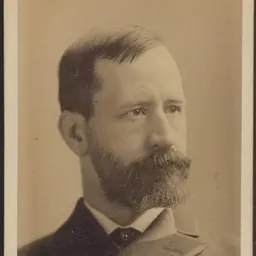

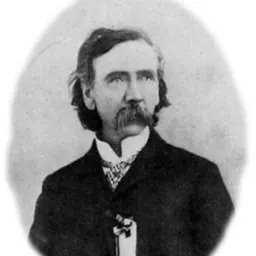



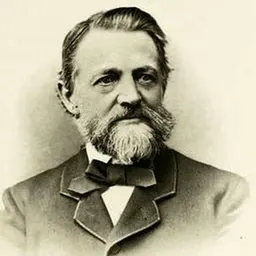
Related people
Same field, nearest in time


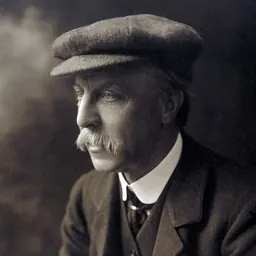

Contemporaries
People whose lives overlapped Charles V. Chapin's



Frequently asked questions
Who was Charles V. Chapin?
American physician (1856–1941)
When was Charles V. Chapin born?
Charles V. Chapin was born on 17 January 1856 in Providence.
When did Charles V. Chapin die?
Charles V. Chapin died on 31 January 1941.
What was Charles V. Chapin's occupation?
Charles V. Chapin was a physician.
What nationality was Charles V. Chapin?
Charles V. Chapin was American.
Sources & further reading
· Wikipedia: Charles V. Chapin
Cite this page
APA: Biography.guide. (2026). Charles V. Chapin. https://biography.guide/charles-v-chapin/
MLA: "Charles V. Chapin." Biography.guide, https://biography.guide/charles-v-chapin/.
Chicago: "Charles V. Chapin." Biography.guide. https://biography.guide/charles-v-chapin/.
Data last updated: 2026-09-20 · Spot an error? Report a correction.
Page generated 2026-09-27 05:27 UTC