
About Charles Tupper
Lived 1821 – 1915 (aged 94). Charles Tupper was a Canadian politician, lawyer, diplomat and physician.
Sir Charles Tupper, 1st Baronet (July 2, 1821 – October 30, 1915), was a Canadian Father of Confederation who served as the sixth prime minister of Canada from May 1 to July 8, 1896. As the premier of Nova Scotia from 1864 to 1867, he led Nova Scotia into Confederation. He briefly served as the Canadian prime minister, from seven days after parliament had been dissolved, until he was dismissed by the governor general on July 8, 1896, following his party's loss in the 1896 Canadian federal election. He is the only medical doctor to have ever held the office of prime minister of Canada, and his 69-day tenure as prime minister is the shortest in Canadian history.
Tupper was born in Amherst, Nova Scotia, to the Rev. Charles Tupper and Miriam Lockhart. He was educated at Horton Academy, Wolfville, Nova Scotia, and studied medicine at the University of Edinburgh Medical School, graduating MD in 1843. By the age of 22 he had handled 116 obstetric cases. He practiced medicine periodically throughout his political career (and served as the first president of the Canadian Medical Association). He entered Nova Scotian politics in 1855 as a protégé of James William Johnston. During Johnston's tenure as premier of Nova Scotia in 1857–1859 and 1863–1864, Tupper served as provincial secretary. Tupper replaced Johnston as premier in 1864. As premier, he established public education in Nova Scotia and expanded Nova Scotia's railway network in order to promote industry.
By 1860, Tupper supported a union of all the colonies of British North America. Believing that immediate union of all the colonies was impossible, in 1864, he proposed a Maritime Union. However, representatives of the Province of Canada asked to be allowed to attend the meeting in Charlottetown scheduled to discuss Maritime Union in order to present a proposal for a wider union, and the Charlottetown Conference thus became the first of the three conferences that secured Canadian Confederation. Tupper also represented Nova Scotia at the other two conferences, the Quebec Conference (1864) and the London Conference of 1866. In Nova Scotia, Tupper organized a Confederation Party to combat the activities of the Anti-Confederation Party organized by Joseph Howe and successfully led Nova Scotia into Confederation.
Following the passage of the British North America Act in 1867, Tupper resigned as premier of Nova Scotia and began a career in federal politics. He held multiple cabinet positions under Prime Minister John A. Macdonald, including President of the Queen's Privy Council for Canada (1870–1872), Minister of Inland Revenue (1872–1873), Minister of Customs (1873–1874), Minister of Public Works (1878–1879), and Minister of Railways and Canals (1879–1884). Initially groomed as Macdonald's successor, Tupper had a falling-out with Macdonald, and by the early 1880s, he asked Macdonald to appoint him as Canadian High Commissioner to the United Kingdom. Tupper took up his post in London in 1883, and would remain High Commissioner until 1895, although in 1887–1888, he served as Minister of Finance without relinquishing the High Commissionership.
In 1895, the government of Mackenzie Bowell floundered over the Manitoba Schools Question; as a result, several leading members of the Conservative Party of Canada demanded the return of Tupper to serve as prime minister. Tupper accepted this invitation and returned to Canada, becoming prime minister in May 1896. Just before he was sworn in as prime minister, the 1896 federal election was called, in which his party lost to Wilfrid Laurier and the Liberals. Tupper served as leader of the Opposition from July 1896 until he resigned in February 1901, just months after his second defeat at the polls in 1900. He returned to London, England, where he lived until his death in 1915 and was buried back in Halifax, Nova Scotia. He was the last surviving Canadian father of Confederation. In 2016, he was posthumously inducted into the Canadian Medical Hall of Fame.
Early life, 1821–1855 Charles Tupper Jr. was born on July 2, 1821, in Amherst, Nova Scotia, to Charles Tupper Sr. and Miriam Lowe, Lockhart. He was a descendant of Richard Warren, a Mayflower Pilgrim who signed the Mayflower Compact. Charles Tupper Sr. (1794–1881) was the co-pastor of the local Baptist church. He had been ordained as a Baptist minister in 1817, and was editor of Baptist Magazine 1832–1836. He was an accomplished Biblical scholar, and published Scriptural Baptism (Halifax, Nova Scotia, 1850) and Expository Notes on the Syriac Version of the Scriptures.
Beginning in 1837, at age 16, Tupper attended Horton Academy in Wolfville, Nova Scotia, where he learned Latin, Greek, and some French.
In 1883, Tupper convinced William Ewart Gladstone's government to exempt Canadian cattle from the general British ban on importing American cattle by demonstrating that Canadian cattle were free of disease. The Conservatives captured only about half of the seats in English Canada, while Laurier's Liberals won a landslide victory in Quebec, where Tupper's reputation as an ardent imperialist was a major handicap. He was the last of the original Fathers of Confederation to die, and had lived the longest life of any Canadian prime minister, at 94 years, four months.
Mount Tupper in the Canadian Rockies and the Sir Charles Tupper Building in Ottawa are named for him. The Sir Charles Tupper Medical Building is the central building of the Dalhousie Medical School in Halifax, Nova Scotia.
Facility naming Sir Charles Tupper Secondary School in Vancouver, British Columbia Sir Charles Tupper School in Halifax Sir Charles Tupper Medical Building at the Faculty of Medicine, Dalhousie University Sir Charles Tupper Building in Ottawa
Coat of arms
Don’t just read it —
keep it.
Full-length biographies made to live with: read them, listen on the way to work, watch them tonight.
- E-book
- Audio
- Video
Instant download · yours to keep · every purchase keeps this site free
Important facts
Family & relationships
People in Charles Tupper's life
Named in this biography and alive at the same time


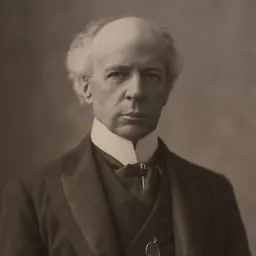
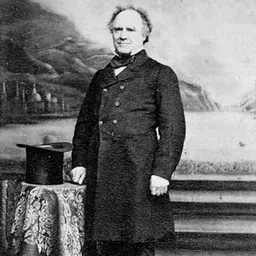

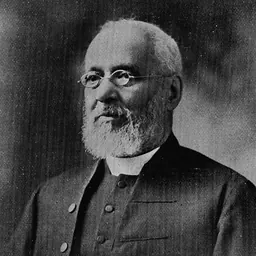
Related people
Same field, nearest in time




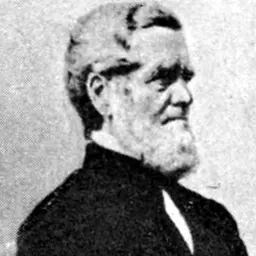

Contemporaries
People whose lives overlapped Charles Tupper's





Frequently asked questions
Who was Charles Tupper?
6th Prime Minister of Canada (1821-1915)
When was Charles Tupper born?
Charles Tupper was born on 2 July 1821 in Amherst.
When did Charles Tupper die?
Charles Tupper died on 30 October 1915 in Bexleyheath.
What was Charles Tupper's occupation?
Charles Tupper was a politician, lawyer, diplomat and physician.
What nationality was Charles Tupper?
Charles Tupper was Canadian.
Sources & further reading
Cite this page
APA: Biography.guide. (2026). Charles Tupper. https://biography.guide/charles-tupper/
MLA: "Charles Tupper." Biography.guide, https://biography.guide/charles-tupper/.
Chicago: "Charles Tupper." Biography.guide. https://biography.guide/charles-tupper/.
Data last updated: 2026-09-20 · Spot an error? Report a correction.
Page generated 2026-09-27 05:30 UTC