
About Charles Seignobos
Lived 1854 – 1942 (aged 87). Charles Seignobos was a French historian and university teacher.
Charles Seignobos (10 September 1854 – 24 April 1942) was a French scholar of historiography and a historian who specialized in the history of the French Third Republic, and was a member of the Human Rights League.
Personal life and education Seignobos was born to a Republican Protestant family in 1854 at Lamastre in the Ardèche department of France, the son of Charles-André Seignobos, the deputy for Ardèche from 1871 to 1881 and again from 1890 to 1892 and also the Councillor of Lamastre from 1852 to 1892. He passed his baccalaureat in 1871 at Tournon, where he studied with the French Symbolist poet and critic Stéphane Mallarmé. After a stellar academic career at the École normale supérieure where he took courses with Numa Denis Fustel de Coulanges and Ernest Lavisse, he completed a degree in history.
Afterwards, he moved to Germany where he studied for two years, spending most of his time in Göttingen, Berlin, Munich, and Leipzig. Named to a tenured position as Maître de conférences at the University of Burgundy in 1879 and a professor at the École des hautes études internationales et politiques (HEI-HEP), he defended his doctoral thesis in 1881, and then was named to a position at the Sorbonne. He is regarded, along with his friend the physiologist Louis Lapicque, as one of the two founders of the scientific and humanistic community "Sorbonne-Plage" at L'Arcouest in Ploubazlanec, near Paimpol. (Marie Curie had a house constructed there and moved there in 1912).
His brother Raymond Seignobos succeeded their father (who had been a mayor for just a few weeks in 1870) as Mayor of Lamastre from 1895 to 1914.
Charles Seignobos died in April 1942 after having been placed under house arrest at Ploubazlanec in Brittany.
Career
Considered along with Charles-Victor Langlois as one of the leading proponents of the historical method, Seignobos wrote a number of works on political history which implemented the German historical method, benefiting from his excellent knowledge of linguistic particulars in documentary research in English and German. He is, as a result of his critical reading of manuscripts, regarded as one of the major figures in the history of the historical method.
To emphasize the importance of primary sources, Seignobos and Langlois began their book "L'Introduction aux études historiques" (1898) with their famous maxim, "History is made with documents."
Notes and references
Don’t just read it —
keep it.
Full-length biographies made to live with: read them, listen on the way to work, watch them tonight.
- E-book
- Audio
- Video
Instant download · yours to keep · every purchase keeps this site free
Important facts
People in Charles Seignobos's life
Named in this biography and alive at the same time
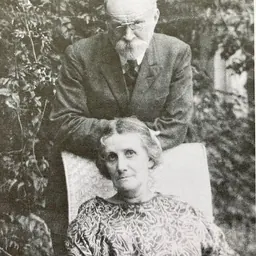
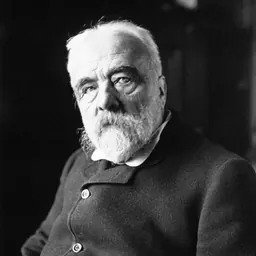

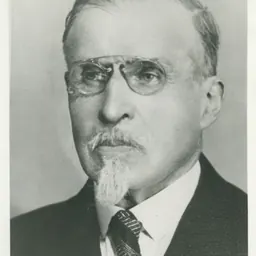
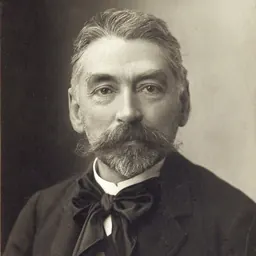
Related people
Same field, nearest in time

Contemporaries
People whose lives overlapped Charles Seignobos's



Frequently asked questions
Who was Charles Seignobos?
French historian (1854-1942)
When was Charles Seignobos born?
Charles Seignobos was born on 10 September 1854 in Lamastre.
When did Charles Seignobos die?
Charles Seignobos died on 24 April 1942 in Ploubazlanec.
What was Charles Seignobos's occupation?
Charles Seignobos was a historian and university teacher.
What nationality was Charles Seignobos?
Charles Seignobos was French.
Sources & further reading
· Wikipedia: Charles Seignobos
Cite this page
APA: Biography.guide. (2026). Charles Seignobos. https://biography.guide/charles-seignobos/
MLA: "Charles Seignobos." Biography.guide, https://biography.guide/charles-seignobos/.
Chicago: "Charles Seignobos." Biography.guide. https://biography.guide/charles-seignobos/.
Data last updated: 2026-09-25 · Spot an error? Report a correction.
Page generated 2026-09-27 05:12 UTC