
About Charles Richard Ogden
Lived 1791 – 1866 (aged 75). Charles Richard Ogden was a Canadian politician and legislator.
Charles Richard Ogden, (February 6, 1791 – February 19, 1866) was a Joint Premier of the Province of Canada for Canada East from 1841 to 1842 with William Henry Draper PM for Canada West. Odgen was a member of the Château Clique, the group of English-speaking officials who supported the Governor General, appointed by the British government. Trained as a lawyer, he developed a lucrative practice at Trois-Rivières and then Montreal. He had a lengthy career as a member of the Legislative Assembly of Lower Canada.
During the Lower Canada Rebellions of 1837 and 1838, Ogden assisted the Governor General in proclaiming martial law in Montreal. He was the lead Crown prosecutor for those caught in arms during the Rebellions. Twelve were hanged.
Following the Rebellions, Ogden assisted in the implementation of the union of Lower Canada with Upper Canada. Although he was elected to the Legislative Assembly of the Province of Canada, his standing with his French-Canadian constituents had been damaged by his actions in the Rebellions and the union.
In 1841, Ogden was initially a member of the Executive Council of the Province of Canada, the province's Cabinet, but was forced out in 1842 to make way for French-Canadians. His position as Attorney General of Lower Canada was taken by Louis-Hippolyte LaFontaine, one of the leaders of the reform movement. Ogden then moved to England. He was appointed Attorney General for the Isle of Man, and later to an additional post as Registrar of the Probate Court of Liverpool. He died in England in 1866.
Family and early life
Ogden was born in Quebec City in 1791, in the old Province of Quebec. He was one of eleven sons of Isaac Ogden, a loyalist and puisne judge of the Court of King's Bench at Montreal, and Sarah Hanson. One of Ogden's brothers, Peter Skene Ogden, became an explorer and fur trader who worked for the North West Company and the Hudson's Bay Company.
Ogden was educated at private schools, first at Trois-Rivières and later at Montreal. He was called to the bar of Lower Canada in 1812 and set up his practice at Trois-Rivières. He eventually relocated to Montreal, where he established a lucrative practice.
Even though the population of Trois-Rivières was largely French-Canadian, and Ogden was a member of the British Tory group, he was generally popular with his constituents. He held the seat through his strong personality and firm grasp of local patronage. In the general elections of 1827, he was one of the few government supporters to retain his seat in the French-Canadian areas of the province. A complicated man, Ogden was known to be very popular among his constituents for his fluent French, his oratory and his sense of humour. He was notorious for his practical jokes, one of which was to paint moustaches on the sleeping passengers of a ship travelling from Montreal to Quebec City.
Lower Canada Rebellion
In October 1837, the Patriotes held a major rally, the Assembly of the Six Counties. Ogden warned Governor General Gosford that the Assembly was "... the first public and open declaration of an intention to revolt". In November 1837, as the unrest grew which would culminate in the Lower Canada Rebellion, Ogden, along with Solicitor General Michael O'Sullivan, wrote a legal opinion for Lord Gosford, advising him that he had the power to declare martial law in the event of a rebellion. Gosford relied on that opinion when he declared martial law in the district of Montreal on December 5, 1837.
After Gosford was recalled to Britain in February 1838, he was replaced by General Sir John Colborne, who had led the military suppression of the Rebellion in 1837. When the Rebellion broke out again in the fall of 1838, Colborne ordered the arrest and prosecution of Patriote leaders. As Attorney-General and a leading Tory, Ogden was chief Crown prosecutor of the Patriotes who had been involved in the rebellion. Twelve were hanged.
In 1838, the British government passed a statute suspending the constitution of Lower Canada. Instead, the colony was governed by the Governor General, assisted by the Special Council of Lower Canada, appointed by the Governor General. Ogden was appointed to the Special Council in 1840, staying in office until the Act of Union, 1840 came into force in February 1841.
Province of Canada
Following the rebellion in Lower Canada, and the similar rebellion in 1837 in Upper Canada (now Ontario), the British government decided to merge the two provinces into a single province, as recommended by Lord Durham in the Durham Report. The Union Act, 1840, passed by the British Parliament, abolished the two provinces and their separate parliaments. It created the Province of Canada, with a single Parliament for the entire province, composed of an elected Legislative Assembly and an appointed Legislative Council. The Governor General initially retained a strong position in the government.
As the Attorney General of Lower Canada, Ogden was one of the officials who counter-signed the Governor General's proclamation bringing the Union Act into force. Ogden's leadership in supporting the Union Act reduced his political popularity. Combined with his involvement in prosecuting the Patriotes, his reputation and standing among the French-Canadian population was greatly diminished.
In the first session, the major issue was the union. One of the leaders of the French-Canadian Group introduced a motion condemning the way union had been imposed on Lower Canada. Ogden voted against the motion and in favour of the union. For the rest of the first session, he was a consistent supporter of Governor General Sydenham. At the close of the session, Ogden went on a lengthy trip to England.
On his return in 1842, Ogden discovered that there had been a major political development. The reformers, led by Louis-Hippolyte LaFontaine and Robert Baldwin, had put considerable pressure on the new Governor General, Sir Charles Bagot, to admit French-Canadian members to the Executive Council. Bagot had been forced to concede this point. Ogden was dropped from the Council, replaced by LaFontaine as Attorney General for Lower Canada. Ogden protested his loss of the office of Attorney General. He argued that he had been appointed "during good behaviour", not "at pleasure", and could not simply be dismissed for political reasons. His protest was not accepted, as the Attorney General was now a political position, under the developing principles of responsible government. Ogden was also denied a pension for his past services. In response, Ogden began to plan to relocate to England. He was absent for the legislative session in 1843.
Historian Donald Creighton commented that it was a curious fact that the members of the pre-Rebellion generation of Canadian public men "whether they were comparatively young, or middle-aged, or old, failed, with astonishing uniformity, to survive very long in the new political atmosphere [of responsible government]. For them, the adjustment was too difficult..."
Move to England
After he lost the position of Attorney General of Lower Canada in 1842, Ogden went back to England. He may have been pleading his case for compensation to the Lord Chancellor, Lord Lyndhurst, who was a relative of his wife. In 1844, he became a member of the English bar at Lincoln's Inn and was appointed Attorney General for the Isle of Man. He then returned briefly to Canada to settle his affairs, before moving permanently to England in 1844. In 1857 he was also appointed Liverpool Registrar of the new Court of Probate. He held the two positions for the rest of his life.
Ogden died at Edge Hill, near Liverpool, in 1866.
Don’t just read it —
keep it.
Full-length biographies made to live with: read them, listen on the way to work, watch them tonight.
- E-book
- Audio
- Video
Instant download · yours to keep · every purchase keeps this site free
Important facts
People in Charles Richard Ogden's life
Named in this biography and alive at the same time
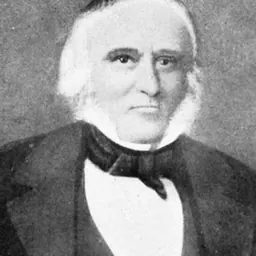


Related people
Same field, nearest in time
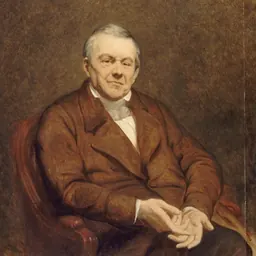

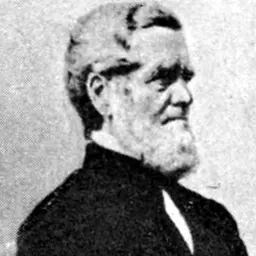

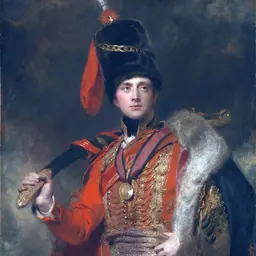

Contemporaries
People whose lives overlapped Charles Richard Ogden's


Frequently asked questions
Who was Charles Richard Ogden?
legislator
When was Charles Richard Ogden born?
Charles Richard Ogden was born on 6 February 1791 in Quebec City.
When did Charles Richard Ogden die?
Charles Richard Ogden died on 19 February 1866 in Ormskirk.
What was Charles Richard Ogden's occupation?
Charles Richard Ogden was a politician and legislator.
What nationality was Charles Richard Ogden?
Charles Richard Ogden was Canadian.
Sources & further reading
· Wikipedia: Charles Richard Ogden
· DBpedia: Charles Richard Ogden
Cite this page
APA: Biography.guide. (2026). Charles Richard Ogden. https://biography.guide/charles-richard-ogden/
MLA: "Charles Richard Ogden." Biography.guide, https://biography.guide/charles-richard-ogden/.
Chicago: "Charles Richard Ogden." Biography.guide. https://biography.guide/charles-richard-ogden/.
Data last updated: 2026-09-24 · Spot an error? Report a correction.
Page generated 2026-09-27 05:02 UTC