
Charles of Taranto
Italian-Anjou Nobleman
About Charles of Taranto
Lived 1296 – 1315 (aged 18–19).
Charles of Taranto (1296 – 29 August 1315) was the eldest son of Philip I, Prince of Taranto and titular Latin Emperor of Constantinople, and his wife, Thamar Angelina Komnene, daughter of the Despot of Epirus, Nikephoros I Komnenos Doukas.
Biography Charles' father, Philip, was invested with the Principality of Achaea in southern Greece in 1307. However, there existed a rival claim to the principality in the person of Matilda of Hainaut, the wife of Guy II de la Roche, Duke of Athens. Guy was made Philip's bailli in Achaea, but he died in 1308 without children, leaving Matilda a widow. In 1309, the fifteen-year-old Matilda was betrothed to the twelve-year-old Charles, in an attempt to reconcile the competing claims to Achaea. The ceremony took place at Thebes on 2 April, in the presence of the Latin Archbishop of Athens, the Angevin bailli and the assembled nobility of Achaea and the Duchy of Athens.
The betrothal between Charles and Matilda was dissolved in 1313, and Matilda married Louis of Burgundy, as part of a complex marital pact wherein Matilda was ceded Achaea (although Philip retained suzerain rights over the principality, which he had held since 1294). As part of a series of marriages and pacts that year, Philip made a second marriage to Catherine of Valois, titular Latin Empress (who had been betrothed to Louis' brother, Hugh V of Burgundy), while Charles was betrothed to his new stepmother's sister, Joan of Valois in compensation for the breaking off of his previous engagement.
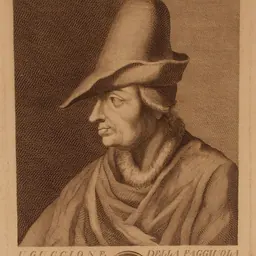
Like the first, this betrothal was never to be consummated. In 1315, Philip went north in command of Neapolitan troops to relieve the Florentine Guelphs, besieged at Montecatini by the Pisan Ghibellines under Uguccione della Faggiuola. Charles of Taranto and Philip's younger brother, Peter, Count of Gravina accompanied him. Despite initial successes, Philip fell ill with fever, and was crushingly defeated by Uguccione at the Battle of Montecatini. Charles was killed on the field, and his uncle lost; the ailing Philip escaped.
Charles's body was found near that of Uguccione's son, Francesco; their contemporaries assumed they had slain one another. Rainieri della Gherardesca had sworn not to be knighted until he had been revenged on the Angevins for the death of his father, who had been executed by Charles I of Naples with Conradin in 1268. He now accepted the accolade with a foot upon the corpse of Charles of Taranto. Bartholomew of Lucca helped arrange the retrieval of Charles' body from the Pisans after the battle. Remigio dei Girolami, a Dominican supporter of Charles' uncle, Robert, King of Naples, preached a sermon on Charles' death.
Don’t just read it —
keep it.
Full-length biographies made to live with: read them, listen on the way to work, watch them tonight.
- E-book
- Audio
- Video
Instant download · yours to keep · every purchase keeps this site free
Important facts
People in Charles of Taranto's life
Named in this biography and alive at the same time





Frequently asked questions
Who was Charles of Taranto?
Italian-Anjou Nobleman
When was Charles of Taranto born?
Charles of Taranto was born in 1296.
When did Charles of Taranto die?
Charles of Taranto died on 29 August 1315 in Montecatini Alto.
Sources & further reading
· Wikipedia: Charles of Taranto
Cite this page
APA: Biography.guide. (2026). Charles of Taranto. https://biography.guide/charles-of-taranto/
MLA: "Charles of Taranto." Biography.guide, https://biography.guide/charles-of-taranto/.
Chicago: "Charles of Taranto." Biography.guide. https://biography.guide/charles-of-taranto/.
Data last updated: 2026-09-20 · Spot an error? Report a correction.
Page generated 2026-09-27 05:31 UTC