
About Charles O'Connor
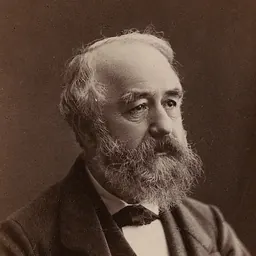
Lived 1854 – 1928 (aged 73). Charles O'Connor was a British and Irish judge and barrister.
Charles Andrew O'Connor, PC, PC(I), SL, KC (31 December 1854 – 18 October 1928) was an Irish judge who served as a Judge of the Supreme Court from 1924 to 1925. His judgment in a case of R. (Egan) v. Macready is still influential. His mother Catherine was the daughter of C. G. Smyth. In 1876, he was admitted to the Middle Temple and two years later he was called to the Irish Bar. In 1890, he obtained his Master of Arts. He was one of only two judges of the old regime who were thought worth retaining by the new Irish Government, which acted on the advice of Hugh Kennedy, the first Chief Justice of Ireland, who believed that O'Connor had demonstrated his integrity and independence of mind in the Egan case (below).
Notable judgments
Although his training had been in Chancery, O'Connor is best remembered for two notable judgments in the field of habeas corpus, both a product of the political turmoil of the period 1919–1923. In R. (Egan) v. Macready, he found that the power to declare martial law imposed by the Restoration of Order in Ireland Act 1920 did not confer a power to impose the death penalty, and ordered the release of the applicant Egan, who was under sentence of death. When Nevil Macready, the Commander in Chief refused to comply, O'Connor caused a sensation by ordering his attachment for contempt of court. Egan was then released. The judgment was extremely influential, although one crucial finding that there is no limit to the number of habeas corpus applications which can be made by a single applicant has been much debated, and in Ireland itself was modified by the Second Amendment of the Constitution of Ireland.
His judgment in Application of Childers, is a striking contrast. Erskine Childers, one of the leaders of the Anti-Treaty side during the Irish Civil War, was captured by Government forces, court-martialled and sentenced to death in November 1922. O'Connor refused to interfere, finding that the formative Irish Free State, unlike General Macready, did have power to establish military courts that could impose the death penalty.
He summed up:
While O'Connor was universally regarded as a man of integrity, who would never consciously bend the law, it is possible that his attitude had hardened since Egan; certainly it cannot have helped Childers that his allies had destroyed the Four Courts, a fact to which O'Connor drew attention in stressing the magnitude of the problems which the new Government faced. Childers appealed, but before this could be heard, he was executed three days later.
Personal life
In 1890, O'Connor married Blanche, the daughter of James Scully.
Character
Maurice Healy praised O'Connor as "the greatest gentleman at the Irish Bar" and an extremely popular judge, even if he did not fully live up to expectations. O'Connor was modest about his own abilities, noting in Egan that if he differed from colleagues with more experience of criminal law, it was not because he thought himself in any way superior to them. His main personal foible is said by Healy to have been his pride in belonging to the Clan O'Connor and a tendency to bore listeners with its history.
Don’t just read it —
keep it.
Full-length biographies made to live with: read them, listen on the way to work, watch them tonight.
- E-book
- Audio
- Video
Instant download · yours to keep · every purchase keeps this site free
Important facts
People in Charles O'Connor's life
Named in this biography and alive at the same time



Related people
Same field, nearest in time

Contemporaries
People whose lives overlapped Charles O'Connor's




Frequently asked questions
Who was Charles O'Connor?
Irish judge (1854-1928)
When was Charles O'Connor born?
Charles O'Connor was born on 31 December 1854 in Roscommon.
When did Charles O'Connor die?
Charles O'Connor died on 18 October 1928 in Dublin, Irish Free State.
What was Charles O'Connor's occupation?
Charles O'Connor was a judge and barrister.
What nationality was Charles O'Connor?
Charles O'Connor was British and Irish.
Sources & further reading
· DBpedia: Charles O'Connor (judge)
Cite this page
APA: Biography.guide. (2026). Charles O'Connor. https://biography.guide/charles-o-connor-judge/
MLA: "Charles O'Connor." Biography.guide, https://biography.guide/charles-o-connor-judge/.
Chicago: "Charles O'Connor." Biography.guide. https://biography.guide/charles-o-connor-judge/.
Data last updated: 2026-09-20 · Spot an error? Report a correction.
Page generated 2026-09-27 05:04 UTC