
Charles Lock Eastlake
English painter, gallery director, collector and writer
About Charles Lock Eastlake
Lived 1793 – 1865 (aged 72). Charles Lock Eastlake was a British linguist, art historian, painter, translator, photographer and writer.
Sir Charles Lock Eastlake (17 November 1793 – 24 December 1865) was a British painter, gallery director, collector and writer of the 19th century. After a period as keeper, he was the first director of the National Gallery. From 1850 to 1865 he served as President of the Royal Academy, succeeding Martin Archer Shee in the role.
Life
Eastlake was born in Plymouth, Devon, the fourth son of an Admiralty lawyer. He was educated at local grammar schools in Plymouth, including Plymouth Grammar School, and, briefly, at Charterhouse (then still in London). He was committed to becoming a painter, and in 1809 he became the first pupil of Benjamin Haydon and a student at the Royal Academy schools in London—where he later exhibited.
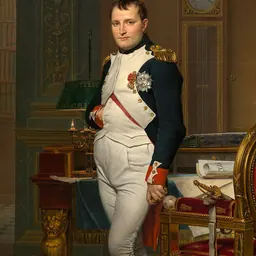
However, his first exhibited work was shown at the British Institution in 1815, a year in which he also visited Paris and studied works in the Louvre (then known as the Musée Napoléon). His first notable success was a painting of Napoleon on the Bellerophon (1815; National Maritime Museum, London). Like many other people at the time, Eastlake had hired a boat to take him to the ship on which Napoleon was held in Plymouth harbour. He sketched him from the boat.
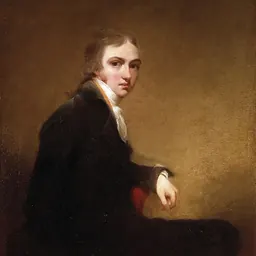
In 1816, he travelled to Rome where he painted members of the British elite staying in Italy including fellow artists Sir Thomas Lawrence and J. M. W. Turner. He also travelled to Naples and Athens.
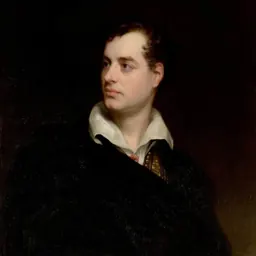
Despite being based predominantly in mainland Europe, Eastlake regularly sent works back to London to be exhibited, and in 1827 he was elected a member of the Royal Academy. Three years later, he returned to England permanently where he continued to paint historical and biblical paintings set in Mediterranean landscapes. While he had been abroad his 1827 painting Lord Byron's Dream was exhibited at the 1829 Royal Academy summer exhibition.
As an art historian, he translated Goethe's Zur Farbenlehre (Theory of Colours, 1840). He edited with extensive and valuable notes the 'Handbuch der Geschichte der Malerei (Handbook of the History of Painting) by Franz Kugler, which in its first English version was translated by 'A Lady', Mrs. Margaret Hutton. These publications and Eastlake's reputation as an artist led to his nomination in 1841 to become secretary of the Fine Arts Commission, the body in charge of government art patronage. He set up home in Fitzroy Square.
In his On Vision and Colours, § 14, Schopenhauer praised Eastlake's translation of Goethe.
Having already advised the National Gallery, London on acquisitions, he was appointed the Gallery's second Keeper in 1843, a post he later resigned "in consequence of an unfortunate purchase that roused much animadversion, a portrait erroneously ascribed to Holbein". In 1855 he returned as the first director, "with more extended powers".
In 1849, he married Elizabeth Rigby, an art historian and translator of German art histories. Together they formed a formidable art history writing partnership.
In 1845, he was elected into the National Academy of Design as an Honorary Academician. From 1850 to 1865, he was the second president of the Birmingham Society of Artists. Elected president of the Royal Academy and knighted in 1850, he became a notable figure in the British art establishment. He was appointed the first president of the Photographic Society in 1853 and the first director of the National Gallery in 1855. In 1864, the University of Cambridge awarded him an honorary degree.
Legacy On 24 December 1865, Eastlake died in Pisa, Italy. He is buried at Kensal Green Cemetery, London. His will provided for the Gallery to purchase his collection of paintings. Lady Eastlake sold her husband's art history book collection to the Gallery's library.
Popular culture In the film Effie Gray (2014), he is portrayed by James Fox.
Gallery
Publications Materials for a History of Oil Painting (1847). A second volume was published posthumously in 1869. Contributions to the Literature of the Fine Arts (1848).
Don’t just read it —
keep it.
Full-length biographies made to live with: read them, listen on the way to work, watch them tonight.
- E-book
- Audio
- Video
Instant download · yours to keep · every purchase keeps this site free
Important facts
more
Sir Eastlake, Charles Lock, EastlakePeople in Charles Lock Eastlake's life
Named in this biography and alive at the same time



Related people
Same field, nearest in time

Contemporaries
People whose lives overlapped Charles Lock Eastlake's





Frequently asked questions
Who was Charles Lock Eastlake?
English painter, gallery director, collector and writer (1793-1865)
When was Charles Lock Eastlake born?
Charles Lock Eastlake was born on 17 November 1793 in Plymouth.
When did Charles Lock Eastlake die?
Charles Lock Eastlake died on 24 December 1865 in Pisa.
What was Charles Lock Eastlake's occupation?
Charles Lock Eastlake was a linguist, art historian, painter, translator, photographer and writer.
What nationality was Charles Lock Eastlake?
Charles Lock Eastlake was British.
Sources & further reading
· Wikipedia: Charles Lock Eastlake
· DBpedia: Charles Lock Eastlake
Cite this page
APA: Biography.guide. (2026). Charles Lock Eastlake. https://biography.guide/charles-lock-eastlake/
MLA: "Charles Lock Eastlake." Biography.guide, https://biography.guide/charles-lock-eastlake/.
Chicago: "Charles Lock Eastlake." Biography.guide. https://biography.guide/charles-lock-eastlake/.
Data last updated: 2026-09-25 · Spot an error? Report a correction.
Page generated 2026-09-27 05:12 UTC