
About Charles Leslie Richardson
Lived 1908 – 1994 (aged 85). Charles Leslie Richardson was a British engineer and military personnel.
General Sir Charles Leslie Richardson, (11 August 1908 – 7 February 1994) was a senior British Army officer who saw service in the Second World War and reached high office in the 1950s.
A 1928 graduate of the Royal Military Academy, Woolwich, Richardson was commissioned into the Royal Engineers. He served in British India between 1931 and 1938. During the Second World War he graduated from the Staff College, Camberley, and served on the staff of the 4th Infantry Division in the Battle of France. He then went to the Middle East, where he was an instructor in logistics at the Staff College, Haifa, and a staff officer with the Special Operations Executive (SOE). He became the staff officer for plans the headquarters of the Eighth Army in June 1942 and was responsible for planning the deception operation codenamed Operation Bertram. Promoted to the acting rank of brigadier, he served on the staff of the Eighth Army in the Tunisian campaign and the Allied invasion of Sicily, on that of the US Fifth Army in the Italian campaign, and with that of the 21st Army Group in the campaign in North West Europe in 1944–1945.
After the war Richardson was with the British Control Commission in Berlin from 1945 to 1946 and the British Army of the Rhine (BAOR) from 1947 to 1948. He was appointed Commandant of the Royal Military College of Science at Shrivenham in 1955 and the General Officer Commanding of the Singapore District in 1958. He went on to become the first Director of Combat Development at the War Office in 1960 and Director General of Military Training in 1961. In this latter role he was credited with recognising the significance of the Special Air Service. In 1963 he became General Officer Commanding-in-Chief Northern Command and in 1965 the Quartermaster-General to the Forces. His final appointment was as Master-General of the Ordnance in 1966 before he retired in 1971. He was Chief Royal Engineer from 1972 to 1977.
Early life Charles Leslie Richardson was born in Guernsey on 11 August 1908, the oldest child and only son of Charles William Richardson, a Royal Artillery officer, and his wife, Eveline Adah Wingrove. He had a younger sister. While his father was stationed in Mauritius, his mother and the two children lived in the French-speaking part of Switzerland, and he became fluent in French. His early education was at St Ronan's School, and when he left in 1922 he was awarded a scholarship to Wellington College, Berkshire.
Richardson then entered the Royal Military Academy, Woolwich, where he passed out first and was awarded the King's Medal for the cadet best qualified in military subjects. He was commissioned as a second lieutenant into the Royal Engineers on 30 August 1928. On 7 November, Mainwaring and Carver, his GSO2, were captured by a German rearguard while reconnoitring a new location for Eighth Army HQ, and Richardson succeeded him as GSO1 (Operations). On 15 April 1943, Montgomery sent de Guingand to Cairo to take charge of the planning for the Operation Husky, the Allied invasion of Sicily, and Richardson succeeded him as BGS, with the rank of brigadier. "In recognition of gallant and distinguished services in the Middle East", Richardson was appointed a Companion of the Distinguished Service Order. When the Eighth Army staff was reunited for Operation Husky, de Guingand resumed as chief of staff and Richardson became BGS (Ops).
Fifth Army For the Allied invasion of Italy, Lieutenant General Mark W. Clark's US Fifth Army had both an American component, Major General Ernest J. Dawley's US VI Corps, and a British one, Lieutenant-General Sir Richard McCreery's British X Corps. A small British increment was therefore added to Fifth Army headquarters, and Richardson was nominated to lead it. Montgomery wrote him a personal letter: Richardson had reservations about Clark's fitness to command, but he soon came to appreciate the talent of his chief of staff, Major General Alfred Gruenther. In the Battle of Salerno, the critical situation raised memories of Dunkirk, and Richardson prepared contingency plans for an evacuation, which were not needed. He remained with the Fifth Army through the Bernhardt Line fighting, the Battle of Monte Cassino and the Battle of Anzio. For his service, he was awarded the American Legion of Merit.
21st Army Group On 1 April 1944, Richardson joined the staff of the 21st Army Group as BGS (Plans). His G (Plans) branch was charged with long-range planning in order that resources would be available to meet foreseeable contingencies. The appreciation it drew up before D-Day highlighted the tactical importance of the Normandy bocage country and the likelihood that the advance would be slower than forecast. He worked closely with the logistical planners, Major-General Miles Graham and Colonel Oliver Poole. Shortly before D-Day, he was given the additional assignment of liaison with the Allied Air Forces, which he performed during the first weeks of the campaign in Normandy. He helped arrange air support for tactical and airborne operations, and he met with Air Chief Marshal Sir Arthur Harris to arrange the support of RAF Bomber Command on 7 July for Operation Charnwood. Later in the year his branch examined the problems involved in crossing the Rhine, which occurred in March 1945. For his services in North West Europe, he was twice mentioned in despatches and advanced to Commander in the Order of the British Empire.
Post-war After the war in Europe ended, Richardson served as military assistant to the Deputy Military Governor of the British Zone, General Sir Ronald Weeks. In July 1945, he became the chief of the British military division of the quadripartite Control Commission that governed Berlin. He spent two days observing the Nuremberg trials of German war criminals. A ruptured Achilles tendon ended his tenure in Berlin, and after a prolonged stay in hospital he joined Rear-Admiral Charles Lambe and Air Vice Marshal Edmund Hudleston in writing British Strategy 1946–61, a forecast of size and shape of the defence forces in the quarter century to come, taking into account anticipated advances in technology, particularly nuclear weapons.
On 10 May 1947, Richardson married Audrey Elizabeth Styles, the widow of an RAF officer, Wing Commander Hubert Mortimer Styles, and the daughter of a British Army officer, Captain Conrad Reginald Eric Jorgensen. They had two children: a son and a daughter, and he also acquired a stepdaughter from his wife's previous marriage. He then become the commander of the 61st Infantry Brigade, the infantry brigade of the 6th Armoured Division from June 1953 to 11 April 1955. Since his experience in command was limited, he relied heavily on his brigade major, Major Ian Gill, who had commanded an armoured squadron in action, and Gill's successor, Major Michael Gow, who had served with him in Berlin. following the sudden death of his predecessor, Major-General Edwyn Cobb. He went on to become the first Director of Combat Development at the War Office from July 1960 to February 1961 and Director General of Military Training from February 1961 to 11 April 1963. From 18 April 1963 to 1 November 1964 he was General Officer Commanding-in-Chief Northern Command. On 20 January 1965 he became Quartermaster-General to the Forces. In this role he oversaw the logistical arrangements for Britain's withdrawal from East of Suez. He was made a Knight Commander of the Order of the Bath in the 1962 New Year Honours, and was advanced to the Knight Grand Cross of the order in the 1967 New Year Honours. He was aide de camp to the queen from 1967 to 1970, colonel commandant of the Royal Army Ordnance Corps from 1967 to 1971, and Chief Royal Engineer from 1972 to 1977. He retired from the Army on 6 April 1971.
Later life In retirement, Richardson lived in Betchworth, Surrey, where he worked as a consultant to International Computers Limited from 1971 to 1976. He was the treasurer of the Kitchener National Memorial Fund from 1971 to 1981, and the chairman of the Gordon Boys' School from 1977 to 1987. He wrote three books: an autobiography, Flashback (1985); a biography of de Guingand, Send for Freddie (1987); and one of Ian Jacob, From Churchill's Secret Circle to the B.B.C. (1991).
Dates of rank
Don’t just read it —
keep it.
Full-length biographies made to live with: read them, listen on the way to work, watch them tonight.
- E-book
- Audio
- Video
Instant download · yours to keep · every purchase keeps this site free
Important facts
People in Charles Leslie Richardson's life
Named in this biography and alive at the same time

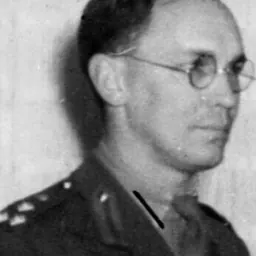

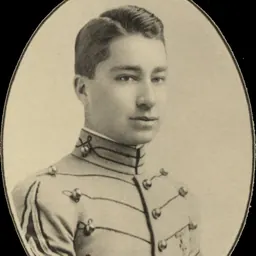




Related people
Same field, nearest in time
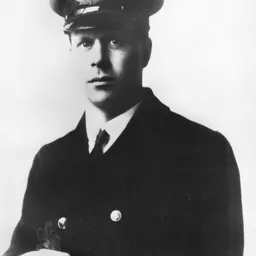

Contemporaries
People whose lives overlapped Charles Leslie Richardson's


Frequently asked questions
Who was Charles Leslie Richardson?
British Army general
When was Charles Leslie Richardson born?
Charles Leslie Richardson was born on 11 August 1908.
When did Charles Leslie Richardson die?
Charles Leslie Richardson died on 7 February 1994 in Betchworth.
What was Charles Leslie Richardson's occupation?
Charles Leslie Richardson was an engineer and military personnel.
What nationality was Charles Leslie Richardson?
Charles Leslie Richardson was British.
Sources & further reading
· Wikipedia: Charles Leslie Richardson
· DBpedia: Charles Richardson (British Army officer)
Cite this page
APA: Biography.guide. (2026). Charles Leslie Richardson. https://biography.guide/charles-leslie-richardson/
MLA: "Charles Leslie Richardson." Biography.guide, https://biography.guide/charles-leslie-richardson/.
Chicago: "Charles Leslie Richardson." Biography.guide. https://biography.guide/charles-leslie-richardson/.
Data last updated: 2026-09-20 · Spot an error? Report a correction.
Page generated 2026-09-27 05:31 UTC