
About Charles Legéndy
Born 1936. Charles Legéndy is a physicist, engineer and neuroscientist.
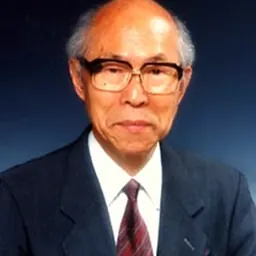
Charles Rudolf Legéndy (Hungarian: Legéndy Károly Rudolf, born November 2, 1936), is a Hungarian-born American engineer, theoretical physicist, and neuroscientist.
In physics, Legéndy is known for his theoretical work on the helicon phenomenon, In neuroscience, he is known for introducing the "Poisson surprise" test used for burst detection in neuronal spike trains, and (after a 26-year hiatus in publications) resumed work in theoretical neuroscience.
While in Germany, Legéndy met his future wife Annemarie; they married in 1977, and settled down to raise their children in New York City.
Physics: helicon waves As a graduate student at Cornell, Legéndy joined an experimental team which had just discovered an electromagnetic resonance phenomenon at unexpectedly low frequencies (32 Hz and below) inside a metal sample in a magnetic field. Legéndy showed that the resonance was the manifestation of solid-state plasma wave propagation inside the metal, mathematically comparable to radio whistlers in the ionosphere.
Neuroscience: general design of data processing in the brain Legéndy's theory of the brain develops certain additions to the Hebbian theory; in particular, to the theory of cell assemblies. He estimated the maximum number of stable cell assemblies that could fit into the network. Under the most optimistic set of assumptions available at the time, the brain model could contain up to 109 "mental entities," the figure later used by Hebb in illustrating the large capacity of the brain. (Recent data shows that the estimate must be greatly reduced; and Legéndy now believes that the large capacity of brains cannot be explained in terms of synaptic weights alone; synapse-based memory must be supplemented by a molecular backup system. )
Legéndy's work on brain circuitry and ignitions led to the “Poisson surprise” analysis of neuronal spike trains a method of burst detection. in view of the large number of unplanned contacts present in the brain which necessitate statistical methods for distinguishing the useful signals from random firing.
Don’t just read it —
keep it.
Full-length biographies made to live with: read them, listen on the way to work, watch them tonight.
- E-book
- Audio
- Video
Instant download · yours to keep · every purchase keeps this site free
Important facts
Related people
Same field, nearest in time




Contemporaries
People whose lives overlapped Charles Legéndy's






Frequently asked questions
Who is Charles Legéndy?
American physicist
When was Charles Legéndy born?
Charles Legéndy was born on 2 November 1936.
What is Charles Legéndy's occupation?
Charles Legéndy is a physicist, engineer and neuroscientist.
Sources & further reading
Cite this page
APA: Biography.guide. (2026). Charles Legéndy. https://biography.guide/charles-legendy/
MLA: "Charles Legéndy." Biography.guide, https://biography.guide/charles-legendy/.
Chicago: "Charles Legéndy." Biography.guide. https://biography.guide/charles-legendy/.
Data last updated: 2026-09-22 · Spot an error? Report a correction.
Page generated 2026-09-27 05:29 UTC