
Charles L. Flint
First Secretary of the Massachusetts Board of Agriculture, scientific writer, education advocate and college president
About Charles L. Flint
Lived 1824 – 1889 (aged 64). Charles L. Flint was an American lawyer, politician, journalist and entomologist.
Charles Louis Flint (May 8, 1824 – February 26, 1889) was a lawyer, cofounder and first secretary of the Massachusetts Board of Agriculture, a lecturer in cattle and dairy farming, the first secretary of the Massachusetts Agricultural College Board of Trustees (now known as the University of Massachusetts Amherst) and the college's fourth president.
Flint was born in Middleton, Massachusetts, on May 8, 1824. He graduated from Harvard University in 1849 and entered the Law School in 1850. In 1853, he became secretary of the newly formed Massachusetts Board of Agriculture, remaining in that position for 27 years. He was a member of the Boston School Committee and was involved in founding of the Massachusetts Institute of Technology.
Flint was one of the founders of the Massachusetts Agricultural College, where he lectured on dairy farming for four years. He served as elected secretary of the Board of Trustees for 22 years. On the resignation of President Clark during a budgetary crisis in 1879, Flint was elected president and served without a salary. After reorganizing the debt-ridden college with some success, he placed his resignation in the spring of 1880, and eventually left his post as secretary of the college board in 1885. In the later years of his life, Flint worked as president of the New England Mortgage Security Company, and remained an active member of the Massachusetts Horticultural Society and the Boston Society of Natural History. After a period of declining health he died during a trip to the South, on February 26, 1889, at a hotel in Hillman, Georgia.
Education and early life Charles Flint, born in Middleton, Massachusetts, on May 8, 1824, was the second son of farmers Jeremiah and Mary Flint (née Howard). Thomas Flint, the first of the Flint family to come America, departed from Wales, settling on his homestead in present-day Peabody in 1640. Charles Flint and his siblings would be the seventh generation to farm on the family's heirloom estate; as a child, much of his time was divided between doing chores on the farm and attending school in the winter, both of which unquestionably influenced his careers in agriculture and education later in life. Unfortunately Flint would later attribute these trying times for his poor health in later years, having to constantly support himself while gaining his education. for first place in Harvard's prestigious Bowdoin prize for an essay on "The Different Representations of the Character of Socrates, by Plato, Xenophon, and Socrates". He would also enter twice in the college's Boylston prize, winning first place in 1848 and second place in his senior year. After four years of rigorous schooling and working to pay for this education, Flint graduated from Harvard debt-free, with honors, in the class of 1849. Though brief, this fleeting experience would prompt much of his later interests in the cause of furthering higher education. Towards the end of 1850 he enrolled in the Dane Law School at Cambridge to prepare for a career in court law over the next two years. During this time he entered a Harvard post-graduate essay prize, winning $50 for the best paper discussing the "Representative System at Different Times and in Different Countries." Meanwhile, he was commended with a silver medal from the New York State Agricultural Society, whose members and chairman had found his 1846 essay on Indian corn "very successful in throwing much and additional interest" over the crop's history. For part of the time that he was attending law school, Flint worked under the supervision then-Commodore Charles Henry Davis for the American Nautical Almanac in Boston. Led by the Hon. Marshall P. Wilder, a merchant and advocate of agricultural education for more than a decade prior, the goal was to create a permanent government body that would accurately gather statistics on the crop returns of the county agricultural societies as well as provide a forum for the advancement of the state's agriculture. This Board was to be a representative body reporting to the state's senate and house, connected with to executive government with the Governor, Lieutenant Governor and Secretary of the Commonwealth serving as members ex officiis. The governor and this executive council would then appoint 3 members considered of scientific background, with the remaining membership being elected delegates from each county agricultural society, serving in terms of 3 years each.
Up until the time of the Board's founding (and those in other states) agricultural science had been in a state of relative neglect in this country, with the small amount of literature printed mainly being reprints from European journals, and the journals of other sciences, industry and the arts dwarfing the agricultural literature that did exist. Over the next two decades Flint would help to rectify this through the publishing of numerous annual reports and outside literature. Some examples of this include the first of his reports which contained an extensive history of agriculture in the Commonwealth, the fourth of which contained a treatise on "Grasses and Foraging Plants", a revised edition of Harris's Injurious Insects, and a 450 book on "Milch Cows and Dairy Farming", all of which would go on to be printed for several more editions. His work was well received: Paul A. Chadbourne, a board member and future president of the Massachusetts Agricultural College himself, once stated Flint's treatise on grasses "embodies the most practical and scientific information on the history, culture and nutritive value of the grasses and the grains. His style of writing is plain, simple, forcible and judiciously adapted to the ends he has in view. The large number of illustrations of the different species of grasses are drawn with great care and accuracy, and greatly facilitate the study and identification of unknown specimens."
International work In summer of 1862, Flint took an extended break in Europe during which he would pass through multiple countries and communicate with the farmers from each one. While passing through Germany, many of these farmers conversed with him about a grand-scale International Exhibition in Hamburg being planned July of the following year. It was to his surprise when, in the spring of 1863, the Board of Agriculture (along with every other state and Federal agricultural body) was given an invitation to attend this convention. The Board decided to name a commissioner to travel with the other state officials who would be in attendance, to which Flint received the appointment "unsought and unexpected[ly]". His detailed account of the exposition can be found in the Board's Eleventh Annual Report. Its wealth of information on breeds of cattle and other livestock, agricultural practices and the organization European agricultural schools would be republished in excerpts throughout American agricultural periodicals for many years to follow.
Flint's reports, though limited to 12,000 copies each, managed to circulate outside of the United States to many parts of the world. In the early 1880s an International Exposition was held at Santiago, at which the government of Chile awarded and sent him a bronze medal and diploma "in recognition of the high quality and value of his reports." Leland was a direct descendant of the first secretary of the Massachusetts Bay Colony, Edward Rawson for whom the couple would name one of their children. Flint would also give a series of courses on dairy farming from 1868 to 1872, the subject for which a campus laboratory bearing his name would later be built for.
Since the time of its founding the college had gone through 3 presidents: Henry F. French, who resigned after 2 years of service, Paul A. Chadbourne, a member of the Board of Agriculture who had to leave the post due to ill health, and William S. Clark, now considered the college founder as the first president to admit students. For a time the college was considered a success while under Clark's leadership, however by the end of the 1870s enrollment had gone into steady decline, with no admissions from the farming region of Berkshire County in 1870 and less than 20 students admitted in the entering class of 1875. This decline in students and revenue, along with the college's needs for a library and laboratories, was causing the institution to lose thousands with each passing year.
In order to survive, the college would need to undergo a period of reorganization, something which had never been done up to that time in its nearly 20-year existence. At a meeting of the trustees later in May 1879, the situation was seen as particularly grave and it was decided that it wouldn't be likely nor beneficial to call in an outsider, thus Charles L. Flint was unanimously elected to serve as the president of the college. Reluctantly, Flint accepted and would hold the title without pay, as well as his other secretarial duties until his resignation on March 24 of the following year. In the Twenty-Seventh Annual Report of the college, Professor of Agriculture and later President of the college William Penn Brooks describes Flint's extensive relationship with the college, in what was otherwise known as "the most stormy year of its existence": In the course of that year "Professor of Mental, Moral and Social Sciences," Henry W. Parker offered his resignation, with the position abolished following his departure. Among other cuts the salaries of two other (unnamed) professors were reduced as were those of the treasurer and some janitorial services were withheld as well. ability to run the college for years to come.
MIT and other efforts in higher education "Our fathers trod the barren wildOf this New England shore,To raise a fane to sacred truth, To stand for evermore.In doubtful hope and anxious fearThey sternly persevered,To lay foundations, deep and strong,To principles revered.Not as those noble fathers came,Come we, their sons, to-day,This tribute to their names to bring,This debt of honor pay;High hopes are ours that richest seedBe sown for coming time:Here may we true ambition feel,To make our lives sublime!Here may our young and ardent soulsTo highest praise aspire,And here may words of magic powerEnkindle living fire!Here press we on with youthful might,Life's journey just begun:The future gleams with dawning lightFrom glory's blazing sun." —Charles Louis Flint, written for dedication of a Lynn schoolhouse, 1850
Massachusetts Institute of Technology Funding from the Morrill Acts not only provided income for the Massachusetts Agricultural College but endowed the Massachusetts Institute of Technology as well. Flint was also instrumental in the creation of this institution, and spent a number of years serving on its founding committees, including the original Committee of Twenty, Committee of Publication, Committee of Associated Institutions, and the Back Bay Lands Committee. Flint is described as an "ardent worker" Throughout this time he would sit on many different subcommittees including (though not limited to), the city high school committee (as chair), the Rice Grammar School committee (as chair), the committee on music, the committee on drawing, the Franklin school district committee, the fifth division committee, the girls' high and normal school committee, and the city committee for school-houses. The secretaryship position paid relatively little, and after performing such duties for 27 years, Flint decided to go on to more lucrative business, becoming president of the New England Mortgage Security Company upon leaving the Board.
Flint still remained involved in agriculture, though to a lesser extent, and remained an active member of the Massachusetts Horticultural Society and the Boston Society of Natural History in his later years.
For years he had been plagued with poor health, and would frequently take train rides south to recuperate for weeks at a time; accompanied by friend and associate O.B. Hadwen, his last trip proved too little and too much. After arriving days earlier, Charles Louis Flint died at the Electric Mound Hotel of Hillman, Georgia, on Tuesday, February 26, 1889, at the age of 64.
Legacy Though he left the Board of Agriculture in 1880, the name Charles Flint would not be forgotten by its members with many of their later publications paying him tribute. William Sessions, the third secretary of the board said of Flint in 1893, "Time would fail me were I to describe the work accomplished by the first secretary...in the twenty seven years he served the Board." In the same year a portrait of Flint was donated to the Board by one of his sons, it would hang in the organization's office for a number of years, though its current whereabouts are unknown. endowment left to the town in Flint's will. Before this time however, all other libraries of the town had been impermanent and with notably sparse collections. When the Flint Library was established it had a total of 5,000 volumes, compared with the present library collection which currently contains upwards of "40,000 books, 1300 videotapes, 1100 audiotapes and subscriptions to 185 periodicals."
Flint would also donate $10,000 to the Massachusetts Institute of Technology, $5,000 to the Genealogical and Natural History societies, $5,000 to the Phillips Academy in the name of a scholarship, and $1,000 to the Massachusetts Home of Intemperate Women.
At the time of writing, the Hon. Charles L. Flint lives on in name alone, with much of his and others' works of the 19th century agricultural science movement having fallen into relative obscurity in the last century. At the University of Massachusetts Amherst a dairy laboratory was built in his name in 1912, however the proposal for the building only credits him as the "fourth president of the Massachusetts Agricultural College", lacking mention of his extensive work in the state's other agricultural and educational affairs.
Selected works Flint was editor to this 3 volume set, which would be published in multiple editions following his death. Flint would write a considerable amount of essays over the years, many covering agricultural and horticultural subjects, with particular focus on pomology, grains, dairy farming and the history of agricultural practices. The works listed below represent an incomplete catalog of the many works he contributed to periodicals and annual reports over the years. The History and Importance of Indian Corn as an Agricultural Product (1846), the essay that launched his career in agriculture Milch Cows and Dairy Farming (1859) Injurious Insects to Vegetation (1862), editor, originally by Thaddeus William Harris Agriculture in the United States (1864), section of Eighty Years' Progress of the United States A Hundred Years' Progress of American Agriculture (1874) Manual of Agriculture for the School, the Farm and the Fireside (1885), coauthored by George B. Emerson, revised by Charles A. Goessmann American Farming and Stock Raising with Useful Facts for the Household Vol. I Vol. II Vol. III (1892), editor, posthumous edition
Printed on an annual basis with 12,000 copies each, these reports, from 1854 until 1880, were compiled and edited by Charles L. Flint. Each contains developments in cultivation techniques, advances in agricultural technology, accounts of different farming localities and architecture, and the annual financial and crop returns of the state's agricultural societies.
First Annual Report, Vol. 1, 1854 Second Annual Report, Vol. 2, 1855 Third Annual Report, Vol. 3, 1856 Fourth Annual Report, Vol. 4, 1857 Fifth Annual Report, Vol. 5, 1858 Sixth Annual Report, Vol. 6, 1859 Seventh Annual Report, Vol. 7, 1860 Eighth Annual Report, Vol. 8, 1861 Ninth Annual Report, Vol. 9, 1862 Tenth Annual Report, Vol. 10, 1863 Eleventh Annual Report, Vol. 11, 1864 Twelfth Annual Report, Vol. 12, 1865 Thirteenth Annual Report, Vol. 13, 1866 Fourteenth Annual Report, Vol. 14, 1867 Fifteenth Annual Report, Vol. 15, 1868 Sixteenth Annual Report, Vol. 16, 1869 Seventeenth Annual Report, Vol. 17, 1870 Eighteenth Annual Report, Vol. 18, 1871 Nineteenth Annual Report, Vol. 19, 1872 Twentieth Annual Report, Vol. 20, 1873 Twenty-First Annual Report, Vol. 21, 1874 Twenty-Second Annual Report, Vol. 22, 1875 Twenty-Third Annual Report, Vol. 23, 1876 Twenty-Fourth Annual Report, Vol. 24, 1877 Twenty-Fifth Annual Report, Vol. 25, 1878 Twenty-Sixth Annual Report, Vol. 26, 1879 Twenty-Seventh Annual Report, Vol. 27, 1880 Appendix, concerning Flint's year as President of the Massachusetts Agricultural College
Don’t just read it —
keep it.
Full-length biographies made to live with: read them, listen on the way to work, watch them tonight.
- E-book
- Audio
- Video
Instant download · yours to keep · every purchase keeps this site free
Important facts
People in Charles L. Flint's life
Named in this biography and alive at the same time
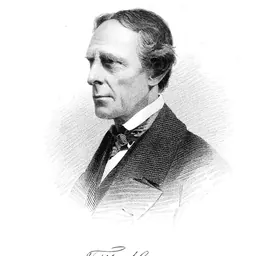
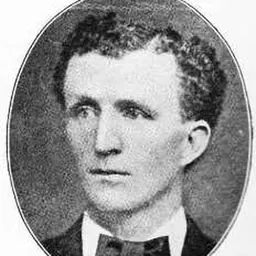




Related people
Same field, nearest in time


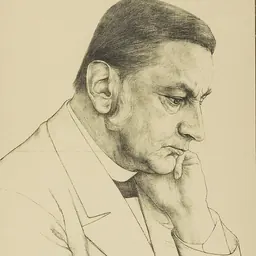

Contemporaries
People whose lives overlapped Charles L. Flint's



Frequently asked questions
Who was Charles L. Flint?
First Secretary of the Massachusetts Board of Agriculture, scientific writer, education advocate and college president
When was Charles L. Flint born?
Charles L. Flint was born on 8 May 1824 in Middleton.
When did Charles L. Flint die?
Charles L. Flint died on 26 February 1889 in Sharon.
What was Charles L. Flint's occupation?
Charles L. Flint was a lawyer, politician, journalist and entomologist.
What nationality was Charles L. Flint?
Charles L. Flint was American.
Sources & further reading
Cite this page
APA: Biography.guide. (2026). Charles L. Flint. https://biography.guide/charles-l-flint/
MLA: "Charles L. Flint." Biography.guide, https://biography.guide/charles-l-flint/.
Chicago: "Charles L. Flint." Biography.guide. https://biography.guide/charles-l-flint/.
Data last updated: 2026-09-20 · Spot an error? Report a correction.
Page generated 2026-09-27 05:29 UTC