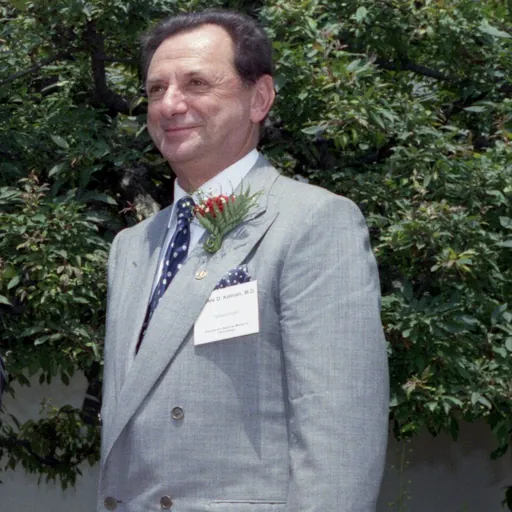
About Charles Kelman
Lived 1930 – 2004 (aged 74). Charles Kelman was an American ophthalmologist, university teacher, surgeon, musician, saxophonist and clarinetist, known for Phacoemulsification.
Charles David Kelman (May 23, 1930 – June 1, 2004) was an American ophthalmologist, surgeon, inventor, jazz musician, entertainer, and Broadway producer. Known as the father of phacoemulsification, he developed many of the medical devices, instruments, implant lenses and techniques used in cataract surgery. In the early 1960s, he began the use of cryosurgery to remove cataracts and repair retinal detachments. Cryosurgery for cataracts remained in heavy use until 1978, when phacoemulsification, a procedure Kelman also developed in 1967, became the modern standard treatment. Kelman was given the National Medal of Technology by President George H. W. Bush and recognized as the Ophthalmologist of the Century by the International Congress of Cataract and Refractive Surgery in Montreal, Canada. He was also inducted into the National Inventors Hall of Fame in Akron, Ohio, and received the 2004 Lasker Award.
Born in New York, Kelman graduated from Tufts University and earned his medical degree from University of Geneva before returning to New York to intern at Kings County Hospital and complete his residency at Wills Eye Hospital in Philadelphia. He was later an attending surgeon at the Manhattan Eye, Ear & Throat Hospital and the New York Eye and Ear Infirmary, and maintained a private practice. Kelman served as clinical professor of ophthalmology at New York Medical College and individually taught his techniques to many surgeons.
Kelman pursued a career as an entertainer alongside his medical career. He began playing the harmonica at a young age and performed on a radio show, The Horn and Hardart Children's Hour. He later learned to play the clarinet and saxophone. As a teenager, he formed a big band, began composing music, and played in his high school band and as first clarinet on the New York All-City Orchestra. While in medical school in Geneva, he appeared on two jazz radio shows and one on television. After returning to New York, he recorded a song, "Telephone Numbers", released by Chancellor Records to some success in national billboard charts. After inventing phacoemulsification, in part to promote the procedure, he began appearing regularly on television, first on The Tonight Show Starring Johnny Carson in 1975. He developed a musical comedy routine which he performed on television as well as in Atlantic City, Las Vegas, and Carnegie Hall in New York, alongside several notable jazz musicians and entertainers. He co-produced several Broadway musicals and wrote at least two off-Broadway musicals.
Early life and education Charles David Kelman was born on May 23, 1930, in Brooklyn, New York, to Eva and David Kelman. He grew up in East New York before the family moved to Forest Hills, Queens. His father was a Jewish immigrant from Greece who never received the proper compensation and recognition for his inventions, He began playing regularly for The Horn and Hardart Children's Hour radio show. to earn a B.S. degree in 1950. He earned a Bachelor of Medical Science degree from the University of Geneva in 1952. After interning at Kings County Hospital from 1956 to 1957, he performed postgraduate work in ophthalmology at Bellevue Medical Center from 1957 to 1958, and then did his residency at Wills Eye Hospital in Philadelphia from 1958 to 1960.
His first invention in the fall of 1962 (and published in January 1963) was an ophthalmic cryoprobe which used liquid nitrogen, to freeze a cataractous lens before removal in intracapsular cataract extraction (ICCE), which removed the lens with the capsule intact. Kelman's cryoprobe using liquid nitrogen offered advantages over the carbon dioxide cryoprobe used for cataract extraction previously and published by Tadeusz Krwawicz in the British Journal of Ophthalmology on April 1, 1961. On July 13, 1965, Kelman first met with Cavitron Corp. engineer Anton Banko, to discuss adding ultrasonic energy to a rotary cutting tool with fluid irrigation / aspiration which Kelman's team had been testing.
Kelman named the procedure phacoemulsification, a technique that has become standard treatment for cataracts in wealthy countries. His first patient's eye became infected and was removed. However, he was successful on subsequent attempts. Kelman began a novel business relationship with the manufacturer to produce the device.
After publishing "Phaco-emulsification and Aspiration—A New Technique for Cataract Removal: A Preliminary Report" in the American Journal of Ophthalmology, he began teaching courses to surgeons interested in learning this new technique. Kelman's developments allowed the incision necessary for ECCE to be reduced from to and minimized recovery time. This new surgery method removed the need for an extended hospital stay and made the surgery less painful. The technique and similar tools have also been adopted and used in neurosurgery to remove tumors from the brain and spinal cord, and subsequently ushered a trend of minimally-invasive outpatient surgical procedures. this issue was only overcome when Thomas R. Mazzocco invented the silicone IOL in the early 1980s. What became known as the "Mazzocco taco" could be folded and inserted in the same small incision used for phacoemulsification. When the foldable IOL was approved for use by the Food and Drug Administration in 1984, the clear advantage of Kelman's phacoemulsification was fully realized.
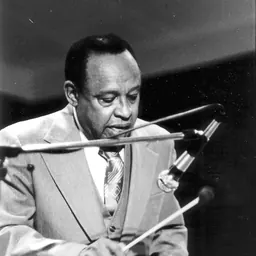
Kelman treated many celebrities including Joe Frazier, Lionel Hampton, Rex Harrison, Ann Miller, Jan Peerce, and William B. Williams. Hedy Lamarr, who Kelman treated in October 1980, said "I was blind for more than seven years. But I'm fine now. Dr. Kelman gave me my sight back. He gave me my eyes." In 1992, The New York Times estimated that Kelman's innovation "shaved $7 billion a year from the nation's hospital bill." as well as a lay book, Cataracts: What You Must Know About Them, published by Crown Publishers in 1982. Later in his career, he invented a way to create collagen from a patient's skin to avoid allergic reactions. He continued to practice medicine, perform surgery, and teach alongside his career as an entertainer. Cataract surgery with phacoemulsification is one of the most common surgeries in the world with more than 9.5 million such procedures performed each year around the world as of 2011.
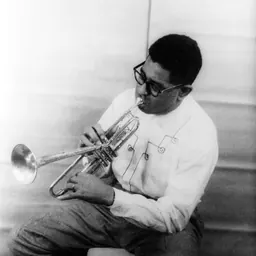
As an entertainer Kelman began composing music in high school he developed a musical comedy routine which he also performed in Atlantic City and Las Vegas, opening for or performing alongside the Spinners, Glen Campbell, James Darren, Dizzy Gillespie, Lionel Hampton and Regis Philbin.
Kelman co-produced several musicals on Broadway, including Can-Can (1981), Triumph of Love (1997), and The Sound of Music (1998–1999), and was a member of the Friars Club in New York.
Awards and honors Kelman receiving the National Medal of Technology from President George H. W. Bush with Barbara Franklin, Secretary of Commerce In 1970, Kelman was awarded by the American Academy of Achievement. In 1982, he was a recipient of the Congressional Salute in the U.S. Senate, 97th Congress, in Washington, D.C. In 1985, Kelman presented the first American Society of Cataract and Refractive Surgery (ASCRS) Innovator's Lecture. The lecture series was named in his honor in 2003. He also delivered the ASCRS's Binkhorst Lecture in 1989, the Ridley Medal Lecture at the International Congress of Ophthalmology in 1990, The same year, he had received the Distinguished Service Award from Tufts University and the Inventor of the Year Award from the New York Patent, Trademark and Copyright Law Association. At the July 1994 International Congress of Cataract and Refractive Surgery in Montreal, Canada, he was recognized as the Ophthalmologist of the Century. In February 2004, he was inducted into the National Inventors Hall of Fame in Akron, Ohio.
In January 2010, the New York public television station WLIW aired a documentary titled Through My Eyes: The Charlie Kelman Story; With his second wife Ann, he had three sons: Evan, Jason, and Seth. Kelman was an avid golfer and learned to fly a helicopter later in life. In 1996, he moved to Boca Raton, where he died of lung cancer on June 1, 2004, at the age of 74.
Don’t just read it —
keep it.
Full-length biographies made to live with: read them, listen on the way to work, watch them tonight.
- E-book
- Audio
- Video
Instant download · yours to keep · every purchase keeps this site free
Important facts
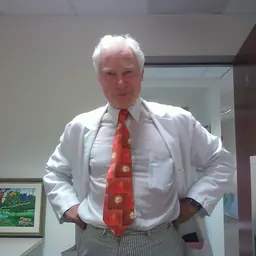
People in Charles Kelman's life
Named in this biography and alive at the same time





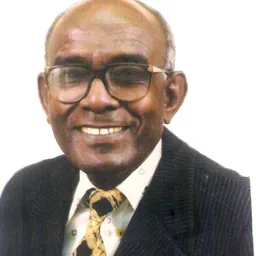
Related people
Same field, nearest in time



Contemporaries
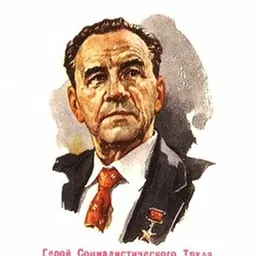
People whose lives overlapped Charles Kelman's
Frequently asked questions
Who was Charles Kelman?
American ophthalmologist
When was Charles Kelman born?
Charles Kelman was born on 23 May 1930 in Brooklyn.
When did Charles Kelman die?
Charles Kelman died on 1 June 2004 in Boca Raton.
What was Charles Kelman's occupation?
Charles Kelman was an ophthalmologist, university teacher, surgeon, musician, saxophonist and clarinetist.
What was Charles Kelman known for?
Charles Kelman was known for Phacoemulsification.
What nationality was Charles Kelman?
Charles Kelman was American.
Sources & further reading
Cite this page
APA: Biography.guide. (2026). Charles Kelman. https://biography.guide/charles-kelman/
MLA: "Charles Kelman." Biography.guide, https://biography.guide/charles-kelman/.
Chicago: "Charles Kelman." Biography.guide. https://biography.guide/charles-kelman/.
Data last updated: 2026-09-23 · Spot an error? Report a correction.
Portrait: Wikimedia Commons · author & licence
Page generated 2026-09-27 05:04 UTC