
About Charles Hesse
Lived 1791 – 1832 (aged 40–41). Charles Hesse was a military personnel.
Charles Hesse (24 February 1832) was a Prussian-born officer of the British Army, notable for his liaison with the young Princess Charlotte of Wales.
Biography He was the son of a Prussian merchant who made a fortune from various enterprises including supplying clothes to the Russian Army. His education took place under the guidance of the Margrave of Brandenburg-Ansbach, who was resident in England. After completing his education he returned to Berlin, where he was expected to inherit his father's fortune. However, the Prussian defeat in the War of the Fourth Coalition ruined his father, as the King of Prussia was unable to pay him for the clothes supplied to the Prussian Army. Hesse was sent back to England and taken under the protection of the now-widowed Margravine of Brandenburg-Ansbach. The Duchess of York, who had been born a princess of Prussia, also interested herself on her countryman's behalf, and in December 1808, at the age of seventeen, Hesse was given a commission as cornet in the 18th Light Dragoons by the Duke of York, Commander-in-Chief of the Forces.
Hesse was good-looking, attractive, and a good horseman, and was soon received in society. However, his good fortune led to rumours about his parentage which Hesse did nothing to dispel. Lady Blessington says that Hesse was presumed to be a son of the Margrave and Margravine of Brandenburg-Ansbach born before their marriage, and was present at all the actions where the 18th Light Dragoons were engaged, which had been sent out and delivered personally to him by Lord Wellington after the Battle of Vitoria. The letters were still in the possession of the Comtesse de Flahaut (Keith's daughter) in 1845. He travelled in her suite as far as Naples, and remained there when the Princess travelled on to Rome in March 1815. On 18 June 1815 Hesse was present with the 18th Light Dragoons at the Battle of Waterloo, where he was wounded; he was consequently awarded the Waterloo Medal. and he retired on half-pay on 25 February 1819. On 17 January 1825 he married Mary Elizabeth, daughter of Thomas Chambre of Nottingham Place.
Captain Gronow describes his friend Hesse's life as "full of singular incidents", and mentions an occasion when his overly close friendship with the Queen of Naples had caused him to be deported from the country. He was also a noted duellist. In 1832, following a dispute over a game of cards, Hesse fought a duel in the Bois de Vincennes with Count Léon, an illegitimate son of Napoleon Bonaparte. Hesse fired first, without waiting, and Léon's return shot wounded Hesse in the chest.
Charles Hesse died at Nogent-sur-Marne on 24 February 1832.
Don’t just read it —
keep it.
Full-length biographies made to live with: read them, listen on the way to work, watch them tonight.
- E-book
- Audio
- Video
Instant download · yours to keep · every purchase keeps this site free
Important facts
People in Charles Hesse's life
Named in this biography and alive at the same time
Related people
Same field, nearest in time


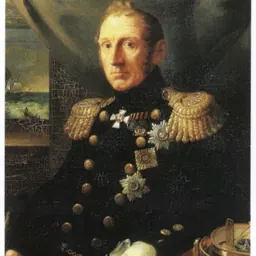
Contemporaries
People whose lives overlapped Charles Hesse's
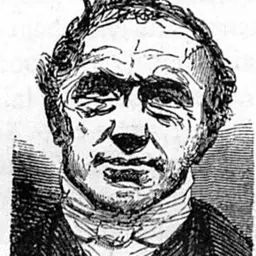

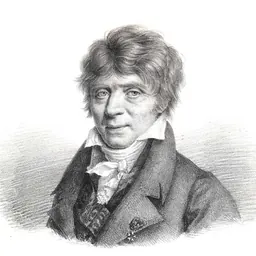



Frequently asked questions
Who was Charles Hesse?
British Army officer
When was Charles Hesse born?
Charles Hesse was born in 1791.
When did Charles Hesse die?
Charles Hesse died in 1832.
What was Charles Hesse's occupation?
Charles Hesse was a military personnel.
Sources & further reading
Cite this page
APA: Biography.guide. (2026). Charles Hesse. https://biography.guide/charles-hesse/
MLA: "Charles Hesse." Biography.guide, https://biography.guide/charles-hesse/.
Chicago: "Charles Hesse." Biography.guide. https://biography.guide/charles-hesse/.
Data last updated: 2026-09-20 · Spot an error? Report a correction.
Page generated 2026-09-27 05:25 UTC