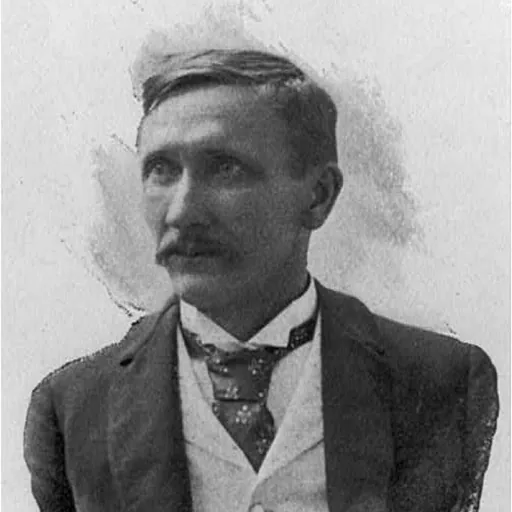
About Charles Henry Niehaus
Lived 1855 – 1935 (aged 80). Charles Henry Niehaus was an American sculptor.
Charles Henry Niehaus (January 24, 1855 – June 19, 1935) was an American sculptor.
Early life and education Niehaus was born in Cincinnati, Ohio, to German parents. He began working as a marble and wood carver, and then gained entrance to the McMicken School of Design in Cincinnati. He studied at the Royal Academy in Munich, Germany (1877–1881). The effect of the German study was that he retained much of the Neo-Classical flavor in his art while most other sculptors of his generation were drawn towards Beaux-Arts realism.
Career He returned to America in 1881. By virtue of being a native Ohioan, he was commissioned to sculpt two statues of the recently assassinated President James Garfield; one for Cincinnati, and the other, in another pose, for the National Statuary Hall Collection at the United States Capitol. He moved to Rome, Italy, where he worked on the commissions, and made a study of ancient sculpture. He modeled three major male nudes during his years in Rome, including The Scraper (1883) and Caestus (1883-1885). He returned to New York City in 1885, and opened a studio.
In 1887, he created a statue of Ohioan William Allen, also for Statuary Hall. In later years, he was to place statues of Oliver P. Morton of Indiana (1900), John J. Ingalls of Kansas (1905), Zachariah Chandler of Michigan (1913), George W. Glick of Kansas (1914), Ephraim McDowell of Kentucky (1929), and Henry Clay of Kentucky (1929) in the collection. His work was also part of the sculpture event in the art competition at the 1932 Summer Olympics.
Monuments by Niehaus can be found in many American cities. Several of the works authored by him are equestrian statues. As was the case with other sculptors of his day he also fashioned a fair amount of architectural sculpture.
In 1900 Niehaus married noted horticulturalist Regina Armstrong and moved to New Rochelle, New York.
A resident of Cliffside Park, New Jersey, Niehaus died at his home there on June 19, 1935.
Selected works
Apotheosis of St. Louis (1906), Forest Park, St. Louis, Missouri James A. Garfield, Piatt Park, Cincinnati, Ohio, 1882-1887 The Scraper (Athlete Using a Strigil), Brookgreen Gardens, Murrells Inlet, South Carolina, 1883 Caestus, Metropolitan Museum of Art, New York City, 1883-1885 Bas-relief panel of Surrender of the Hessians, Trenton Battle Monument, Trenton, New Jersey, 1891–1893 William Rudolf O'Donovan sculpted the colossal George Washington statue atop the monument, and statues of two Continental soldiers flanking the entrance. Thomas Eakins modeled two other bas-relief panels. Moses, Main Reading Room, Library of Congress, Washington, D.C., 1894 Edward Gibbon, Main Reading Room, Library of Congress, Washington, D.C., 1894 Samuel Hahnemann Monument, Scott Circle, Washington, D.C., 1896-1900 Hackley Park, Muskegon, Michigan: Bust of Charles Hackley, 1890 Abraham Lincoln Monument, 1900. Replicas of Niehaus's Abraham Lincoln are at the Buffalo History Museum in Buffalo, New York, and at Library Park in Kenosha, Wisconsin. David Farragut Monument, 1900 William McKinley Monument, 1902 Bust of Robert Blum, Cincinnati Art Museum, Cincinnati, Ohio, ca. 1900 The Driller, Edwin Drake Memorial, Woodlawn Cemetery, Titusville, Pennsylvania, 1901 Equestrian Statue of General Forrest, Nathan Bedford Forrest Grave, Forrest Park, Memphis, Tennessee, 1901-1905 Apotheosis of St. Louis, Forest Park, St. Louis, Missouri, 1906 William McKinley, McKinley Memorial Mausoleum, Canton, Ohio, 1907. Niehaus also modeled the lunette bas-relief over the entrance. Benjamin Harrison, Indiana World War Memorial Plaza, Indianapolis, Indiana, 1908. James W. Beardsley, Beardsley Park, Bridgeport, Connecticut, 1909 John Paul Jones, John Paul Jones Memorial, West Potomac Park, Washington, D.C., 1912. Niehaus's plaster original is at the United States Naval Academy, Annapolis, Maryland. Oliver Hazard Perry (1915–16), Front Park, Buffalo, New York. Orpheus with the Awkward Foot (Francis Scott Key Monument), Fort McHenry National Monument, Baltimore, Maryland, 1916-1922. Planting the Standard of Democracy in Honor of Newark's Soldiers, World War I Memorial, Lincoln Park, Newark, New Jersey, 1923. Hackensack War Monument, The Green, Bergen County Court House, Hackensack, New Jersey, 1924. At least 30 Civil War monuments and several World War I memorials.
United States Capitol
Niehaus had eight statues in the National Statuary Hall Collection at the United States Capitol in Washington, D.C., a record for a sculptor. However, in 2003, Kansas replaced his statue of George Washington Glick with one of Dwight D. Eisenhower, in 2011, Michigan replaced his statue of Zachariah Chandler with one of Gerald R. Ford, in 2016, Ohio replaced his statue of William Allen with one of Thomas Edison, and, in 2022, Kansas replaced his statue of John James Ingalls with one of Amelia Earhart. His remaining four statues are still more than any other sculptor has in the Hall. James A. Garfield, 1886 William Allen, 1887 (removed 2016) Oliver P. Morton, 1900 John James Ingalls, 1905 (removed 2022) Zachariah Chandler, 1913 (removed 2011) George W. Glick, 1914 (removed 2003) Henry Clay, 1929 Ephraim McDowell, 1929
There are also two busts by Niehaus in other collections: Bust of James A. Garfield, United States Senate Art Collection, ca. 1885. Bust of Daniel D. Tompkins, United States Senate Vice Presidential Bust Collection, 1891
Architectural sculpture
Connecticut State Capitol, Hartford, Connecticut: Bust of Joel Barlow, ca. 1885 Bust of George Berkeley, ca. 1885 Statue of John Davenport, 1889 Statue of Thomas Hooker, 1889 Bust of Reverend Jonathan Edwards, 1895 Bust of John Trumbull, 1895 Bas-relief of Hooker's March, 1895 Bas-relief of Davenport Preaching at New Haven, 1895 Astor Memorial Doors (south doors), Trinity Church, New York City, 1895 Two tympana, Thomas Jefferson Building, Library of Congress, Washington, D.C., ca. 1896 Pedimental sculpture of The Triumph of Law, Appellate Court House, New York City, 1896–1900 Pedimental sculpture, Kentucky State Capitol, Frankfort, Kentucky, 1907
Gallery
Don’t just read it —
keep it.
Full-length biographies made to live with: read them, listen on the way to work, watch them tonight.
- E-book
- Audio
- Video
Instant download · yours to keep · every purchase keeps this site free
Important facts
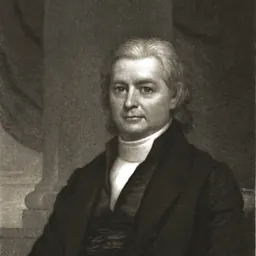
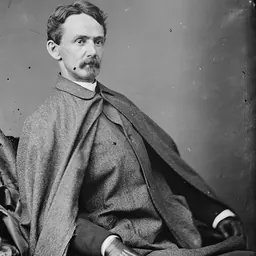
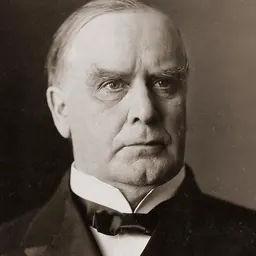
People in Charles Henry Niehaus's life
Named in this biography and alive at the same time




Related people
Same field, nearest in time



Contemporaries
People whose lives overlapped Charles Henry Niehaus's




Frequently asked questions
Who was Charles Henry Niehaus?
United States sculptor (1855–1935)
When was Charles Henry Niehaus born?
Charles Henry Niehaus was born on 24 January 1855 in Cincinnati.
When did Charles Henry Niehaus die?
Charles Henry Niehaus died on 19 June 1935 in New Rochelle.
What was Charles Henry Niehaus's occupation?
Charles Henry Niehaus was a sculptor.
What nationality was Charles Henry Niehaus?
Charles Henry Niehaus was American.
Sources & further reading
· Wikipedia: Charles Henry Niehaus
· DBpedia: Charles Henry Niehaus
Cite this page
APA: Biography.guide. (2026). Charles Henry Niehaus. https://biography.guide/charles-henry-niehaus/
MLA: "Charles Henry Niehaus." Biography.guide, https://biography.guide/charles-henry-niehaus/.
Chicago: "Charles Henry Niehaus." Biography.guide. https://biography.guide/charles-henry-niehaus/.
Data last updated: 2026-09-23 · Spot an error? Report a correction.
Portrait: Wikimedia Commons · author & licence
Page generated 2026-09-27 05:07 UTC