
About Charles Henri Ford
Lived 1908 – 2002 (aged 94). Charles Henri Ford was an American film director, photographer, poet, novelist, writer and painter.
Early years Charles Henry Ford was born in Brookhaven, Mississippi, on February 10, 1908. His family owned hotels in the Southern United States. Although the family was Baptist, he was sent to Catholic boarding schools. and only known sibling. The New Yorker published one of his poems in 1927, before he turned 20, under the name Charles Henri Ford, which he had adopted to counter the assumption that he was related to the business magnate Henry Ford. The magazine's other editors were Parker Tyler and Kathleen Tankersley Young.
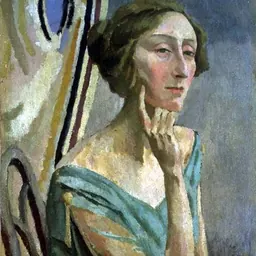
Not long after, he became part of Gertrude Stein's salon in Paris, where he met Natalie Barney, Man Ray, Kay Boyle, Janet Flanner, Peggy Guggenheim, Djuna Barnes, and others of the American expatriate community in Montparnasse and Saint-Germain-des-Près. He had an affair with Barnes and they visited Tangiers together. Tyler later described it as "the novel that beat the beat generation by a generation". Louis Kronenberger, in the novel's only U.S. review, described it as "the first candid, gloves-off account of more or less professional young homosexuals". Edith Sitwell burned her copy and described it as "entirely without soul, like a dead fish stinking in hell". The novel portrays a collection of young artists as they write poems, have sex, move in and out of cheap rented rooms, and explore the many speakeasies in their Greenwich Village neighborhood. The characters' gender and sexual identities are presented candidly. It was rejected by several American and British publishers before Obelisk Press in Paris agreed to publish it. Officials in the U.K. and U.S. prevented shipments of the novel from reaching bookstores.
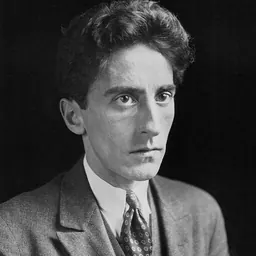
He published his first full-length book of poems, The Garden of Disorder in 1938. William Carlos Williams wrote the introduction. When Ford discussed the concept of poetry, he highlighted its relationship with other forms of art. Ford said, "Everything is related to the concept of poetry. As you know, Jean Cocteau used to talk about the poetry of the novel, the poetry of the essay, the poetry of the theater—everything he did, he said, was poetry. Well, he was one of my gurus." While some of his poetry is easily recognizable as surrealist–"the pink bee storing in your brain's/veins a gee-gaw honey for the golden skillet"–he also adapted his style to political poetry. He published in New Masses and gave voice to a black man confronting a lynch mob: "Now I climb death's tree./The pruning hooks of many mouths/cut the black-leaved boughs./The robins of my eyes hover where/sixteen leaves fall that were a prayer."
In the 1940s, View Editions, the publishing arm of the quarterly, published the first monograph on Marcel Duchamp and a collection of André Breton's poems in a bi-lingual edition, Young Cherry Trees Secured Against Hares (1946). Ford's book of poems Sleep in a Nest of Flames (1959) contained a preface by Dame Edith Sitwell. Ford and Tchelitchew moved to Europe in 1952, and in 1955 Ford had a photo exhibition, Thirty Images from Italy, at London's Institute of Contemporary Arts. In Paris the next year he had his first one-man show of paintings and drawings. Jean Cocteau wrote the foreword to the catalog. In 1957, Tchelitchew died in Rome. His second film was Johnny Minotaur, which premiered in 1971. Its nominal subject was the Greek myth of Theseus, Ariadne, and the Minotaur's labyrinth. It was an exercise in surrealist juxtaposition of styles, including cinema vérité and "erotic kitsch". Shot in Crete and employing the structure of a film-within-a-film, it pretended to document the experiences of a film producer as he worked on a contemporary film about a classical myth, but Ford's work moved freely between the documentary subject and the supposed film in production with little respect for any distinction between the two. A reviewer in The New York Times said of the film, "The order of the day is male anatomy and male sexuality." The film played for a time at New York's Bleecker Street Cinema
He published selections from his diaries as Water from a Bucket in 2001In the 1970s Ford moved to Nepal and bought a house in Kathmandu. In 1973 he hired a local teenager, Indra Tamang, to run errands and cook, then taught him photography and made him his assistant. Tamang remained at his side for the rest of Ford's life, "a sort of surrogate son", artistic collaborator, and personal caretaker. Together they toured from Turkey to India, relocated to Paris and Crete, and then to New York City. efn Tamang was born about 1953. He left a wife and two daughters in Nepal. He was widowed in 1986, remarried in the 1990s, had another daughter, and brought his two elder daughters to the U.S. Ford and later his sister Ruth Ford paid Tamang so little his wife needed to work to support the family.
In 2001, he published a selection from his diaries as Water from a Bucket: A Diary 1948-1957. Covering the years from his father's final illness to the death of Tchelitchew, it provided, according to Publishers Weekly, "richly observed details, both quotidian and unusual, constituting a delightful, moving, poetic portrait of a man and a subculture".
Also in 2001, he was the subject of a two-hour documentary film, Sleep in a Nest of Flames, directed by James Dowell and John Kolomvakis.
Personal life When Tchelitchew died in Rome in 1957, The New York Times described Ford as his "life-long companion and secretary."
Ford and his sister had separate apartments at The Dakota apartment building in their final years, where Tamang served as their caretaker. He was survived by his younger sister, actress Ruth Ford, who died in 2009, aged 98.
Ford left some paintings and the rights to his co-authored novel The Young and Evil to Tamang, who took the ashes of both Fords to Mississippi for burial in 2011. They are buried in Rose Hill Cemetery, Brookhaven, Mississippi. The inscription on the gravestone of Charles Henri Ford reads "Sleeping Through His Reward".
Works Nonfiction Water from a Bucket: A Diary 1948-1957 (Turtle Point Press, 2001)
Fiction The Young and Evil, with Parker Tyler (Paris: Obelisk Press, 1933)
Poetry A Pamphlet of Sonnets (1936) The Garden of Disorder (1938) ABC's (1940) The Overturned Lake (1941) Poems for Painters (1945) The Half-Thoughts, The Distances of Pain (1947) Sleep in a Nest of Flames (1949) Spare Parts (1966) Silver Flower Coo (1968) Flag of Ecstasy: Selected Poems (1972) 7 poems (1974) Om Krishna I: Special Effects (1972) Om Krishna II: from the Sickroom of the Walking Eagles (1981) Om Krishna III (1982) Emblems of Arachne (1986) Out of the Labyrinth: Selected Poems (2001)
Editor The Mirror of Baudelaire (New Directions, 1942) A Night with Jupiter and Other Fantastic Stories (New York: View Editions, Vanguard Press, 1945) View: Parade of the Avant-Garde, 1940–1947 (Thunder's Mouth Press, 1992; Basic Books, 1993)
Don’t just read it —
keep it.
Full-length biographies made to live with: read them, listen on the way to work, watch them tonight.
- E-book
- Audio
- Video
Instant download · yours to keep · every purchase keeps this site free
Important facts
Family & relationships
People in Charles Henri Ford's life
Named in this biography and alive at the same time





Related people
Same field, nearest in time


Contemporaries
People whose lives overlapped Charles Henri Ford's


Frequently asked questions
Who was Charles Henri Ford?
American photographer and writer (1913–2002)
When was Charles Henri Ford born?
Charles Henri Ford was born on 10 February 1908 in Brookhaven.
When did Charles Henri Ford die?
Charles Henri Ford died on 27 September 2002 in New York City.
What was Charles Henri Ford's occupation?
Charles Henri Ford was a film director, photographer, poet, novelist, writer and painter.
What nationality was Charles Henri Ford?
Charles Henri Ford was American.
Sources & further reading
· Wikipedia: Charles Henri Ford
Cite this page
APA: Biography.guide. (2026). Charles Henri Ford. https://biography.guide/charles-henri-ford/
MLA: "Charles Henri Ford." Biography.guide, https://biography.guide/charles-henri-ford/.
Chicago: "Charles Henri Ford." Biography.guide. https://biography.guide/charles-henri-ford/.
Data last updated: 2026-09-20 · Spot an error? Report a correction.
Page generated 2026-09-27 05:06 UTC