
About Charles Harford Lloyd
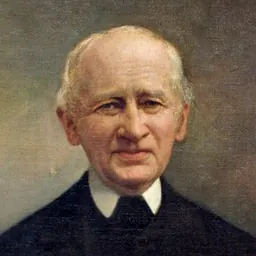
Lived 1849 – 1919 (aged 70). Charles Harford Lloyd was a British composer.
Charles Harford Lloyd (Thornbury, 16 October 1849 – Eton, 16 October 1919) was an English composer who became a well-known organist in his time.
His most successful area was organ and choral works but he wrote three clarinet pieces for his friend Randle Fynes Holme (1864–1957), (a talented amateur musician), a number of chamber works, a Festival Overture for orchestra, an organ concerto with orchestra and a number of songs for voice and piano.
He served as organist and choir-master at Gloucester Cathedral, Christ Church Cathedral in Oxford, Eton College Chapel and organist at the Chapel Royal. His most frequently performed works today are his settings of the Anglican Church liturgy.
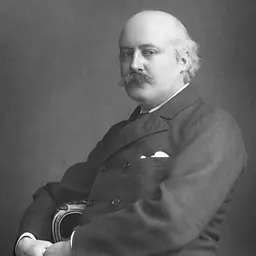
He had a lifelong friendship with Hubert Parry.
Early years Charles Harford Lloyd was born on 16 October 1849 to a Gloucestershire solicitor, Edmund Lloyd. Charlie, as his intimates called him, began to play the piano at an early age, receiving his first instruction from a governess. When he was ten years old, he played the organ at the neighbouring church of Rangeworthy, where his brother-in-law was the vicar as well as another nearby village of Falfield. He attended the grammar school of his native town for his general education.
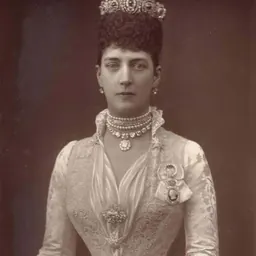
In 1862, aged thirteen, he took lessons in piano and harmony with John Barrett, of Bristol, who introduced him to the works of Beethoven and Bach. "He simply revelled in Bach's Forty-eight Preludes and Fugues", said Barrett. He also started composing at an early age, composing a mazurka he called "The Pearl of Denmark", in honour of the Princess of Wales Alexandra of Denmark, and settings of two poems of Tennyson, when he was fourteen. Lloyd met Frederick Ouseley and Thomas Gambier Parry at her house. The latter invited him to visit Highnam Court, where Lloyd first met his "attached friend of after years", Hubert Parry. They both stayed up till the small hours making music in the drawing room. He took his B.A. degree in 1872, taking a second class in Classical Mods and Theology, however music was quietly taking possession of his life. He was greatly influenced by the organist of Magdalen College, John Stainer, who gave him lessons in harmony but, more importantly, inspired him musically – "I gained an experience of untold value to me in watching him as he played". Lloyd was organist of Gloucester Cathedral 1876–1881. He was succeeded by Charles Lee Williams.
While at Gloucester Cathedral, Lloyd became the Honorary Secretary of an organisation called Cathedral Organists of England and Wales, which worked for better working and living conditions for organists and choristers.
At the invitation of Dean Henry Liddell, Lloyd became organist at Christ Church Cathedral, Oxford (1882–1891). While in Oxford he took his degree of Doctor of Music in 1890. He was appointed to a specially created lectureship in music at Christ Church and at various times he conducted the Oxford Choral Society, the Oxford Philharmonic Society and the Oxford Orchestral Association; but the most important concerts he directed were a series of Public Classical Concerts organised by the University Musical Club on the initiative of William Henry Hadow which continued for six seasons (1891–1897).
From 1887 to 1892, Lloyd was an instructor in organ and composition at the Royal College of Music.
Lloyd was invited to fill the position of music teacher at Eton College from 1892, when Sir Joseph Barnby resigned. As Instructor of Music, his work was largely that of supervision with six music teachers under him. He played the organ in the Eton College Chapel every morning and afternoon, as well as on Sundays, and rehearsed the choir. He also gave frequent organ recitals on Sunday evenings.
After retirement from Eton, Lloyd was appointed organist at the Chapel Royal, St James's Palace from 1914, a post he held until his death. He was succeeded by Stanley Roper.
Who's Who of 1906 described Lloyd's recreations as "figure skating, cycling, boating, golf". Lloyd died "very suddenly" on his birthday on 16 October 1919.
Works Orchestral 1895 – Organ Concerto in F minor (Gloucester Festival, 15 September 1895) 1898 – Festival Overture (Gloucester Festival, 11 September 1898)
Choral and vocal
1883 – Allen-a-Dale (Gloucester Festival, 4 September 1883) 1884 – Hero and Leander (Worcester Festival, 9 September 1884) 1885 – The Song of Balder (Hereford Festival, 10 September 1885) 1886 – Andromeda (Gloucester Festival, 7 September 1886) 1887 – The Longbeard's Saga, for male voices (Christ Church, Oxford, 20 June 1887) 1888 – The Gleaners' Harvest, cantata for female voices 1889 – The Rosy Dawn, pastoral (Leeds Festival, 10 October 1889) 1890 – To Morning, eight-part chorus (Worcester Festival, 10 September 1890) 1891 – A Song of Judgment, sacred cantata (Hereford Festival, 10 September 1891) 1894 – Rossall, ode by Owen Seaman for the 50th anniversary of Rossall School, 1844–1894 1894 – Ballad of Sir Ogie and the Ladie Elsie (Hereford Festival, 11 September 1894) 1897 – A Hymn of Thanksgiving for the Queen's Long Reign (Hereford Festival, 14 September 1897) 1901 – The righteous live for evermore (Gloucester Festival, 11 September 1901)
Incidental music
1887 – Alcestis, for flute, clarinet, two harps and male chorus (Dramatic Club, Oxford University, Oxford, 18 May 1887)
Part-songs
1884 – Pack, Clouds, Away! 1885 – When at Corinna's Eyes I Gaze, madrigal for five voices 1885 – The Patriot 1885 – Looking for Spring 1890 – A Sunny Shaft Did I Behold 1890 – A Wet Sheet and a Flowing Sea 1890 – Fly to my Mistress, glee 1895 – An Ode on the Birth of Our Saviour, carol 1896 – Is not that my Fancy's Queen? 1896 – Shall I look to ease my Grief? 1897 – Mark when she smiles 1897 – Thomalin, why sytten we soe? 1897 – In Sherwood lived stout Robin Hood 1898 – Men are fools that wish to die 1899 – A Thousand Years, by Sea and Land 1899 – When first I came to Court 1901 – Three Men of Gotham, for male voices 1902 – A Loyal Ode, for male voices 1903 – Up-Hill 1904 – Dear in Death 1905 – A Baby's Feet 1905 – Give a Man a Horse he can ride 1907 – The Battle of the Baltic, choral ballad 1907 – Let my voice ring out 1909 – Kitty of Coleraine 1909 – The Young May Moon 1909 – He left the upland Lawns 1911 – Our Sailor King 1911 – Hither! hither! 1913 – A Water Party 1916 – Grey Stones
Songs
1876 – Magdalen at St Michael's Gate 1886 – Annette, for baritone, piano and clarinet (or violin, viola, or cello) 1890 – Twelve by the Clock for female duet 1891 – In Summer Weather 1895 – Come, Tuneful Friends 1897 – To a Skylark, trio for female voices 1898 – The Vigil 1898 – A Song of Exmoor 1898 – Hawke 1899 – The Borderers 1904 – Dear in Death 1904 – Song of the Dunes 1908 – He Left the Upland Lawns 1909 – Cupid is a Wayward Boy 1910 – Lesbia's Sparrow – Passer mortuus est meae puellae 1910 – A Little Work, a Little Play 1910 – April, April 1911 – To Althea, from Prison 1913 – O Father all-creating, sacred song 1916 – Sweet Dreams, form a Shade 1916 – Queen Mab, for children
Services, etc.
1880 – Magnificat and Nunc dimittis in F 1880 – Morning and Evening Service in E flat 1890 – Magnificat and Nunc dimittis in F 1883 – Magnificat and Nunc dimittis in A 1883 – Magnificat and Nunc dimittis in G 1893 – Magnificat and Nunc dimittis in D 1906 – Communion Service in E, for female voices 1911 – Magnificat and Nunc dimittis in E, for male voices 1911 – Te Deum in E, for male voices 1911 – Benedictus in E, for male voices 1913 – Communion Service in F ?? – Benedicite in E flat (Chant form)
Anthems
1876 – Blessed is he that considereth the poor and needy, for soprano or tenor solo, chorus and orchestra (or organ) 1876 – Give the Lord the Honour 1876 – Art thou weary? 1883 – Blessed is He 1886 – Fear not, O Land, for Harvest 1889 – Who are We, O Lord? 1890 – In this was manifested the love of God 1899 – Lord, teach us to number our Days 1903 – Sing Ye to the Lord, for Easter 1904 – Blessed be Thou, O Lord God 1904 – Praised be the Lord daily 1905 – Christ Was Delivered for Our Offences, for Easter 1908 – Let us come boldly 1917 – Beloved, it is well 1918 – Grieve not the Holy Spirit of God 1919 – Awaked from Sleep
Hymn tunes
1918 – Contributions to Novello's Parish Choir Book: Give the Lord the Honour A Thirteenth Century Prayer Lie Still Beloved, Lie Still Lord, We Uplift Our Voice Resignation Uprouse Ye, Christian People, for St. George's Day
c1919 (Published posthumously) – Free Accompaniment of Unison Hymn Singing, ed. A. M. Goodhart
Chamber music
1888 – Bon voyage for clarinet 1888 – Duo concertante for violin (or viola, or clarinet) and piano 1900 – Trio for piano, clarinet, and bassoon 1912 – Six Easy Pieces for violin and piano 1912 – Four Characteristic Pieces for violin and piano – In modo d'una sonata – Cavatina – Mazurka – Moto perpetuo 1912 – Idyll for violin and piano 1914 – Suite in the Old Style for clarinet (or viola) and piano – Prelude – Allemande – Minuet – Sarabande – Gigue 1919 – Three Little Pieces for violin (or clarinet) and piano: Romance, A simple melody and Valse mignonne 1919 – Four Miniatures for violin and piano: Morning song, Lullaby, Dirge and Hornpipe 1919 – Le Départ for cello and piano
Piano
1910 – Two Album Leaves: Good Morning! and Good Night 1918 – Glyndebourne Dances, suite 1918 – Two Concert Studies: Toccata and Moto Perpetuo
Organ
1883 – Allegretto in E 1886 – Sonata in D minor 1896 – Allegro agitato 1896 – Study in canon 1897 – Elegy 1917 – Elegy No.2 Theme, Variations and Finale, edited 1920 by A. Herbert Brewer
Scores and manuscripts
Novello, Ewer & Co., London, published the vocal scores of Alcestis, Andromeda, Hero and Leander, A Hymn of Thanksgiving for the Queen's Long Reign, The Longbeard's Saga, O give thanks unto the Lord, Rossall, The Rosy Dawn, The righteous live for evermore, The Ballad of Sir Ogie and the Ladie Elsie, The Song of Balder and A Song of Judgment.
The autograph score of Andromeda is at the British Library, London (Add MS 50772). Autograph scores of The Ballad of Sir Ogie and the Ladie Elsie, Give the Lord the honour, The Longbeard's Saga, the Magnificat and Nunc dimittis in A, the Magnificat and Nunc dimittis in F and A Song of Judgment are held by the Library of the Royal College of Music, London (Add.Mss 5133).
Publications "THE ROYAL COLLEGE OF MUSIC; What Results may be anticipated from the new Royal College of Music; (a) as regards its Influence on the British Public as a Musical Public; (&) as regards the Re-establishment of a National School of Composition?" (1883) Transactions of the National Association for the Promotion of Social Science, London: Longman's, Green & Co.
Recordings "A Thousand Years, by Sea and Land" (to the "Ode to Queen Victoria" of Henry Newbolt) — on Spiritus Chamber Choir, Choral Songs in Honour of Her Majesty Queen Victoria, Track 3, Toccata Classics TOOC 0012 (2009) "Bon Voyage!" on The Victorian Clarinet Tradition, Colin Bradbury, clarinet, and Oliver Davies, piano. Clarinet Classics CC0022 (1997) Chamber Music for Clarinet, including the Clarinet Trio, Duo Concertante, Annette, Suite in the Old Style, Le Départ, Three Little Pieces, Idyll. Metthew Nelson (clarinet), Alexander Volpov (cello), Chad Sloan (baritone), Anna Petrova (piano).Toccata TOCC 0768 (2025) Magnificat & Nunc Dimittis Vol. 1, including Magnificat and Nunc dimittis in A, Gloucester Cathedral Choir. Priory PRCD494 (1994)
Don’t just read it —
keep it.
Full-length biographies made to live with: read them, listen on the way to work, watch them tonight.
- E-book
- Audio
- Video
Instant download · yours to keep · every purchase keeps this site free
Important facts
People in Charles Harford Lloyd's life
Named in this biography and alive at the same time




Related people
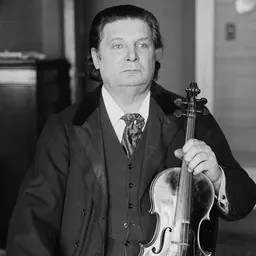
Same field, nearest in time



Contemporaries
People whose lives overlapped Charles Harford Lloyd's



Frequently asked questions
Who was Charles Harford Lloyd?
English composer and organist
When was Charles Harford Lloyd born?
Charles Harford Lloyd was born on 16 October 1849 in Thornbury.
When did Charles Harford Lloyd die?
Charles Harford Lloyd died on 16 October 1919 in Slough.
What was Charles Harford Lloyd's occupation?
Charles Harford Lloyd was a composer.
What nationality was Charles Harford Lloyd?
Charles Harford Lloyd was British.
Sources & further reading
· Wikipedia: Charles Harford Lloyd
· DBpedia: Charles Harford Lloyd
Cite this page
APA: Biography.guide. (2026). Charles Harford Lloyd. https://biography.guide/charles-harford-lloyd/
MLA: "Charles Harford Lloyd." Biography.guide, https://biography.guide/charles-harford-lloyd/.
Chicago: "Charles Harford Lloyd." Biography.guide. https://biography.guide/charles-harford-lloyd/.
Data last updated: 2026-09-20 · Spot an error? Report a correction.
Page generated 2026-09-27 05:20 UTC