
About Charles Francis Richter
Lived 1900 – 1985 (aged 85). Charles Francis Richter was an American seismologist, geologist, mathematician and geophysicist.
Charles Francis Richter (; April 26, 1900 – September 30, 1985) was an American seismologist and physicist. He is one of the creators of the Richter scale, which, until the development of the moment magnitude scale in 1979, was widely used to quantify the size of earthquakes. Inspired by Kiyoo Wadati's 1928 paper on shallow and deep earthquakes, Richter first used the scale in 1935 after developing it in collaboration with Beno Gutenberg; both worked at the California Institute of Technology.
Childhood and education Richter was born in Overpeck, Ohio, on April 26, 1900. Richter had German heritage: his great-grandfather was a Forty-Eighter, coming from Baden-Baden (today in Baden-Württemberg, Germany) in 1848 in the wake of the German revolutions of 1848–1849. Richter's parents Frederick William and Lillian Anna (Kinsinger) Richter, were divorced when he was very young.
Richter was enrolled in the Hobart Boulevard Elementary School. In his early life, he had faced being isolated and without getting time to play with other children. He faced problems of getting along with other children, and had difficulties in properly adjusting to his school. At 13 years old, Richter's mother admitted him to a special preparatory school that was attached to the University of Southern California. With his new school admission, Richter's grades and interest improved, and he kept examples of his school papers such as assignments, tests and exercises. He began his college work at the University of Southern California when he was 16 years old. Just one year later, he transferred to Stanford University, where he studied the field of chemistry.
He grew up with his maternal grandfather, who moved the family (including his mother) to Los Angeles in 1909. After graduating from Los Angeles High School he attended Stanford University and received his undergraduate degree in 1920. In 1928, he began work on his PhD in theoretical physics from California Institute of Technology, but before he finished it, he was offered a position at the Carnegie Institute of Washington.
At this point, he became fascinated with seismology (the study of earthquakes and the waves they produce in the earth). Thereafter, he worked at the new Seismological Laboratory in Pasadena, under the direction of Beno Gutenberg. In 1932, Richter and Gutenberg developed a standard scale to measure the relative sizes of earthquake sources, called the Richter scale. In 1937, he returned to the California Institute of Technology, where he spent the rest of his career, eventually becoming professor of seismology in 1952. "I wasn But someone had to find out where they originated and how big they were, so I did it."
Career In 1923, Robert Millikan gave a series of lectures regarding physics. Richter commented on his eagerness to hear Millikan's lectures and said the result of it was that he gave up his employment and joined California Institute of Technology as a graduate student. According to Susan Zannos, Richter established himself as an excellent student with this decision, and applied his knowledge to new fields. He based his thesis on the subject of Hydrogen bomb, gaining idea from the new ideas of quantum mechanics. Charles Richter then took to the research of physics and became a physics professor. In 1927, the Seismological Laboratory was established in the California Institute by the Carnegie Foundation. Susan Zannos said that the reason the Laboratory was built in California was because as a place where many earthquakes occurred, the location was ideal. Harry O. Wood, an American seismologist, became the director of the lab. Wood asked Millikan to suggest him a young scientist who could serve as a research assistant. Millikan recommended Richter to him. By the time of his recommendation, Richter had not begun to study about earthquakes or the field of seismology, but had experience in quantum mechanics. Richter later told that it was "a happy incident" during an interview with U. S. Geological Survey. With Wood's team, he engaged the routine work of measuring seismograms and locating earthquakes.
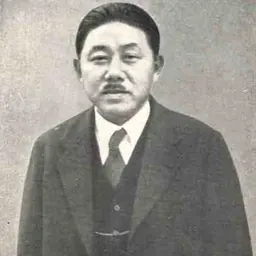
Richter went to work at the Carnegie Institution of Washington in 1927 after Robert Andrews Millikan offered him a position as a research assistant there, where he began a collaboration with Beno Gutenberg. The Seismology Lab at the California Institute of Technology wanted to begin publishing regular reports on earthquakes in southern California and had a pressing need for a system of measuring the strength of earthquakes for these reports. Together, Richter and Gutenberg devised the scale that would become known as the Richter scale to fill this need, based on measuring quantitatively the displacement of the earth by seismic waves, as Kiyoo Wadati had suggested.
The pair designed a seismograph that measured this displacement and developed a logarithmic scale to measure intensity.
Predicting earthquakes Richter was skeptical of scientists who pursued earthquake prediction. At parties Richter was considered "the earthquake man" and rejected regular requests to predict the next earthquake by always responding, "five o .
The Richter scale was published in 1935 and immediately became the standard measure of earthquake intensity. Richter did not seem concerned that Gutenberg's name was not included at first; but in later years, after Gutenberg was already dead, Richter began to insist for his colleague to be recognized for expanding the scale to apply to earthquakes all over the globe, not just in southern California. Since 1935, several other magnitude scales have been developed.
Personal life Richter was an active and avowed naturist. He travelled to many naturist resorts with his wife, who died in 1972. Richter eventually came around to the song, reported its lyricist J. Kent Clark in a 1989 interview. He is buried in Altadena, California's Mountain View Cemetery and Mausoleum.
Works
Don’t just read it —
keep it.
Full-length biographies made to live with: read them, listen on the way to work, watch them tonight.
- E-book
- Audio
- Video
Instant download · yours to keep · every purchase keeps this site free
Important facts
People in Charles Francis Richter's life
Named in this biography and alive at the same time





Related people
Same field, nearest in time



Contemporaries
People whose lives overlapped Charles Francis Richter's




Frequently asked questions
Who was Charles Francis Richter?
American seismologist
When was Charles Francis Richter born?
Charles Francis Richter was born on 26 April 1900 in Overpeck.
When did Charles Francis Richter die?
Charles Francis Richter died on 30 September 1985 in Pasadena.
What was Charles Francis Richter's occupation?
Charles Francis Richter was a seismologist, geologist, mathematician and geophysicist.
What nationality was Charles Francis Richter?
Charles Francis Richter was American.
Sources & further reading
· Wikipedia: Charles Francis Richter
Cite this page
APA: Biography.guide. (2026). Charles Francis Richter. https://biography.guide/charles-francis-richter/
MLA: "Charles Francis Richter." Biography.guide, https://biography.guide/charles-francis-richter/.
Chicago: "Charles Francis Richter." Biography.guide. https://biography.guide/charles-francis-richter/.
Data last updated: 2026-09-26 · Spot an error? Report a correction.
Page generated 2026-09-27 05:15 UTC