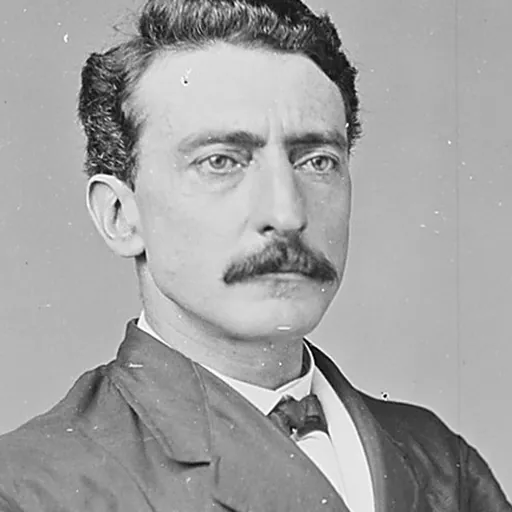
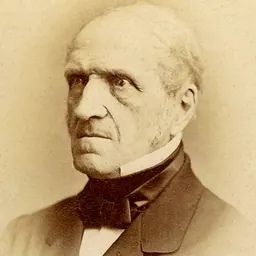
Charles E. Phelps
Union Army general and politician
About Charles E. Phelps
Lived 1833 – 1908 (aged 75). Charles E. Phelps was an American politician, military officer, university teacher, lawyer and judge.
Charles Edward Phelps (May 1, 1833 – December 27, 1908) was a colonel in the Union Army during the Civil War, later received a brevet as a brigadier general of volunteers, served as a city councilman, a U.S. Congressman from the third district of Maryland, and received the Medal of Honor. In later life, he was professor of equity at University of Maryland Law School and served for many years as judge on the Circuit Court of Baltimore.
Early life and education Charles Edward Phelps was born in Guilford, Vermont, on May 1, 1833. His father was John Phelps, a lawyer and Senator in the Vermont State government. At the age of 5, he moved with his parents to Pennsylvania, and at the age of 8 to Maryland, when his mother, Almira Hart Lincoln Phelps,(sister of Emma Willard), became principal of the Patapsco Female Seminary in Ellicott City. He matriculated at Princeton University, where he was admitted to the Zeta Psi fraternity, graduating in 1852. He then studied at Harvard University Law School, graduating in 1853.
Early career Phelps was admitted the Maryland bar association in 1855. He was admitted to practice in the Supreme Court of the United States in 1859.
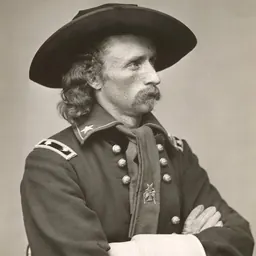
In 1860, Phelps was elected and served on the Baltimore City Council. While leading a charge at Laurel Hill during the Battle of Spotsylvania, Phelps was wounded and taken prisoner. However, he was later rescued by General Phillip Sheridan's cavalry under the immediate command of Brigadier General George Armstrong Custer.
After the war, Phelps became a companion of the Maryland Commandery of the Military Order of the Loyal Legion of the United States.
On March 30, 1898, Phelps was awarded the Medal of Honor in honor of his military service. The citation read,
United States House of Representatives Phelps served in the United States House of Representatives from 1865 through 1869.
In February 1868, he voted against the impeachment of President Andrew Johnson. In his remarks to the House on the day of the impeachment vote, Phelps questioned whether Johnson's attempted at removing Edwin Stanton as secretary of war (which triggered the impeachment) had been indeed constituted a violation of the Tenure of Office Act. He cast doubt that it could be considered have yet been a removal, since Stanton was still fighting it, and also argued that no appointment of a successor to Stanton had actually been made, since Johnson had instead only acted to empower an officer to act in an ad interim capacity. He also questioned whether Stanton would be eligible for protection under the law, as he had been appointed by Abraham Lincoln, not Johnson. Phelps also questioned the constitutionality of the Tenure of Office Act, as he argued it interfered with the presidents' constitutional power to remove officers. Phelps further argued,
Later government work and judgeship In 1872, he served as the state manager of Prince George's County's House of Reformation for Colored Children. In 1876, he served as a commissioner of the Baltimore Public Schools school board.
In 1882, he was appointed by Governor William Thomas Hamilton to serve as an associate judge of the Circuit Court of Baltimore. He held this judgeship until the year he died.
Other ventures In 1869, he established a legal practice with John Van Lear Findlay.
In 1896, Phelps became a charter member of the Maryland State Bar Association.
Phelps taught at University of Maryland Law School from 1884 through 1907, where he was a professor of equity. In 1901, he published the book Falstaff and Equity, relating legal arguments to Shakespeare. In 1907 he received an honorary Doctor of Laws from Princeton University.
Personal life and death In 1868, Phelps married Martha Woodward of Baltimore.
Phelps died on December 27, 1908, at Baltimore, Maryland and was buried at Woodlawn Cemetery, Baltimore.
Don’t just read it —
keep it.
Full-length biographies made to live with: read them, listen on the way to work, watch them tonight.
- E-book
- Audio
- Video
Instant download · yours to keep · every purchase keeps this site free
Important facts
People in Charles E. Phelps's life
Named in this biography and alive at the same time



Related people
Same field, nearest in time




Contemporaries
People whose lives overlapped Charles E. Phelps's



Frequently asked questions
Who was Charles E. Phelps?
Union Army general and politician (1833-1908)
When was Charles E. Phelps born?
Charles E. Phelps was born on 1 May 1833 in Guilford.
When did Charles E. Phelps die?
Charles E. Phelps died on 27 December 1908 in Baltimore.
What was Charles E. Phelps's occupation?
Charles E. Phelps was a politician, military officer, university teacher, lawyer and judge.
What nationality was Charles E. Phelps?
Charles E. Phelps was American.
Sources & further reading
· Wikipedia: Charles E. Phelps
Cite this page
APA: Biography.guide. (2026). Charles E. Phelps. https://biography.guide/charles-e-phelps-politician/
MLA: "Charles E. Phelps." Biography.guide, https://biography.guide/charles-e-phelps-politician/.
Chicago: "Charles E. Phelps." Biography.guide. https://biography.guide/charles-e-phelps-politician/.
Data last updated: 2026-09-21 · Spot an error? Report a correction.
Portrait: Wikimedia Commons · author & licence
Page generated 2026-09-27 05:00 UTC