
About Charles D. Pennebaker
Lived 1825 – 1888 (aged 62). Charles D. Pennebaker was an American lawyer and politician.
Charles David Pennebaker (November 3, 1825 – June 21, 1888) was an American politician, attorney, and soldier. He served in the Kentucky Senate and the Kentucky House of Representatives and played an important role in convincing Kentucky to stay in the Union during the American Civil War. He was a Union colonel during the Civil War and was also Kentucky's military agent in Washington, D.C.
Early life Pennebaker was born in Nelson County, Kentucky on November 3, 1825. He was of German ancestry.
Career Pennebaker was a private and second lieutenant with General John Stuart Williams in the 4th Regiment of the Kentucky Volunteers the Mexican–American War from 1846 to July 1848. He became an attorney in Nelson County, Kentucky, in 1850. However, that firm dissolved in 1861 when both men were elected to the Kentucky Senate.
In March 1854, Pennebaker ran for the Louisville common council from the eighth ward and was elected in April. He was re-elected to the common council in April 1855. In January 1856, the Kentucky Legislature approved his appointed as a notary for Jefferson County.
During a special election to fill a vacancy, Pennebaker was elected to the Kentucky House of Representatives in 1857, representing Jefferson County from January 4, 1858, to 1859. He ran for the Kentucky Senate in 1859 under the Opposition Party ticket. He was elected and served from 1859 to 1861, again representing Jefferson County. He was a member of the senate's judiciary committee.
Pennebaker opposed Kentucky's secession from the Union. Pennebaker was important in getting Kentucky to remain part of the Union.
At the start of the American Civil War in 1861, Pennebaker resigned from the Kentucky Senate. He organized a regiment of at least 700 men by November 1861 as part of the Kentucky State Guard. This regiment was mustered in as the 27th Kentucky Volunteer Infantry Regiment (U.S.A.) in on January 21, 1862, with Pennebaker being elected its colonel. The Louisville Journal noted, "Col. Pennebaker will make an admirable officer; he is a skillful disciplinarian and has endeared him to his soldiers." His horse during the war was Bob, later the subject of the poem "My War-Horse Bob". He was its colonel until April 10, 1864. Despite the newspaper editorial consensus the he should remain in the military and allow a civilian to fill the position, In this capacity, he sought compensation for supplies taken for commissary stores, horses taken for quartermaster stores, and damages in Kentucky that were cause by military action. He also completed applications and presented any claims of soldiers or their heirs for no charge. In October 1866, Pennebaker accompanied Governor Bramlette, General Edward H. Hobson, General George W. Monroe, and Col. Wake Holman on a tour of New York and New Jersey to make political speeches to before 10,000 soldiers and civilians in favor of a return to the former Union.
Although some sources indicated his role as a military agent ended in 1865, In October 1867, he was working on bounties that were still due to soldiers from Kentucky. The Kentucky Senate reaffirmed Pennebaker's position as state claim agent in Washington, D.C. in March 1868; he worked in this capacity for many years. His son Charles became a partner in the firm in 1877. The firm specialized in prosecuting claims against the federal government. She was the daughter of a doctor from New Haven, Kentucky. However, he resigned from the citizen guard in December 1857. Pennebaker served on the national central executive committee of The State and the National Convention of Union Soldiers and Sailors, which was held in Cleveland, Ohio on February 22, 1868. In 1879, he served on the committee that helped organize the 11th annual reunion of the Society of the Army of the Cumberland in Washington, D.C.
In January 1852, Pennebaker was on the committee that invited Lajos Kossuth, the exiled Hungarian freedom fighter, to Louisville. In April 1884, he was elected as one of the founding secretaries of the National Protective League. He was a member of Calvary Episcopal Church in Louisville.
He was "dangerously ill" in July 1869; he recovered but was sick again in early May 1888 with an illness he contracted during the Mexican-American War. Pennebaker died on June 21, 1888, at his home on Corcoran Street in Washington, D.C. He was buried in Cave Hill Cemetery in Louisville, Kentucky.
Don’t just read it —
keep it.
Full-length biographies made to live with: read them, listen on the way to work, watch them tonight.
- E-book
- Audio
- Video
Instant download · yours to keep · every purchase keeps this site free
Important facts
People in Charles D. Pennebaker's life
Named in this biography and alive at the same time

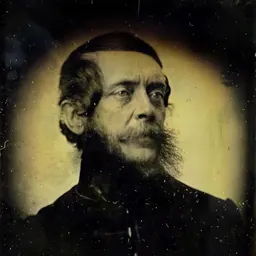
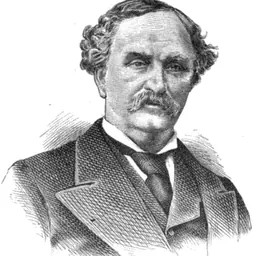
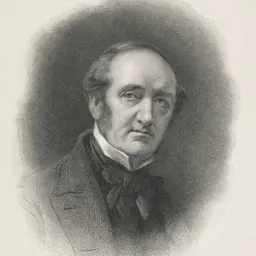
Related people
Same field, nearest in time


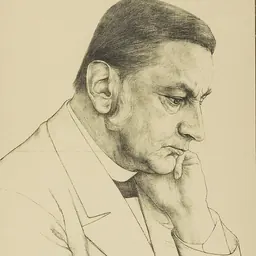


Contemporaries
People whose lives overlapped Charles D. Pennebaker's




Frequently asked questions
Who was Charles D. Pennebaker?
American politician (1825–1888)
When was Charles D. Pennebaker born?
Charles D. Pennebaker was born on 3 November 1825.
When did Charles D. Pennebaker die?
Charles D. Pennebaker died on 21 June 1888.
What was Charles D. Pennebaker's occupation?
Charles D. Pennebaker was a lawyer and politician.
What nationality was Charles D. Pennebaker?
Charles D. Pennebaker was American.
Sources & further reading
· Wikipedia: Charles D. Pennebaker
· DBpedia: Charles D. Pennebaker
Cite this page
APA: Biography.guide. (2026). Charles D. Pennebaker. https://biography.guide/charles-d-pennebaker/
MLA: "Charles D. Pennebaker." Biography.guide, https://biography.guide/charles-d-pennebaker/.
Chicago: "Charles D. Pennebaker." Biography.guide. https://biography.guide/charles-d-pennebaker/.
Data last updated: 2026-09-20 · Spot an error? Report a correction.
Page generated 2026-09-27 05:19 UTC