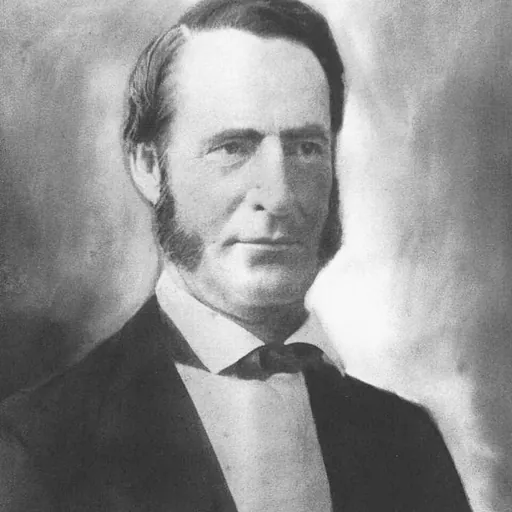
About Charles Coffin Harris
Lived 1822 – 1881 (aged 59). Charles Coffin Harris was an American lawyer, judge and politician.
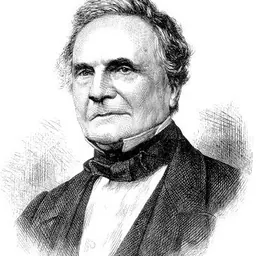
Charles Coffin Harris (1822–1881) was a New England lawyer who became a politician and judge in the Kingdom of Hawaii who firmly supported the monarchy as an independent nation. After serving in a number of cabinet posts, he became chief justice of the supreme court.
Early life Charles Coffin Harris was born June 9, 1822, in Newington, New Hampshire. His father was educator William Coffin Harris (1788–1853) and mother was Mary Johnson. After studying in his father's school in Portsmouth, New Hampshire, he enrolled at Harvard in 1837 and graduated in 1841 when only 19 years old. He taught school for a few years in Portsmouth.
On January 31, 1844, Harris married cousin Harriet Miller Harris, and in 1847 moved to Boston to teach at the Chauncey Hall School while studying law. In 1849 he and two brothers Thomas and Abel sailed to join the California Gold Rush. On a trip to the Hawaiian Islands to obtain produce to sell in California, he stayed behind for what he thought would be a short visit. Younger brother Thomas Aston Harris (born 1824) went on to a career in the steamship business, and served in the American Civil War. Another younger brother Robert Harris (1830–1894) became president of the Chicago Burlington Railroad and then the Northern Pacific Railway.
Lawyer in Hawaii In September 1850 when the Hawaiian Princes Alexander and Lot returned from their trip the United States and Europe, they encouraged Harris to become a lawyer in their kingdom. Harris decided to settle in Honolulu, and on September 23, 1850, became a naturalized citizen of the Kingdom of Hawaii. He sent for his wife and young son who arrived in early 1852. Besides his private law practice, he became a police magistrate for minor offenses in 1852. In 1853, King Kamehameha III was seriously considering annexation by the US, since the islands had been invaded several times by European powers during his reign. Harris instead advocated a free trade treaty while keeping Hawaii a sovereign state. The young princes were less attracted to American influence, because they were subject to racial discrimination in the US, while treated like royalty in Europe. For a few years the family shipping business produced furniture stuffing called pulu from a soft fern that grew in Kahuku. Some time in the 1860s Harris tried to develop an early sugarcane plantation that is now Kaneohe Ranch on the east coast of Oahu with Queen Dowager Kalama. The venture was not a success, but he was able to get title to the Kaneohe land as well.
In the government In 1854 Harris was elected to the house of representatives of the legislature of the Hawaiian Kingdom, and was re-elected until 1862. On August 26, 1862, King Kamehameha IV (former Prince Alexander) appointed him as Attorney General of Hawaii, a post effectively vacant since John Ricord had left in 1847. On November 30, 1862, Harris officially became a member of the Church of Hawaii branch of Anglican Church by new Bishop Thomas Nettleship Staley, two days after the king and queen. This further irritated the conservative Americans who were descended from the early missionaries identified with the Congregational Church.
On March 30, 1867, Harris was made an envoy to the US to help negotiate the treaty he had long advocated. He met former Civil War General Edward M. McCook who was the United States Minister to Hawaii, in San Francisco. They drew up and signed a treaty on May 21, 1867. The ratification of this treaty by the Hawaii legislature was delayed because the presence of the American warship was seen as a show of force.
With the king's influence, he was an investor with fellow American politician John Mott-Smith in the first Hawaiian Hotel in 1872. The government issued bonds to finance its construction after Harris bought the land for the site. It was converted to a YMCA in 1917. In 1926 the building was finally torn down, and it is now the site of the Hawaii State Art Museum. On August 25, 1872, Harris was replaced as foreign minister.
On the death of Kamehameha V at the end of 1872 without naming an heir, the constitution specified an election of a new ruler by the legislature. Harris backed David Kalākaua, who lost the election. The new liberal King Lunalilo had no use for Harris in his cabinet, but died just a year later. On February 18, 1874, King Kalākaua won the next election and appointed Harris to the supreme court of the Kingdom. In 1875, he was awarded the Royal Order of Kamehameha I and the Royal Order of Kalākaua decorations. Her first husband was a son of the namesake company C. Brewer & Co. Frank worked as tax collector and notary public on Oahu, until he purchased the sugarcane plantation at Ōōkala (later called the Kaiwiki Sugar Company) in 1869.
On May 1, 1879, he married Ella Fessenden Tiffany, daughter of his predecessor Elisha Hunt Allen. He died in Honolulu on July 2, 1881, leaving a large estate. After an official state funeral in Saint Andrew's Cathedral on July 5,
Although often remembered outside of Hawaii by Twain's satiric attacks, at his death Harris was honored even by former political opponents such as William Richards Castle, Alfred S. Hartwell, and Albert Francis Judd. Some historians speculate that Harris was a model for the character from New England who becomes active in a medieval kingdom in Twain's novel A Connecticut Yankee in King Arthur's Court. However, in Harris' case, he fought to preserve the monarchy, not overthrow it. Kahuku Ranch was bought by Alfred Wellington Carter as part of Parker Ranch after the unsustainable harvest of pulu quickly collapsed. In the 1950s part of it became the enormous subdivision called Hawaiian Ocean View Estates. After becoming part of the Samuel Mills Damon estate, another large section was sold to expand Hawaii Volcanoes National Park in 2003, and some remains as a tourist accommodation.
Don’t just read it —
keep it.
Full-length biographies made to live with: read them, listen on the way to work, watch them tonight.
- E-book
- Audio
- Video
Instant download · yours to keep · every purchase keeps this site free
Important facts
People in Charles Coffin Harris's life
Named in this biography and alive at the same time







Related people
Same field, nearest in time


Contemporaries
People whose lives overlapped Charles Coffin Harris's

Frequently asked questions
Who was Charles Coffin Harris?
politician, judge, Hawaii
When was Charles Coffin Harris born?
Charles Coffin Harris was born on 9 June 1822 in Newington.
When did Charles Coffin Harris die?
Charles Coffin Harris died on 2 July 1881 in Honolulu.
What was Charles Coffin Harris's occupation?
Charles Coffin Harris was a lawyer, judge and politician.
What nationality was Charles Coffin Harris?
Charles Coffin Harris was American.
Sources & further reading
· Wikipedia: Charles Coffin Harris
· DBpedia: Charles Coffin Harris
Cite this page
APA: Biography.guide. (2026). Charles Coffin Harris. https://biography.guide/charles-coffin-harris/
MLA: "Charles Coffin Harris." Biography.guide, https://biography.guide/charles-coffin-harris/.
Chicago: "Charles Coffin Harris." Biography.guide. https://biography.guide/charles-coffin-harris/.
Data last updated: 2026-09-20 · Spot an error? Report a correction.
Page generated 2026-09-27 05:10 UTC