
About Charles Chauvel
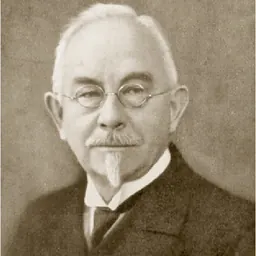
Lived 1897 – 1959 (aged 62). Charles Chauvel was an Australian film director, film producer, screenwriter, film editor, director and actor.
Charles Edward Chauvel (7 October 1897 – 11 November 1959) was an Australian filmmaker, producer, actor and screenwriter and nephew of Australian army General Sir Harry Chauvel. He is noted for writing and directing the films Forty Thousand Horsemen in 1940 and Jedda in 1955. His wife, Elsa Chauvel, was a frequent collaborator on his filmmaking projects.
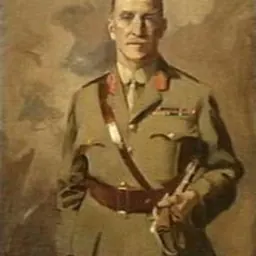
Early life Family Charles Edward Chauvel was born on 7 October 1897 in Warwick, Queensland, the son of James Allan Chauvel and his wife Susan Isabella (née Barnes), pioneer farmers in the Mutdapilly area. He was the nephew of General Sir Harry Chauvel, Commander of the Australian Light Horse and later the Desert Mounted Corps in Palestine during World War I. His father, a grazier, at 53 also enlisted to serve in Palestine and Sinai in World War I. The Chauvels were descended from a French Huguenot family who fled France for England in 1685, and soon established a tradition of serving in the British army. The Australian Chauvels descended from a Charles Chauvel who retired from the Indian Army to New South Wales in 1839 and was a pioneer in the New England region.
Chauvel was educated at the Normanby State School (now the Mutdapilly State School), The Southport School and Ipswich Grammar School in Queensland.
Early film work After leaving school, he worked on Queensland properties, and on his family property when his father was at war, before studying commercial art and taking drama classes in Sydney. He was fascinated by films and pestered a friend, showman Reginald "Snowy" Baker, to give him work as a production assistant; usually, he was the man in charge of the horses. Chauvel worked on The Shadow of Lightning Ridge (1920) and The Jackeroo of Coolabong (1920) with Baker; he also assisted on Robbery Under Arms (1920)
He designed the St Aidan's Church of England in Mutdapilly in 1921 (the church closed in 1974 and is now used as a private residence).
Hollywood Chauvel followed Baker to Hollywood in 1922, at his own expense, and spent some time as a jack of all trades, including working as an extra, a lighting technician, a publicist, and a stunt double. The films he worked on included Strangers of the Night (1923).
Director Moth of Moonbi (1926) Back in Australia after about a year, Chauvel obtained finance from Queensland businessmen and friends to make his first film The Moth of Moonbi. It was a romantic melodrama exploring a theme of the decadent city vs the authentic country. The Moth of Moonbi is a country girl who flutters to the city lights, loses her fortune, but eventually returns home and finds love with her father's trusty stockman.
The film was profitable enough for Chauvel to raise funds for a second film.
Greenhide (1926) In Greenhide a city girl struggles to cope on a cattle station and gradually finds love with her polar opposite, an extremely taciturn bushman. Like Moonbi the film was made in Harrisville near Brisbane, enlisting the locals as extras and using locations around his family property "Summerlands", near the edge of town. While making Greenhide he met Elsa May Wilcox (professional name Elsa Sylvaney), an actress, whom he married in 1927. After their marriage she traveled with him and assisted him on all his films.
Both these silent films were released in 1926 and were reasonably successful in Australia. Unfortunately Chauvel could not arrange for the release of his silent movies in Hollywood because of the transition to sound.
Chauvel returned to Australia and worked as a cinema manager during the Depression.
In the Wake of the Bounty (1933) In 1933 he made his first talkie: In the Wake of the Bounty starring Errol Flynn as Fletcher Christian before Flynn went on to Hollywood. The film mixed re-enactments with documentary, and focused not so much on the mutiny itself as on its consequences. To provide a long postscript to the story of the mutiny, the Chauvels went to Pitcairn Island and shot interesting footage of the descendants, spending three months on the island. He also included footage of bare-breasted Tahitian dancers which caused a temporary problem with the censors.
Heritage (1935) In 1935, Chauvel won a Commonwealth Government competition for Heritage which gave a panoramic view of Australian history. It begins with a character from the earliest days of white settlement (1788), following his struggles, his loves and his marriage, then skips to the modern generation, where a romance between descendants of the original characters completes a circle. The modern hero is struggling to run an outback cattle station, the modern heroine is an expert aviator.
Uncivilised (1936) In 1936 he made Uncivilised, a "jungle story" filmed in Cape York, in Far North Queensland, Australia.
That year also saw the release of Rangle River (1936), based on a script by Charles and Elsa Chauvel.
Forty Thousand Horsemen (1940) The outbreak of war meant that Chauvel turned to war-themed films, making Forty Thousand Horsemen (1940), a tribute to the Australian Light Horse Brigade in Palestine in World War I, in the Cronulla sand dunes. It was both a popular and critical success and was credited with boosting morale. It also launched the career of actor Chips Rafferty.
Chauvel then focused on making a series of propaganda shorts for the Australian war effort including Soldiers Without Uniform (1942).
Sons of Matthew (1949) After the war he made a film about a pioneer family in Queensland, Sons of Matthew (1949), drawing on his own family history
Jedda (1955) In 1955, Chauvel released Jedda, perhaps his best known film. Jedda is a story of an Aboriginal baby girl raised by a white station owner and kept in ignorance of traditional ways and the Aboriginal man who carries her off, even though this is a forbidden "wrong way" marriage, and brings tragedy to both of them.
Jedda was filmed on location in difficult conditions and is considered among Chauvel's best works. It was the first Australian feature film shot in colour, and had to be developed overseas as there were no colour processing facilities in Australia. For Jedda, the Chauvels sought out Aboriginal people for the lead roles; in lead actor Robert Tudawali they found someone with great natural ability. Both these films were made in a period when the Australian film industry had virtually collapsed, unable to compete with imported films.
Legacy In honour of the contribution made to filmmaking by Elsa and Charles Chauvel, the Chauvel Award was created in 1992 to celebrate those who have made an impact on the Australian film industry. It is awarded annually at the Gold Coast Film Festival.
Chauvel Cinema, an art-house cinema in the Sydney suburb of Paddington, is named after him.
Chauvel was posthumously inducted into the Queensland Business Leaders Hall of Fame in 2013.
In 2009 as part of the Q150 celebrations, Charles Chauvel was announced as one of the Q150 Icons of Queensland for his role as an "Influential Artist".
Filmography
Film Year Title Role Notes 1920 Robbery Under Armsactordirected by Kenneth Brampton 1920 The Shadow of Lightning Ridgeactordirected by Wilfred Lucas 1920 The Jackeroo of Coolabongactordirected by Wilfred Lucas 1922 Captain Fly-By-Nightactor 1922 The Man from the Desertactor 1923 Strangers of the Nightactor 1926 The Moth of Moonbidirector / producer / screenwriter 1926 Greenhidedirector / producer / screenwriter 1933 In the Wake of the Bountydirector / producer / screenwriter 1935 Heritagedirector / producer / screenwriter 1936 Unciviliseddirector / producer / screenwriter 1936 Rangle Riverscreenwriter (with Elsa Chauvel)directed by Clarence G. Badger 1937 Screen Testdirector / producer 1940 Forty Thousand Horsemendirector / producer / screenwriter 1942 Soldiers Without Uniformdirector / producerdocumentary short 1942 Power to Windirector / producerdocumentary short 1943 A Mountain Goes to Seadirector / producerdocumentary short 1943 While There is Still Timedirector / producerdocumentary short 1943 Russia Aflamedirector / producerdocumentary short 1944 The Rats of Tobrukdirector / producer / screenwriter 1949 Sons of Matthewdirector / producer / screenwriter 1955 Jeddadirector / producer / screenwriter
Television Year Title Role Notes 1958 Australian Walkaboutdirector / producer / screenwriterproduced for the ABC and BBC
Unmade projects Chauvel announced a number of projects over the years that were not made, including: Conflict – a project for which Chauvel registered scripts in 1930 and 1933 adaptation of the novel Geoffrey Hamlyn about early Australian pioneers a script called The Man from Down Under which Chauvel registered in 1941 adaptation of the novel My Love Must Wait by Ernestine Hill about the life of Matthew Flinders – Chauvel claimed he paid a record price for an Australian novel to get the rights and gave a copy of the novel to Laurence Olivier during his 1948 tour of Australia in an attempt to interest him in playing Flinders the life of boxer Les Darcy starring Tommy Burns adaptation of the novel When Cobb and Co Was King by Will Lawson adaptation of the novel Wards of the Outer March by Kathleen Glasson Taylor, a story of convict-bushranger days ' wartime documentary about the wool industry.
Don’t just read it —
keep it.
Full-length biographies made to live with: read them, listen on the way to work, watch them tonight.
- E-book
- Audio
- Video
Instant download · yours to keep · every purchase keeps this site free
Important facts
Family & relationships
People in Charles Chauvel's life
Named in this biography and alive at the same time



Related people
Same field, nearest in time


Contemporaries
People whose lives overlapped Charles Chauvel's



Frequently asked questions
Who was Charles Chauvel?
Australian filmmaker (1897-1959)
When was Charles Chauvel born?
Charles Chauvel was born on 7 October 1897 in Warwick.
When did Charles Chauvel die?
Charles Chauvel died on 11 November 1959 in Sydney.
What was Charles Chauvel's occupation?
Charles Chauvel was a film director, film producer, screenwriter, film editor, director and actor.
What nationality was Charles Chauvel?
Charles Chauvel was Australian.
Sources & further reading
· DBpedia: Charles Chauvel (filmmaker)
Cite this page
APA: Biography.guide. (2026). Charles Chauvel. https://biography.guide/charles-chauvel/
MLA: "Charles Chauvel." Biography.guide, https://biography.guide/charles-chauvel/.
Chicago: "Charles Chauvel." Biography.guide. https://biography.guide/charles-chauvel/.
Data last updated: 2026-09-25 · Spot an error? Report a correction.
Page generated 2026-09-27 05:06 UTC