
About Charles Boarman
Lived 1795 – 1879 (aged 83). Charles Boarman was an American military officer.
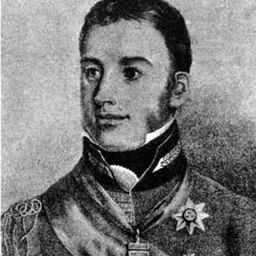
Charles Boarman (December 24, 1795 – September 13, 1879) was a career officer in the United States Navy. He entered the naval service shortly before the War of 1812 and served until 1876, subsequently retiring as a rear admiral. He held a number of important posts, both in peace and wartime, in the Mediterranean, West Indies and Brazil Squadrons and as commandant of the Brooklyn Navy Yard. He was also assigned to special duty during the American Civil War and a member of the U.S. Naval Board at Washington, D.C.
After attending naval school at the Washington Navy Yard, Boarman saw service as a young midshipmen aboard during the War of 1812 and later took part in anti-piracy operations in the early 1820s. He commanded a number of warships between 1827 and 1850, most notably, during the Mexican–American War. In 1876, Boarman was promoted to rear admiral on the retired list and died in Martinsburg, West Virginia, three years later.
He was among several of Catholic background, such as John Cassin, Patrick McDonough, and Philemon C. Wederstrandt, to become high-ranking naval officers in the early years of the U.S. Navy. He was also, at the time of his death, the longest serving naval officer on the Navy Register with 68 years service. The Boarman family home, the Boarman House, occupied by the family for over a century, is a state historical landmark in West Virginia.
Early life and career Charles Boarman was born in Bryantown, Maryland, on December 24, 1795. He was the son of Mary (née Edelen; c. 1754 – April 23, 1836) and Charles Boarman Sr. (1751 – 1819), a professor at Georgetown College. The Boarmans were among the oldest families in colonial Maryland. Its patriarch, Major William Boarman (1630–1709), was an officer and administrator under Lord Baltimore, first arriving in the colony in 1645, and became a major landholder in present-day Charles County. Many of Charles Boarman's relatives were in the clergy including his uncle Rev. Sylvester Boarman and distant cousins Rev. Father Edelen and Rev. Cornelius Thomas, the latter a rector of St. Anne's Church in Baltimore. Boarman's aunt Sallie Edelen was a Sister in the Poor Clares in France before having to flee the country during the Reign of Terror; four of his cousins were among the first women to enter Baltimore's Carmelite Convent. In August of that year, on behalf of Boarman's father, Brent wrote to then United States Secretary of the Navy Paul Hamilton endorsing the commission. He was one of several Georgetown alumni, including Thomas Blackstone, William Ford, Thomas Robinson, John Rogers, and Clement Sewall to participate in the war.
Service in the Mediterranean, West Indies, and Brazil squadrons Boarman returned to Erie at the end of the war as part of the Mediterranean Squadron and won promotion to lieutenant on March 5, 1817. After a brief time sailing with the West India Squadron on the sloop he was stationed at the Washington Navy Yard.
Boarman received his first command, USS Weazel (1827), and then transferred to the frigates (1828) and (1829), both flagships of the Mediterranean Squadron. In 1830, he was made executive officer of the Brazil Squadron's flagship . In September, he took temporary command of while Captain John Gallagher left to testify in the court martial of fellow Captain Beekman V. Hoffman of . He went back to Hudson after Gallagher's return and remained on board until 1836 when he was reassigned to the West India Squadron and given command of the schooner . On February 9, 1837, he was made a full commander, and in 1840 captained the sloop .
Four years later, on March 29, 1844, Boarman won his captain's commission and assumed command of the Brazil Squadron's flagship . Boarman held this command throughout the Mexican–American War In the four-year period he and his family were stationed in Brooklyn one of his daughters, Mary Jane Boarman, began a relationship with William Henry Broome, longtime deputy collector of the New York Custom House; the two may have been introduced through Broome's brother John L. Broome who was serving as a marine lieutenant at the navy yard. They were married in a modest ceremony at the Commandant's House, officiated by Archbishop John Hughes, on October 18, 1853; the family regularly attended Sunday Mass at St. James' Cathedral, in all kinds of weather, where Boarman was a pew holder.
During his tenure at the navy yard Boarman supervised the fitting out of the Japan expedition under Commodore Matthew C. Perry. Four months after this incident, on September 18, 1855, Boarman was placed on the reserve list, less than a month before turning over command of the yard to Captain Abraham Bigelow, holding the rank of captain. His grandson Dr. Charles Boarman Harris (1857–1942), a well known pioneer physician in northwestern Minnesota and the Dakota Territory, helped establish the oldest settlement in the state North Dakota. Andrew "Andy" F. Boarman (1910–1999), a popular banjo and bluegrass musician, was the great-grandson of Charles Boarman.
At the time of his death Boarman had been the longest serving officer in the U.S. Navy Register, with over 68 years of service, and the U.S. Naval Department issued a special general order to recognize his passing. It is one of the oldest brick buildings in downtown Martinsburg and part of the city's walking tour of Civil War landmarks. Originally built by Philip Nadenbousch, it was purchased by Lieutenant Charles Boarman in 1832 and remained in the Boarman family for over a century before being sold to the King's Daughters Circle in December 1943, and then to the Sisters of the Holy Ghost in 1953; the building was used for apartments and various offices, including an employment office for returning World War II servicemen, during this time. It was purchased in 1980 by West Virginia nonprofit corporation Associates for Community Development and, after extensive restorations, housed the Boarman Arts Center and the Martinsburg-Berkeley County Convention and Visitors Bureau from 1987 to 2001; the building featured Boarman's navigator's log and two portraits, one when he bought the house as a young lieutenant and the other as an older officer. In October 2005, the house was sold to a Leesburg, Virginia, couple, Chester and Jeanne Martin, who planned to turn it into the city's first bed and breakfast.
Don’t just read it —
keep it.
Full-length biographies made to live with: read them, listen on the way to work, watch them tonight.
- E-book
- Audio
- Video
Instant download · yours to keep · every purchase keeps this site free
Important facts
People in Charles Boarman's life
Named in this biography and alive at the same time


Related people
Same field, nearest in time

Contemporaries
People whose lives overlapped Charles Boarman's






Frequently asked questions
Who was Charles Boarman?
US Navy Rear Admiral
When was Charles Boarman born?
Charles Boarman was born on 24 December 1795 in Bryantown.
When did Charles Boarman die?
Charles Boarman died on 13 September 1879 in Martinsburg.
What was Charles Boarman's occupation?
Charles Boarman was a military officer.
What nationality was Charles Boarman?
Charles Boarman was American.
Sources & further reading
Cite this page
APA: Biography.guide. (2026). Charles Boarman. https://biography.guide/charles-boarman-military-officer/
MLA: "Charles Boarman." Biography.guide, https://biography.guide/charles-boarman-military-officer/.
Chicago: "Charles Boarman." Biography.guide. https://biography.guide/charles-boarman-military-officer/.
Data last updated: 2026-09-20 · Spot an error? Report a correction.
Page generated 2026-09-27 05:21 UTC