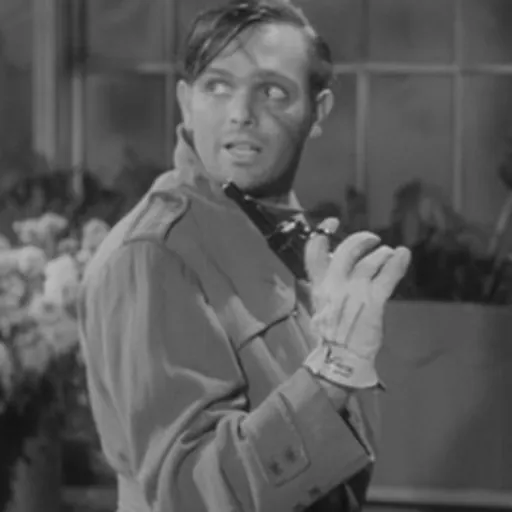
About Charles B. Griffith
Lived 1930 – 2007 (aged 77). Charles B. Griffith was an American film director, actor, screenwriter, film actor, film producer and writer.
Charles Byron Griffith (September 23, 1930 – September 28, 2007) was an American screenwriter, actor, and film director. He was best known for writing Roger Corman productions such as A Bucket of Blood, The Little Shop of Horrors (1960), and Death Race 2000 (1975).
He was credited with 29 movies, but is known to have written many more. He had also directed at least six films, acted in six films, was second unit director in six films, produced three films, and was the production manager of two films.
During the late fifties and early sixties, Griffith created both redneck classics such as Eat My Dust! and black comedies such as A Bucket of Blood and The Little Shop of Horrors. He had a small role in It Conquered the World, which he also wrote, as Dr. Pete Shelton.
Griffith died on September 28, 2007, in San Diego, aged 77, from a heart attack
Quentin Tarantino dedicated his film Death Proof to Griffith, whom he referred to as one of his main influences and called him "the father of redneck cinema".
Biography
Early life Griffith was born into a family of actors and performers: his mother, Donna Damerel, and grandmother, Myrtle Vail, were actresses, his father was in vaudeville and his grandfather was a circus performer. His mother died in childbirth in 1941, and Griffith was raised by his grandmother and attended military school.
He broke into the industry writing scripts for the radio serial, Myrt and Marge, in which his mother and grandmother had appeared as actresses. He then worked on the TV adaptation on the serial which ended up not being filmed.
Meeting Roger Corman Griffith began writing film scripts, which an actor friend of his, Jonathan Haze showed to Roger Corman, who hired Griffith as a writer. He wrote two Westerns for Corman: Three Bright Banners, based on the Battle of Brownsville, and Hangtown. Neither was made, but Corman hired Griffith to do an uncredited rewrite on It Conquered the World (Griffith says he asked to take his name off).
He received his debut credit with Gunslinger (1955), a Western about a female sheriff. He wrote the script with a partner, Mark Hanna, with whom he worked for the next few years, although Griffith later claimed that he did most of the writing while Hanna did the selling.
"I got into the habit of writing very quickly without realising it and, because I was raised in a radio family, I didn't know that you were supposed to take a long time to write a film script", said Griffith.
Columbia Films Following his success with Corman, Columbia Pictures signed Griffith to a contract as producer and director. Jonathan Haze later recalled Griffith had a lawyer friend, Art Sherman, who met Gordon Stolberg, a vice president and Columbia, and " sold Stolberg on the idea that Chuck was the talent behind Roger Corman. At that point, Columbia was making a lot of Sam Katzman movies and Art sold Columbia on the idea that Chuck could do better than Katzman, and cheaper. So, they gave him a two-picture deal. Had he come through and he had really done what he said he was going to do. Chuck would have had it really made." According to Charles Griffith They told me to make a list of 100 titles to see if I could do it. Once I did that, they picked out two that would send me on a distant location in Hawaii because they knew I couldn't make a picture out of the promised budgets: $85,000/black and white and $90,000/color. I really don't want to get into the Columbia pictures because they thought I was putting them on. Roger thought I told them that I taught him everything he knew, whereas it was actually the other way around.
Haze said "both pictures ran over-budget and were not that hot. His casting was bad." However Corman continued to use Griffith on other projects: a third black comedy, Creature from the Haunted Sea (1961) – which used the Naked Paradise structure – and Atlas (1962), a sword-and-sandal movie shot in Greece.
Years overseas In 1960 Griffith produced an Arab-Israeli war film with regular collaborator Mel Welles but they were picketed by unions and had to shut down. Griffith and Melles sued the union and settled out of court. Griffith moved to Israel to finish the movie but was unable to. He wound up living there for two years, writing a couple of films before Corman rehired him to work on the crew of The Young Racers (1963).
Griffith spent the next few years in Europe. He did some second unit work on Corman's The Secret Invasion (1964) and co-wrote The She Beast (1966), the debut feature for director Michael Reeves.
"I was lazy", he admitted later. "Instead of trying to write an A-picture and sell it on the market, I'd just go back and get another assignment from Roger."
Return to Hollywood He returned to Los Angeles and wrote The Wild Angels (1966) for Corman, the first "biker" movie (although Peter Bogdanovich claims to have rewritten it). It was enormously successful at the box office. Griffith wrote a follow-up, Devil's Angels (1967), produced by Corman and directed by Daniel Haller.
He did some uncredited rewrites of Barbarella (1968) He wrote The Swinging Barmaids (1975), had a small role in Hollywood Boulevard (1976), then wrote and directed the car chase movie, Eat My Dust! (1976), a massive hit for Corman's New World Pictures.
Less successful was Up from the Depths (1979) shot in the Philippines for Corman, which Griffith directed. For the Cannon Group he wrote and directed the comedy, Dr. Heckyl and Mr. Hype (1980) with Oliver Reed. He directed another car chase film for Corman, Smokey Bites the Dust (1981).
Later years From the 1980s onwards Griffith concentrated on writing books and traveling as opposed to writing screenplays.
In 1982 a stage adaptation of Little Shop of Horrors premiered and went on to enjoy great success, with many productions all over the world. The producers secured the rights from Roger Corman but Griffith was originally not part of the arrangement. Griffith, sued the makers of the musical, and wound up being granted "one-fourth of one percent" of the takings as a royalty. "It has kept me going since 1983" said Griffith in the late 1990s – although in 1999 he was claiming the deal had lapsed.
His last credit was directing for Corman, Wizards of the Lost Kingdom II (1989).
Appraisal Jonathan Haze later praised Griffith: He was very creative. He wrote really funny dialogue, and he was fast—really fast... He would write a screenplay in a couple of weeks. Chuck was very good and very good for that time in film history. He was an innovator. He thought up those really funny, really squirrelly ideas—like the plant that eats people. Quentin Tarantino was once asked what writers he admired; he listed Robert Towne, Elmore Leonard and Griffith.
"Griffith's scripts were very imaginative and often quirky and kind of subversive, and when you look at any list of Roger Corman's early pictures, those were the ones that put Corman on the map", said Tom Weaver. Roger Corman later praised him as "A good friend and the funniest, fastest and most inventive writer I ever worked with. His offbeat humor was undoubtedly a big part of the reason a few of my early films... acquired "cult classic" status. We had a lot of fun working together to come up with these stories."
Personal life Griffith died of a heart attack in 2007. He was survived by a wife Marmory James, a daughter, Jessica Griffith, and four grandchildren. His daughter emigrated to Australia and Griffith spent some time there in the late 1990s.
Filmography
It Conquered the World (1956) – also actor Gunslinger (1956) – with Mark Hanna Not of This Earth (1956) – with Mark Hanna – also actor Flesh and the Spur (1956) – with Mark Hanna Teenage Doll (1956) Naked Paradise (1957) – with Mark Hanna Attack of the Crab Monsters (1957) – also actor, underwater sequences Rock All Night (1957) The Undead (1957) – with Mark Hanna Ghost of the China Sea (1958) – also produced Forbidden Island (1959) – also produced, directed Beast from Haunted Cave (1958) Ski Troop Attack (1959) A Bucket of Blood (1959) The Little Shop of Horrors (1960) – also actor, 2nd unit The Troubled Giants Creature from the Haunted Sea (1961) Atlas (1962) – also actor, 2nd unit The Paratroopers (1962) Frontier Ahead (1963) The Young Racers (1963) – 2nd unit only The Secret Invasion (1964) – 2nd unit only The She Beast (1965) – also 2nd unit The Wild Angels (1966) Devil's Angels (1966) Barbarella (1968) Death Race 2000 (1975) – also actor, 2nd unit The Swinging Barmaids (1975) Hollywood Boulevard (1976) – actor only Eat My Dust! (1976) – also directed Up from the Depths (1979) – also directed Dr. Heckyl and Mr. Hype (1980) – also directed Smokey Bites the Dust (1981) – also directed, actor Eating Raoul (1982) – actor only Wizards of the Lost Kingdom II (1989) – also directed
Unmade screenplays Three Bright Banners – a Western about the Confederate incursion into Mexico at Brownsville, written for Roger Corman – Griffith's first screenplay Hang Town – a Western written for Roger Corman – Griffith's second screenplay Devil on Horseback (1955) – a Western written for Roger Corman about bandit Juan Cortina – meant to star Montgomery Clift and Pedro Armendáriz The Nth Man (1957) – adaptation of a novel about a giant man; Griffith wrote the first draft then left the project which was written by Mark Hanna and Bert I. Gordon as The Amazing Colossal Man (1957) Flash, Son of Hitler Mind Out of Time Part Time Mother – script for Roger Corman's Filmgroup, based on a story by Mitchell Healy, about a working widowed mother The Gold Bug (1964) – from the novel by Edgar Allan Poe, written for Roger Corman to star Vincent Price, Basil Rathbone and Peter Lorre The Trip (1966) – the first two drafts of the script not used in the final film Hit the High Road (1970) – a comedy drama to be produced by Tamara Assayev and directed by Jimmy Murakami, about two teenage girls The Mouldering Mistress of Wier Who Stole Irving? – based on a play by Menahem Golan and meant to star Groucho Marx Roger the Rager – comedy about road rage Two on the Isle – a comedy Out of this World – described by Griffith as "a very large scale science fiction film" The Real McCoy Oy Vey, My Son Is Gay – described by Griffith as "the Jewish La Cage aux Folles, written for Cannon.
Don’t just read it —
keep it.
Full-length biographies made to live with: read them, listen on the way to work, watch them tonight.
- E-book
- Audio
- Video
Instant download · yours to keep · every purchase keeps this site free
Important facts
People in Charles B. Griffith's life
Named in this biography and alive at the same time




Related people
Same field, nearest in time

Contemporaries
People whose lives overlapped Charles B. Griffith's
Frequently asked questions
Who was Charles B. Griffith?
American screenwriter (1930–2007)
When was Charles B. Griffith born?
Charles B. Griffith was born on 23 September 1930 in Chicago.
When did Charles B. Griffith die?
Charles B. Griffith died on 28 September 2007 in San Diego.
What was Charles B. Griffith's occupation?
Charles B. Griffith was a film director, actor, screenwriter, film actor, film producer and writer.
What nationality was Charles B. Griffith?
Charles B. Griffith was American.
Sources & further reading
· Wikipedia: Charles B. Griffith
· DBpedia: Charles B. Griffith
Cite this page
APA: Biography.guide. (2026). Charles B. Griffith. https://biography.guide/charles-b-griffith/
MLA: "Charles B. Griffith." Biography.guide, https://biography.guide/charles-b-griffith/.
Chicago: "Charles B. Griffith." Biography.guide. https://biography.guide/charles-b-griffith/.
Data last updated: 2026-09-20 · Spot an error? Report a correction.
Portrait: Wikimedia Commons · author & licence
Page generated 2026-09-27 04:57 UTC