
About Chandrashekhara Kambara
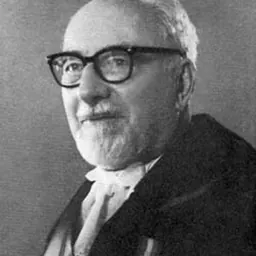
Born 1937. Chandrashekhara Kambara is an Indian film director, poet, translator, writer, playwright and professor.
Early life Chandrashekhara Kambara was born in kannada-speaking family in Ghodageri, a village in Belgaum district of Bombay Presidency (today in Karnataka). He was the third son in the family, with brothers Parasappa and Yallappa who still reside in the small house belonging to the Kambara family in the village. From an early age, Kambara was interested in folk arts, local culture and ritual. His favorite Kannada writers include Kumara Vyasa, Basava, Kuvempu and Gopalakrishna Adiga and among English writers, it is W. B. Yeats, William Shakespeare and Federico García Lorca. but Jagadguru Siddaram Swamiji of Savalagi Matha blessed Kambara and took care of all his primary and high school educational expenses which is why Kambara honours the seer in many of his writings.
Career After a brief stint in teaching in the University of Chicago, he taught in Bangalore University for over two decades and was a Fulbright scholar.
He is a strong supporter of imparting school education with Kannada language as the medium of instruction. His justification for this stance is that only mother tongue can provide an "experience," which is an integral part of learning and learning through any other language only gives people "information," which makes them less competent. This concurs with UNESCO's recommendation that "providing education in a child's mother tongue is a critical issue."
Works Kambara has to his credit 25 plays, 11 anthologies of poems, 5 novels, 16 research works and several scholarly write-ups on folk theatre, literature and education. His most recent novel, Shikhar Soorya, is rated among the best Kannada novels. and to Tamil, Hindi, Marathi and Rajasthani by the Sahitya Akademi, New Delhi. His novel "Singarevva Mattu Aramane" translated as Kulothe Chingaramma, to Malayalam by C Raghavan, is one of his works that has become popular in Kerala.
Apart from his literary career, Kambara has been associated with direction of feature films. His directorial work in many movies on the plays scripted by him; he has directed films such as Karimayi, Sangeeta and Kadu Kudare. Jeeke Maastara Pranaya Prasanga. Two of his plays which have been made into television series. His contributions include many documentaries for the Government of Karnataka and Government of India.
Shivapura is an imaginary utopian village which continues to be a character, a metaphor and the locale in most of his works. It forms the locus of his poems and tales. In his characterisation, Lord Shiva and Parvati visit the place and bless the villagers. Even Rama, when he was going to Sri Lanka in search of Sita, visits the village en route. Sangeet Natak Akademi Fellowship (2011) Jnanpith Award (2010) Padma Shri (2001) Sahitya Akademi Award (1991) Sangeet Natak Akademi Award (1983)
State awards Kadammanitta Ramakrishnan Award (Kerala, 2018) Sangeet Natak Akademi Fellowship (Akademy Ratna Award, 2011) Devaraj Urs Award (Karnataka, 2007) Joshua Sahitya Puraskaram (Andhra Pradesh, 2005) Nadoja Award (2004) Pampa Award (2004) Sant Kabir Award (2002) Masti Award (Karnataka, 1997) Janapada and Yakshagana Academy Award (1993) Karnataka Sahitya Academy (1989) Rajyotsava Award (Karnataka, 1988) Nandikar Award (Calcutta, 1987) Karnataka Natak Academy (1987) Kumaran Ashan Award (Kerala, 1982) Kannada Sahitya Parishat (1975)
Five of his books have been awarded by the Karnataka Sahitya Academy. His well-known play Jokumaraswamy has won the "Kamaladevi Chattopadhyaya Award" of Natya Sangh as the "Best Play of the Year" in India in the year 1975. Another popular play Jaisidanayaka won the Vardhamaana Prashasti as the "Best Book of the Year" – 1975 in Karnataka.
His Saavirada Neralu won the "Ashan Award" (Kerala) as the best collection of poems in 1982. He won the K.V. Shankare Gowda Award for Theatre in 1990. He is the recipient of the Sangeet Natak Akademi Award, New Delhi,
Kambara received the eighth Jnanpith Award for the Kannada language, the highest literary honour conferred in India, in September 2011 for the year 2010. The prestigious award which was instituted in 1961, carries a cheque for 750,000, a citation and a bronze replica of goddess Vagdevi. The Chief Minister of Karnataka, D. V. Sadananda Gowda was among the many dignitaries who wished him well on the occasion of receiving this award. At a felicitation ceremony held a week after winning the award, the Government of Karnataka announced that it will reprint all works of Kambara, including his plays and make them available at all government school libraries. His works will also be translated to different languages. A drama festival featuring his plays will be staged to honour the laureate.
List of works His contribution to Kannada literature in the field of poetry, plays, novels and stories, and on his research and political perceptions are listed below. Maarikadu
Novels Anna Tangi – 1956 Karimaayi – 1975 (Filmed) G.K. Maastarara Pranaya Prasanga – 1986 (filmed for Doordarshan, translated to Hindi by Vidya Prakashan Mandir, New Delhi) Singarevva Mattu Aramane – 1982 (State Academy of Literature Award, translated to English by Katha Books, New Delhi in 2002, Hindi by Radhakrishna Prakashan, New Delhi in 1984 and to Malayalam by DC Books, Kottayam in 1999 as Kulothe Chingaramma) (Filmed by T. S. Nagabharana) Shikhara Soorya – 2007 (published by Akshara Prakashana and second edition by Ankita Pustaka) Shivana Dangura - 2015
Research and critical perceptions
Uttara Karnataka Janapada Rangabhumi – 1980 Sangya Balya – 1966 Bannisi Hadavva Nana Balaga – 1968 Bayalaatagalu – 1973 Matado Lingave – 1973 Namma Janapada – 1980 Bandire Nanna Jayolage – 1981 Kannada Folklore Dictionary (2 volumes) – 1985 Bedara Huduga Mattu Gilli – 1989 (State Academy of Literature Award) Lakshapathi Rajana Kathe – 1986 Kasigondu Seru – 1989 Nelada Mareya Nidhana – 1993 Brihaddesiya Chintana – 2001 An Anthology of Modern India Plays for the National School of Drama – 2000 Desheeya Chintana – 2004 (collection of articles on culture and literature. Published by Ankita Pustaka) Tudi Irada Daari - 2009 Marave Marmarave – 2007 Idu Desi – 2010 Smit - 1968
Don’t just read it —
keep it.
Full-length biographies made to live with: read them, listen on the way to work, watch them tonight.
- E-book
- Audio
- Video
Instant download · yours to keep · every purchase keeps this site free
Important facts
People in Chandrashekhara Kambara's life
Named in this biography and alive at the same time
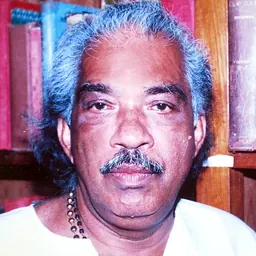



Related people
Same field, nearest in time


Contemporaries
People whose lives overlapped Chandrashekhara Kambara's




Frequently asked questions
Who is Chandrashekhara Kambara?
Indian writer
When was Chandrashekhara Kambara born?
Chandrashekhara Kambara was born on 2 January 1937 in Gokak.
What is Chandrashekhara Kambara's occupation?
Chandrashekhara Kambara is a film director, poet, translator, writer, playwright and professor.
What nationality is Chandrashekhara Kambara?
Chandrashekhara Kambara is Indian.
Sources & further reading
· Wikipedia: Chandrashekhara Kambara
· DBpedia: Chandrashekhara Kambara
Cite this page
APA: Biography.guide. (2026). Chandrashekhara Kambara. https://biography.guide/chandrashekhara-kambara/
MLA: "Chandrashekhara Kambara." Biography.guide, https://biography.guide/chandrashekhara-kambara/.
Chicago: "Chandrashekhara Kambara." Biography.guide. https://biography.guide/chandrashekhara-kambara/.
Data last updated: 2026-09-20 · Spot an error? Report a correction.
Page generated 2026-09-27 05:28 UTC