
About Chanchal Kumar Majumdar
Lived 1938 – 2000 (aged 61). Chanchal Kumar Majumdar was an Indian physicist.
Chanchal Kumar Majumdar (11 August 1938 – 20 June 2000) was an Indian condensed matter physicist and the founder director of S.N. Bose National Centre for Basic Sciences. Known for his research in quantum mechanics, Majumdar was an elected fellow of all the three major Indian science academies – the Indian National Science Academy, the National Academy of Sciences, India, and the Indian Academy of Sciences – as well a member of the New York Academy of Sciences and the American Physical Society.
Majumdar was the mentor of Dipan Ghosh with whom he co-developed the Majumdar–Ghosh model, an extension of the Heisenberg model which improved upon the latter, and was a protege of Walter Kohn and Maria Goeppert-Mayer, both Nobel laureates. The Council of Scientific and Industrial Research, the apex agency of the Government of India for scientific research, awarded him the Shanti Swarup Bhatnagar Prize for Science and Technology, one of the highest Indian science awards, for his contributions to Physical Sciences in 1976.
Biography
C. K. Majumdar was born on 11 August 1938 in Calcutta in the Bengal Presidency of British India to Sita and Nirmal Kanti Majumdar, a political science professor, as one of their three sons. He and his brothers, Ujjal and Mukul, did well in their studies. He did his schooling at C.M.S St. John's High School in Krishnanagar and completed his early college education in Calcutta at Presidency College and the Rajabazar Science College, University of Calcutta.
After undertaking postgraduate research at the Saha Institute of Nuclear Physics during 1960–61, he enrolled at the University of California, San Diego and worked at the laboratory of Walter Kohn, who would go on to receive a Nobel Prize in Chemistry in 1998; Kohn was his thesis supervisor and their relationship lasted Majumdar's lifetime. Majumdar's research on the effect of interactions on positron annihilation in solids guided by Maria Goeppert-Mayer, who had won the Nobel Prize for Physics in 1963, earned him a PhD in 1965, and he did his post-doctoral work at Carnegie Mellon University (then known as Carnegie Institute of Technology) while continuing his work with Kohn for a while.
On his return to India in 1966, Majumdar joined the Tata Institute of Fundamental Research as an associate professor, where he stayed until his move to University of Calcutta in 1975. In between, he had a short stint at the University of Manchester in 1969–70, working alongside Sam Edwards.
At Calcutta University, Majumdar served as the Palit Professor of Physics at the University College of Science, Technology & Agriculture, and as the head of the department of magnetism and solid state physics of the Indian Association for the Cultivation of Science (IACS), carrying out his research at the Palit Laboratory of IACS and at the Variable Energy Cyclotron Centre. When the Department of Science and Technology established the S.N. Bose National Centre for Basic Sciences (SNBNCBS), an autonomous institute for basic research in mathematics, Majumdar was appointed as its first director in 1987.
After retirement from regular service, Majumdar served as a senior scientist of the Indian National Science Academy at the Indian Statistical Institute, but his stint there was short-lived. ), and his association with Majumdar resulted in the development of the Kohn-Majumdar theorem, which explained the continuity in a Fermi gas in relation to its bound and unbound states. They described the theorem in an article, Continuity between Bound and Unbound States in a Fermi Gas, published in Physical Review in 1965.
Later, during his days at TIFR, Majumdar guided Dipan Ghosh on Magnetic Hamiltonians for the latter's doctoral studies. Together they developed the Majumdar–Ghosh model, an extension of the Heisenberg model, which serves as a stepping stone to a broader understanding of complex spin models. A year later, Majumdar worked on non-Debye stress relaxation of glassy systems along with Samuel Edwards, which also resulted in the publication of a notable article.
Majumdar used scattering theory techniques to study bound magnon states, and his findings have since been experimentally verified. the Mössbauer effect determination of the Fe(II) and Fe(III) ratio, the determination of critical parameters of gas-liquid phase transition, the Ising model of ferromagnetism, and the development of a theoretical method for measuring the Fermi momentum of metals.
His studies have been documented by way of a number of articles and the article repository of the Indian Academy of Sciences has listed 45 of them. Majumdar also published two books, Annihilation of Positrons in Metals and S N Bose: The Man and His Work, and contributed chapters to books published by others.
On the academic front, Majumdar was instrumental in modernising the physics laboratories at Calcutta University. He was the president of the Indian Physical Society (1988–90) and served as an executive council member of the Raman Centre for Applied and Interdisciplinary Sciences.
Controversy Towards the end of his career at S. N. Bose Centre, he faced allegations of misappropriation of funds. The same year, he was elected a Fellow of the Indian Academy of Sciences. He received the M. N. Saha Medal of the Asiatic Society in 1978 and was selected as a National Lecturer by University Grants Commission (UGC) the same year; the P. A. Pandya Award of the Indian Physics Association reached him a year later. and in 1983 the UGC honoured him again with the Meghnad Saha Award for Research in Theoretical Sciences. He became an elected fellow of the American Physical Society and delivered the Santanu Ghosh Memorial Lecture of the Indian Science News Association, Calcutta, both honours coming in 1991. The Indian Science Congress Association awarded him the Satyendranath Bose Birth Centenary Award in 1997. Indian Physical Society and the New York Academy of Sciences. An issue of Physics Letters B in 2000, the year of his death, was published as a festschrift on him.
To commemorate his 60th birthday, an international conference on statistical physics, Statphys – Calcutta III, was held at S. N. Bose Centre in January 1999. A year after his death, the Indian Statistical Institute organised a Workshop on Strongly Correlated Electron Systems to honour his memory.
Selected bibliography Books
Chapters
Articles
Don’t just read it —
keep it.
Full-length biographies made to live with: read them, listen on the way to work, watch them tonight.
- E-book
- Audio
- Video
Instant download · yours to keep · every purchase keeps this site free
Important facts
People in Chanchal Kumar Majumdar's life
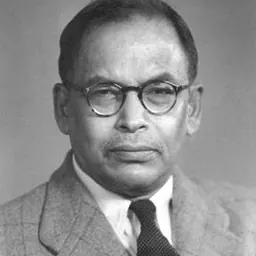
Named in this biography and alive at the same time


Related people
Same field, nearest in time




Contemporaries
People whose lives overlapped Chanchal Kumar Majumdar's



Frequently asked questions
Who was Chanchal Kumar Majumdar?
Indian physicist
When was Chanchal Kumar Majumdar born?
Chanchal Kumar Majumdar was born on 11 August 1938 in Kolkata.
When did Chanchal Kumar Majumdar die?
Chanchal Kumar Majumdar died on 20 June 2000 in Kolkata.
What was Chanchal Kumar Majumdar's occupation?
Chanchal Kumar Majumdar was a physicist.
What nationality was Chanchal Kumar Majumdar?
Chanchal Kumar Majumdar was Indian.
Sources & further reading
· Wikipedia: Chanchal Kumar Majumdar
· DBpedia: Chanchal Kumar Majumdar
Cite this page
APA: Biography.guide. (2026). Chanchal Kumar Majumdar. https://biography.guide/chanchal-kumar-majumdar/
MLA: "Chanchal Kumar Majumdar." Biography.guide, https://biography.guide/chanchal-kumar-majumdar/.
Chicago: "Chanchal Kumar Majumdar." Biography.guide. https://biography.guide/chanchal-kumar-majumdar/.
Data last updated: 2026-09-20 · Spot an error? Report a correction.
Page generated 2026-09-27 05:12 UTC