
About Chalmers Johnson
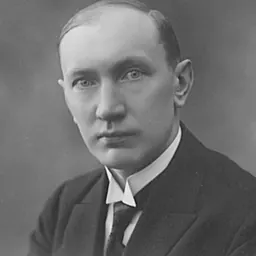
Lived 1931 – 2010 (aged 79). Chalmers Johnson was an American political scientist, consultant, historian, university teacher and economist.
Chalmers Ashby Johnson (August 6, 1931 – November 20, 2010) was an American political scientist specializing in comparative politics, and professor emeritus of the University of California, San Diego. He served in the Korean War, was a consultant for the CIA from 1967 to 1973 and chaired the Center for Chinese Studies at the University of California, Berkeley from 1967 to 1972. He was also president and co-founder with Steven Clemons of the Japan Policy Research Institute (now based at the University of San Francisco), an organization that promotes public education about Japan and Asia.
Johnson wrote numerous books, including three examinations of the consequences of what he called the "American Empire": Blowback, The Sorrows of Empire, and Nemesis; The Last Days of the American Republic.
Life and career Johnson was born in 1931 in Phoenix, Arizona, to David Frederick Johnson Jr. and Katherine Marjorie (Ashby) Johnson. He earned a BA in economics in 1953 and an MA and a PhD in political science in 1957 and 1961, respectively. Both of his advanced degrees were from the University of California, Berkeley. Johnson met his wife, Sheila, a junior at Berkeley, in 1956, and they married in Reno, Nevada, in May 1957.
During the Korean War, Johnson served as a naval officer in Japan. He was a communications officer on the USS La Moure County, which ferried Chinese prisoners of war from South Korea back to ports in North Korea.
Johnson set the agenda for 10 or 15 years in social science scholarship on China, with his book on peasant nationalism. His book MITI and the Japanese Miracle, on the Japanese Ministry of International Trade and Industry, was the pre-eminent study of the country's development and it created the subfield of what could be called the political economy of development. He coined the term "developmental state." As a public intellectual, he first led the "Japan revisionists" who critiqued American neoliberal economics with Japan as a model, and their arguments faded from view as the Japanese economy stagnated in the mid-1990s and later. During that period, Johnson served as a consultant to the Office of National Estimates, part of the CIA, and contributed to analysis of China and Maoism.
Johnson was elected a Fellow of the American Academy of Arts and Sciences in 1976. He served as Director of the Center for Chinese Studies (1967–1972) At the same time, however, he experienced a political awakening after the dissolution of the Soviet Union and noted that instead of demobilizing its armed forces, the US accelerated its reliance on military solutions to problems both economic and political. The result of that militarism, as distinct from domestic defense, is more terrorism against the US and its allies, the loss of core democratic values at home, and the eventual crumbling of the American economy. Of four books he wrote on the topic, the first three are referred to as the Blowback Trilogy. Johnson summarized the intent of the Blowback series in the final chapter of Nemesis.
Blowback: The Costs and Consequences of American Empire
The Sorrows of Empire: Militarism, Secrecy, and the End of the Republic
Nemesis: The Last Days of the American Republic
A former Cold Warrior, he notably stated, "A nation can be one or the other, a democracy or an imperialist, but it can't be both. If it sticks to imperialism, it will, like the old Roman Republic, on which so much of our system was modeled, lose its democracy to a domestic dictatorship."
Death In 2010, Chalmers Johnson died after a long illness from complications of rheumatoid arthritis at his home, in Cardiff-by-the-Sea.
Works
Audio and video Audio interview March 2010 on Media Matters with Bob McChesney Video/Audio: Chalmers Johnson on the military-industrial complex October 4–7, 2008 on The Real News with Paul Jay Audio: Is America on the brink of destruction through imperial over-reach? Audio interview April 2004 on Behind the News with Doug Henwood
Don’t just read it —
keep it.
Full-length biographies made to live with: read them, listen on the way to work, watch them tonight.
- E-book
- Audio
- Video
Instant download · yours to keep · every purchase keeps this site free
Important facts
People in Chalmers Johnson's life
Named in this biography and alive at the same time






Related people
Same field, nearest in time




Contemporaries
People whose lives overlapped Chalmers Johnson's





Frequently asked questions
Who was Chalmers Johnson?
American political scientist (1931–2010)
When was Chalmers Johnson born?
Chalmers Johnson was born on 6 August 1931 in Phoenix.
When did Chalmers Johnson die?
Chalmers Johnson died on 20 November 2010 in Cardiff-by-the-Sea.
What was Chalmers Johnson's occupation?
Chalmers Johnson was a political scientist, consultant, historian, university teacher and economist.
What nationality was Chalmers Johnson?
Chalmers Johnson was American.
Sources & further reading
Cite this page
APA: Biography.guide. (2026). Chalmers Johnson. https://biography.guide/chalmers-johnson/
MLA: "Chalmers Johnson." Biography.guide, https://biography.guide/chalmers-johnson/.
Chicago: "Chalmers Johnson." Biography.guide. https://biography.guide/chalmers-johnson/.
Data last updated: 2026-09-20 · Spot an error? Report a correction.
Page generated 2026-09-27 05:00 UTC