
About Cesare Federici
Lived 1530 – 1600. Cesare Federici was an Italian explorer.
Cesare Federici (c. 1530 – 1600/03) was an Italian merchant and traveler.
Federici was born at Erbanno, in what is now the province of Brescia, then under the rule of the Republic of Venice.
In 1563, he visited India and spent eighteen years in commercial pursuits and travels on the southern coasts and islands of Asia. He started from Cyprus and made his way to Aleppo and by caravan with Armenians and Moors to Bir on Euphrates then Feluchia (Fallujah), and Babylon. He then went downriver to Basra and then the island of Hormuz, where a Portuguese fort existed. He describes the election of a Muslim king, who swore fealty to the Portuguese. The fort and market were bustling with people from all parts of the world and included the export of horses to India. At Hormuz, water and wood were supplied from Persia.
He subsequently travelled throughout India, visiting mostly coastal forts and towns, on the west and east coasts. Most of these were owned by, friendly with, or trading with the Portuguese, including Goa, Diu, Cambaia (Khambhat), Daman, Basain, Tana, Chiaul (Chaul), Bezeneger (Vijayanagara), Onor (Honnavar), Mangalor (Mangalore), Barzelor (Basrur), and Canannore (Kannur). Crangenor (Kondungallur), and Cochin.
Of Kannur, he noted it as being ruled by a gentle king and serving as a hub of the cardamon trade. He noted the population's habit of chewing Betel.
He wrote about pearl diving off the coasts from Cao Comeri to Baste de Chilao (the Adam's Bridge, in Portuguese) and Ceylon. He discusses the politics of Ceylon and the limited control that the Portuguese had over only the town of Colombo.
He went to Negapatan (Nagapattinam) and San Tome (Mylapore). Traveling on a Portuguese galleon, he passed the Andaman Islands, inhabited by "people of the jungle". In northeastern India, he visited Orifa (Orissa), the city of Satagan (Satgaon) in Bengal on the Gulf of Martavan (Martaban), and Sion (Sirian), a city conquered by the king of Pegu. He sailed to Malacca and passed the channel of Nicobar to the island of Sumatra.
He returned through Baghdad and Aleppo to Europe and landed again at Venice in November, 1581. He then wrote in Italian an account of his voyages, published at Venice in 1587.
While Marco Polo's travels were centuries old by Federici's time, the latter explorer is generally contemporary with travels by the fellow Venetian Niccolò de' Conti and Gasparo Balbi. The Genoese Hieronymo di San Stefano and Varthema of Bologna occurred at the beginning of the 16th century. The more eloquent tale of Gemelli Careri in Giro del Mondo would be over a century later.
Works The voyage and travaile into the East India: London 1588 Theatrum Orbis Terrarum New York: Da Capo, 1971.
Don’t just read it —
keep it.
Full-length biographies made to live with: read them, listen on the way to work, watch them tonight.
- E-book
- Audio
- Video
Instant download · yours to keep · every purchase keeps this site free
Important facts
People in Cesare Federici's life
Named in this biography and alive at the same time

Related people
Same field, nearest in time

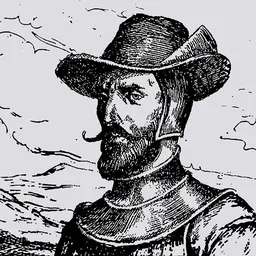
Contemporaries
People whose lives overlapped Cesare Federici's
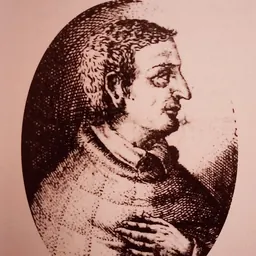
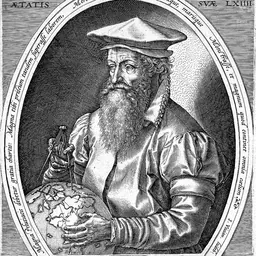

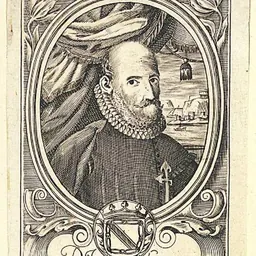

Frequently asked questions
Who was Cesare Federici?
Venetian explorer
When was Cesare Federici born?
Cesare Federici was born in 1530 in Venice.
When did Cesare Federici die?
Cesare Federici died in 1600.
What was Cesare Federici's occupation?
Cesare Federici was an explorer.
What nationality was Cesare Federici?
Cesare Federici was Italian.
Sources & further reading
Cite this page
APA: Biography.guide. (2026). Cesare Federici. https://biography.guide/cesare-federici/
MLA: "Cesare Federici." Biography.guide, https://biography.guide/cesare-federici/.
Chicago: "Cesare Federici." Biography.guide. https://biography.guide/cesare-federici/.
Data last updated: 2026-09-20 · Spot an error? Report a correction.
Page generated 2026-09-27 05:31 UTC