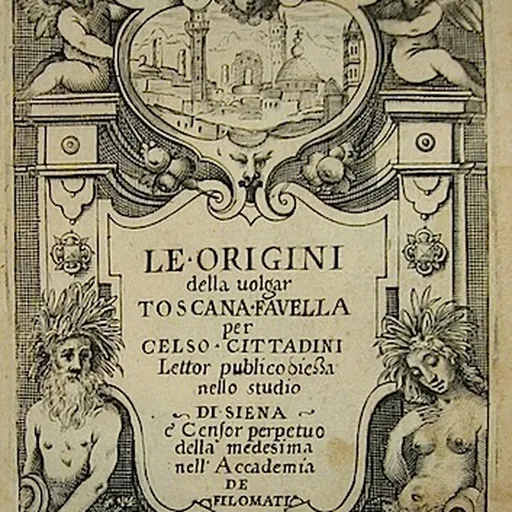
About Celso Cittadini
Lived 1553 – 1627 (aged 73). Celso Cittadini was a philologist, university teacher, romanist, translator, writer and docent.
Celso Cittadini (1 April 1553 – 29 March 1627) was an Italian grammarian and philologist.
He was the author of important works in which he demonstrated the emergence of Romance languages from Vulgar Latin and the also defined phonetic laws that highlight the correlation between certain Latin vowels and their equivalents in Tuscan.
Biography Celso Cittadini was born in Rome into a family of noble origins which counted the poet Cecco Angiolieri among its ancestors. He studied Greek and Latin languages and classics, and travelled often. As court secretary, he moved from Rome first to Parma to work for Duke Ranuccio, then to Urbino under Francesco Maria II Della Rovere, and finally to Milan to Cardinal Federico Borromeo.
He returned to Rome in 1581, and following Petrarch's model wrote a songbook of madrigals and sonnets for the noblewoman Hippolita Calcagni known as Fiamma, entitled Rime platoniche. He travelled again in 1589, and in the same year wrote the Apologia delle donne under the name Infiammato. This marked his transition from Petrarchist poet to antiquarian and philologist.
He moved to Siena and married Eufrasia Petroni. He was chosen as the tutor of Cosimo, son of Ferdinando I de' Medici, and in 1598, on the recommendation of Ferdinando, he was appointed to the chair of Tuscan language and 'perpetual archivist' of Siena. A scholar of heraldry, he reconstructed the family tree of some of the older Sienese families. He actively dedicated himself to the study of grammar and linguistics, as well as the history of the Italian language.
Major works In 1601, he published the Treaty on the true origin, and the process, and the name of our language. He made original use of epigraphic and literary evidence to argue that Latin evolved into the vernacular independently of the ‘barbarian’ invasions. He appended to this publication a Trattato degli articoli e di alcune particelle della volgar lingua, in which he explains the use of pronominal particles, simple prepositions and articles; in the last case he demonstrates the derivation from the nominative case of Latin pronouns. In 1604, he published The origins of common Tuscan speech, in which he identified ten forces which determined the nature of the vernacular.
In 1721, almost a hundred years after his death, Girolamo Gigli published a collection of his major works, plus the posthumous Degl'idiomi toscani.
Don’t just read it —
keep it.
Full-length biographies made to live with: read them, listen on the way to work, watch them tonight.
- E-book
- Audio
- Video
Instant download · yours to keep · every purchase keeps this site free
Important facts
People in Celso Cittadini's life
Named in this biography and alive at the same time
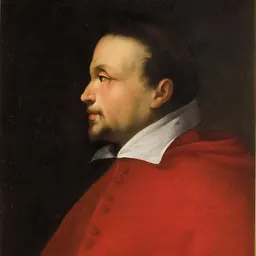
Related people
Same field, nearest in time

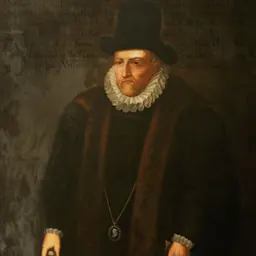

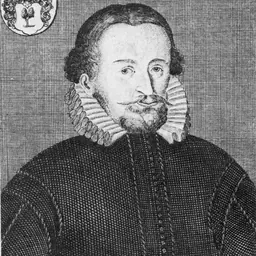

Contemporaries
People whose lives overlapped Celso Cittadini's



Frequently asked questions
Who was Celso Cittadini?
Italian philologist
When was Celso Cittadini born?
Celso Cittadini was born on 1 April 1553 in Rome.
When did Celso Cittadini die?
Celso Cittadini died on 29 March 1627 in Siena.
What was Celso Cittadini's occupation?
Celso Cittadini was a philologist, university teacher, romanist, translator, writer and docent.
Sources & further reading
Cite this page
APA: Biography.guide. (2026). Celso Cittadini. https://biography.guide/celso-cittadini/
MLA: "Celso Cittadini." Biography.guide, https://biography.guide/celso-cittadini/.
Chicago: "Celso Cittadini." Biography.guide. https://biography.guide/celso-cittadini/.
Data last updated: 2026-09-23 · Spot an error? Report a correction.
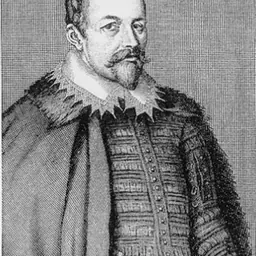
Portrait: Wikimedia Commons · author & licence
Page generated 2026-09-27 05:07 UTC