
About Cedd
Lived 620 – 664 (aged 43–44). Cedd was a theologian, catholic priest and catholic bishop.
Cedd (; 620 – 26 October 664) was an Anglo-Saxon monk and bishop from the Kingdom of Northumbria. He was an evangelist of the Middle Angles and East Saxons in England and a significant participant in the Synod of Whitby, a meeting which resolved important differences within the Church in England. He is venerated in Anglicanism, the Roman Catholic Church and the Orthodox Church.
Background
The little that is known about Cedd comes to us mainly from the writing of Bede in his Ecclesiastical History of the English People. The following account is based entirely on Book 3 of Bede's History.
Cedd was born in the kingdom of Northumbria and brought up on the island of Lindisfarne by Aidan of the Irish Church. He had three brothers: Chad of Mercia (transcribed into Bede's Latin text as Ceadda), Cynibil and Cælin. All four were priests and both Cedd and Chad became bishops. Despite being of apparent Northumbrian birth, the names of all four brothers are British Celtic in origin, rather than Anglo-Saxon. The first datable reference to Cedd by Bede makes clear that he was a priest by the year 653. This probably pushes his birth date back to the early 620s. It is likely that Cedd was oldest of the brothers and was acknowledged the head of the family. He seems to have taken the lead, while Chad was his chosen successor.
Aidan had come to Northumbria from Iona, bringing with him a set of practices that are known as the Celtic Rite. As well as superficial differences over the Computus (calculation of the date of Easter), and the cut of the tonsure, these involved a pattern of Church organisation fundamentally different from the diocesan structure that was evolving on the continent of Europe. Activity was based in monasteries, which supported peripatetic missionary bishops. There was a strong emphasis on personal asceticism, on Biblical exegesis, and on eschatology. Aidan was well known for his personal austerity and disregard for the trappings of wealth and power. Bede several times stresses that Cedd and Chad absorbed his example and traditions. Bede tells us that Chad and many other Northumbrians went to study with the Irish after the death of Aidan (651).
Cedd is not mentioned as one of the wandering scholars. He is portrayed by Bede as very close to Aidan's successor, Finan. So it is highly likely that he owed his entire formation as a priest and scholar to Aidan and to Lindisfarne.
Mission to Mercia
In 653, Cedd was sent by Oswiu of Northumberland with three other priests, Diuma, Atta, and Betti, to evangelise the Middle Angles,
The East Saxon kingdom was originally converted by missionaries from Canterbury, where Augustine of Canterbury had established a Roman mission in 597. The first bishop of the Roman Rite was Mellitus, who arrived in Essex in 604. After a decade, he was driven out of the area. The religious destiny of the kingdom was constantly in the balance, with the royal family itself divided among Christians, pagans, and some wanting to tolerate both.
Bede tells us that Sigeberht's decision to be baptised and to reconvert his kingdom was at the initiative of Oswiu. Sigeberht travelled to Northumbria to accept baptism from Bishop Finan of Lindisfarne. Cedd went to the East Saxons partly as an emissary of the Northumbrian monarchy. Certainly his prospects were helped by the continuing military and political success of Northumbria, especially the final defeat of Penda in 655. Practically, Northumbria gained hegemony among the Anglo-Saxon kingdoms.
After making some conversions, Cedd returned to Lindisfarne to report to Finan. In recognition of his success, Finan ordained him bishop, calling in two other Irish bishops to assist at the rite. Cedd was appointed bishop of the East Saxons. As a result, he is generally listed among the bishops of London, then part of the East Saxon kingdom. Bede, however, generally uses ethnic descriptions for episcopal responsibilities when dealing with the generation of Cedd and Chad.
Bede's record makes clear that Cedd demanded personal commitment and that he was unafraid to confront the powerful. He excommunicated a thegn who was in an unlawful marriage and forbade Christians to accept the man's hospitality. According to Bede, when Sigeberht continued to visit the man's home, Cedd went to the house to denounce the king, foretelling that he would die in that house. Bede asserts that the King's subsequent murder (660) was his penance for defying Cedd's injunction.
After the death of Sigeberht, there were signs that Cedd had a more precarious position. The new king, Swithhelm of Essex, who had assassinated Sigeberht, was a pagan. He had long been a client of Æthelwold of East Anglia, who was increasingly dependent on Wulfhere of Mercia, the Christian king of a newly resurgent Mercia. After some persuasion from Æthelwold, Swithelm accepted baptism from Cedd. The bishop travelled into East Anglia to baptise the king at Æthelwold's home. For a time, the East Saxon kingdom remained Christian.
Bede presents Cedd's work as decisive in the conversion of the East Saxons, although it was preceded by other missionaries, and eventually followed by a revival of paganism. Despite the substantial work, the future suggested that all could be undone.
Monastic foundations Cedd founded many churches. He also founded monasteries at Tilaburg (probably East Tilbury, but possibly West Tilbury) and Ithancester (almost certainly Bradwell-on-Sea). These locations are all in the modern county of Essex.
Cedd was appointed as abbot of the monastery of Lastingham in his native Northumbria at the request of the sub-king Œthelwald of Deira. Bede records the foundation of this monastery in some detail, providing intellectual and spiritual support, and a place of retreat. Cedd delegated daily care of Lastingham to other priests, and it is likely that Chad operated similarly.
Final years
Cedd had been brought up in the Celtic Rite, which differed from the Roman Rite in the dating of the religious calendar and other practices, including the tonsure of monks. Supporters of each rite met at a council within the Northumbrian kingdom known as the Synod of Whitby. The proceedings of the council were hampered by the participants' mutual incomprehension of each other's languages, which probably included Old Irish, Old English, Frankish and Old Welsh, as well as Latin. Bede recounted that Cedd interpreted for both sides. Cedd's facility with the languages, together with his status as a trusted royal emissary, likely made him a key figure in the negotiations. His skills were seen as an eschatological sign of the presence of the Holy Spirit, in contrast to the Biblical account of the Tower of Babel. When the council ended, Cedd returned to Essex.
According to Bede, Cedd accepted the Roman dating of the observance of Easter. He returned to his work as bishop, abandoning the practices of the Irish of Dál Riata.
A short time later, he returned to Northumbria and the monastery at Lastingham. He fell ill with the plague and died on 26 October 664. Bede records that immediately after Cedd's death a party of thirty monks travelled up from Essex to Lastingham to do homage. All but one small boy died there, also of the plague. Cedd was initially buried at Lastingham in a grave. Later, when a stone church was built, his body was moved and re-interred in a shrine inside the church of the monastery. Chad succeeded his brother as abbot at Lastingham.
King Swithhelm of Essex died at about the same time as Cedd. He was succeeded by the joint kings Sighere and Sæbbi. Some people reverted to paganism, which Bede said was due to the effects of the plague. Mercia under King Wulfhere was the dominant force south of the Humber, so it fell to Wulfhere to take prompt action. He dispatched Bishop Jaruman to take over Cedd's work among the East Saxons. Jaruman, working (according to Bede) with great discretion, toured Essex, negotiated with local magnates, and soon restored Christianity.
Commemorations Cedd is remembered in the Church of England with a commemoration on 26 October, the anniversary of his death. In the Anglican and Catholic traditions, the liturgical colour for St Cedd's Day (in common with other non-martyred saints) is white, meaning that the church is decorated with white hangings and the clergy wear white vestments. St Cedd's Day is also known as Essex Day.
The Diocese of Chelmsford celebrated 1954, the 13th centenary of Cedd's mission to Essex, as St Cedd's Year. In that year, Chelmsford Cathedral, already dedicated to St Mary the Virgin was additionally dedicated to St Cedd and St Peter (to whom Cedd's chapel at Bradwell is dedicated ) while events in his honour included a rally at West Ham United's Boleyn Ground.
The site of an ancient tree in Polstead, Suffolk, known as the Gospel Oak, is one of a number of sites where Cedd is traditionally supposed to have preached. The original tree collapsed in 1953, but its remains can still be seen among its successor trees, and a church service is held there on the first Sunday of every August.
The town Chediston, is named after Saint Cedd.
Don’t just read it —
keep it.
Full-length biographies made to live with: read them, listen on the way to work, watch them tonight.
- E-book
- Audio
- Video
Instant download · yours to keep · every purchase keeps this site free
Important facts
People in Cedd's life
Named in this biography and alive at the same time


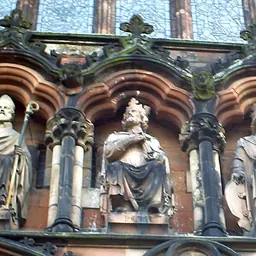



Related people
Same field, nearest in time



Contemporaries
People whose lives overlapped Cedd's
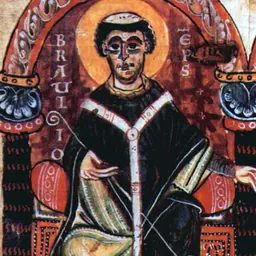



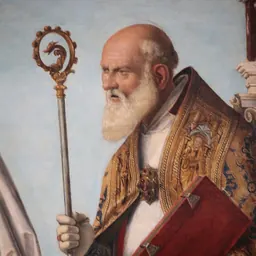
Frequently asked questions
Who was Cedd?
Bishop of London; Saint
When was Cedd born?
Cedd was born in 620 in Kingdom of Northumbria.
When did Cedd die?
Cedd died on 26 October 664 in Lastingham.
What was Cedd's occupation?
Cedd was a theologian, catholic priest and catholic bishop.
What nationality was Cedd?
Cedd's recorded nationality: Kingdom of Northumbria.
Sources & further reading
Cite this page
APA: Biography.guide. (2026). Cedd. https://biography.guide/cedd/
MLA: "Cedd." Biography.guide, https://biography.guide/cedd/.
Chicago: "Cedd." Biography.guide. https://biography.guide/cedd/.
Data last updated: 2026-09-20 · Spot an error? Report a correction.
Page generated 2026-09-27 05:22 UTC