
About Cecil Rawling
Lived 1870 – 1917 (aged 47). Cecil Rawling was a British explorer and military personnel.
Brigadier-General Cecil Godfrey Rawling, (16 February 1870 – 28 October 1917) was a British soldier, explorer and author whose expeditions to Tibet and Dutch New Guinea brought acclaim from the Royal Geographical Society and awards from the Dutch and Indian governments. He published two books detailing his experiences and served in the British Army on the North-West Frontier of India and in France during the First World War. It was during this latter service that he was killed in action aged 47 during the Battle of Passchendaele.
A man of adventure in the Victorian mould, he was said to possess 'true courage, modesty and kindness of heart' After leaving school, Rawling served in the Militia as an officer in the 4th Battalion, Royal Irish Fusiliers, being promoted to lieutenant in October 1889.
He subsequently accepted a Regular Army commission into the Somerset Light Infantry in October 1891 as a second lieutenant on augmentation. Made a lieutenant in February 1896, his unit was dispatched to India in 1897 and served on the North-West Frontier during the Tirah campaign, although Rawling did not see action. During this period, Rawling, advanced to captain, dated to August 1901, took numerous hunting trips up into the Himalaya mountains. In 1902, he unofficially entered Tibet with a friend, Lieutenant A.J.G. Hargreaves, and together they began an exploration of the region which would last another four years.
Explorations
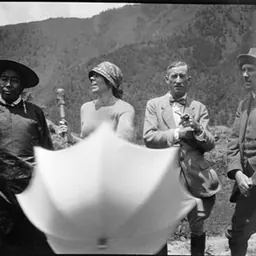
In 1903 he reentered Tibet to begin a professional survey although without official sanction, and in the following year Captain Rawling was attached to the British expedition to Tibet, charged with exploring and surveying the mountainous terrain. During the diplomatic expedition and the campaign which followed it, Rawling surveyed over of Tibet in addition to his military duties. establishing it as the highest mountain in the Himalayas. and in 1909 was awarded the Murchison Bequest of the Royal Geographical Society in London, of which he was a fellow. He was thus not deployed to France until the spring of 1915, when he was placed in command of the 6th (service) Battalion of the Somerset Light Infantry as a temporary lieutenant colonel. His unit fought in the latter stages of the Second Battle of Ypres and spent the winter in the trenches around the besieged Belgian city. With the massive buildup of troops in the approach to the Battle of the Somme he took command of the 62nd Brigade in the 21st Division, and retained this post throughout the battle. During the battles along the Somme he was engaged at Fricourt, Mametz Wood and Gueudecourt, in the battles of Albert and Flers-Courcelette. All of his unit's objectives were eventually captured but only at the cost of high casualties. and awarded the Companion of the Order of St Michael and St George in recognition of his service.
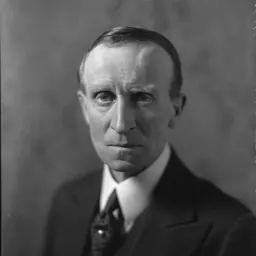
His remains were removed from the battlefield and buried in The Huts Commonwealth War Graves Commission Cemetery in Dickebusch, near what is now Dikkebus in Belgium. His grave is surmounted with a Commonwealth War Graves Commission headstone. A white memorial plaque to his memory can be found at St. Mary Magdelene Church in Taunton, Somerset, where he lived prior to joining the army. In life he had been a friend of the novelist John Buchan, who included Rawling in his short unpublished piece These for Remembrance printed in 1919, which remembered personal friends of his who had fallen in the war.
Don’t just read it —
keep it.
Full-length biographies made to live with: read them, listen on the way to work, watch them tonight.
- E-book
- Audio
- Video
Instant download · yours to keep · every purchase keeps this site free
Important facts
People in Cecil Rawling's life
Named in this biography and alive at the same time

Related people
Same field, nearest in time




Contemporaries
People whose lives overlapped Cecil Rawling's



Frequently asked questions
Who was Cecil Rawling?
British general, explorer and author (1870–1917)
When was Cecil Rawling born?
Cecil Rawling was born on 16 February 1870 in London.
When did Cecil Rawling die?
Cecil Rawling died on 28 October 1917 in Passendale.
What was Cecil Rawling's occupation?
Cecil Rawling was an explorer and military personnel.
What nationality was Cecil Rawling?
Cecil Rawling was British.
Sources & further reading
Cite this page
APA: Biography.guide. (2026). Cecil Rawling. https://biography.guide/cecil-rawling/
MLA: "Cecil Rawling." Biography.guide, https://biography.guide/cecil-rawling/.
Chicago: "Cecil Rawling." Biography.guide. https://biography.guide/cecil-rawling/.
Data last updated: 2026-09-26 · Spot an error? Report a correction.
Page generated 2026-09-27 05:14 UTC