
About Cecil Hartt
Lived 1894 – 1930 (aged 35–36). Cecil Hartt was an Australian cartoonist.
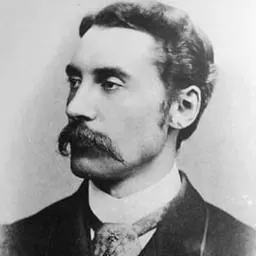
Cecil Lawrence Hartt (15 July 1884 – c. 17 May 1930) was an Australian cartoonist and caricaturist. As a wartime artist, he popularised the concept of the Australian digger as independent, easy-going and disrespectful of authority, with a sardonic attitude to life. He was the first artist to be employed by Smith's Weekly in 1919, continuing in that role until his death in 1930. Over his career Hartt produced a large number of cartoons on a broad range of subjects and themes; his drawings encompassed political, social and military topics and were admired for their observational humour and the quality of his character portraits. He mainly drew single-panel cartoons, but his body of work also includes early examples of Australian comic strips. Hartt was the first president of the Australian Black and White Artists' Club, formed in July 1924 (now the Australian Cartoonists' Association).
Biography
Early life
Cecil Hartt was born Cyril Lawrence Hartt on 16 July 1884 at Prahran in inner suburban Melbourne, the son of James Hartt and Alice (née Lawrence), one of seven children in the family. His given name, Cyril, was soon abandoned and from an early age he was known as Cecil, or informally 'Cec'.
In about 1887, James Hartt took a job as a bookkeeper at Alfred Billson's Anglo-Australian Brewery at Beechworth, in north-east Victoria. In March 1897, Hartt resigned from his position "to seek to better his fortunes in Western Australia". By December 1897, James Hartt was living in Barrack-street in Perth.
By about 1901, the Hartt family had returned to north-east Victoria, living at Tallangatta near Albury-Wodonga, with James Hartt working as the head bookkeeper in Dyring and Dyring's general merchandise store. Cecil's mother died in January 1906 at Tallangatta after having "been in indifferent health for some time". In April 1906, Cecil's father left Tallangatta for Melbourne after Dyring's store changed hands. His father remarried in 1907. In August 1907 a cartoon by Hartt was accepted and published in The Bulletin magazine. Hartt also studied art in Melbourne with the artist Harold Gye. In 1908, Hartt had a drawing published in Comments, a short-lived Melbourne journal. He also contributed to Randolph Bedford's mining and literary journal, The Clarion (at that time Melbourne's answer to The Bulletin).
In January 1909, Hartt relocated to Sydney. In 1913, Hartt was living in Hunter-street, Sydney, working as a freelance artist. During the period 1911 to 1913, he had cartoons accepted for the Sydney magazine The Comic Australian. They were a part of a wider social group of Sydney-based writers and artists, who often met for drinking sessions at pubs such as the Newcastle Hotel, at the corner of George and Essex streets, and the Assembly Hotel, at the corner of Hunter and Phillip streets.
From 1913 to early 1915, when he enlisted in the army, Hartt contributed political cartoons to The Worker newspaper and its successor, The Australian Worker. Hartt's cartoons were also being published in The Bulletin prior to and after his enlistment in March 1915. In 1915, Hartt was part of a group called the Newspaper Cartoonists' Association of New South Wales which published Sydneyites: As we see ’em 1913-14-15, a book of "representative citizens" of Sydney (all men), each image combining a drawing with a photograph of the subject's head. Hartt contributed nineteen drawings to the publication and was listed as being a cartoonist from The Bulletin.
Military service
Hartt's occupation was recorded as a cartoonist when he enlisted in the army, aged 30. His next of kin was recorded as his wife Ruby, living on Pittwater Road in Dee Why, a northern beach suburb of Sydney. Hartt enlisted at Liverpool in Sydney in March 1915, shortly after the outbreak of World War I and was placed in B Company of the 18th Battalion of the Australian Imperial Force. In June he embarked for overseas service.
'Cecil Hartt's so-long to his models'(from The Bulletin, 3 June 1915).
The 18th Battalion AIF was sent to Gallipoli. On 27 August 1915, Hartt was wounded in left ankle by a machine-gun bullet during a disastrous charge from Chocolate Hill against Turkish forces on Hill 60. While he was crawling back to safety, Hartt was struck in the right thigh by shrapnel.
In London, Hartt began working on a collection of his cartoons and drawings about Australian soldiers, which he published as Humorosities in 1917. Hartt's book, which sold for a shilling a copy, was a great success with over 60,000 copies being sold in Great Britain. His drawings in Humorosities portrayed the Australian 'digger' as self-reliant, easy-going and disrespectful of authority, "more interested in avoiding tedious rules than in obedient conformity". Hartt's book of drawings was often purchased by Australian soldiers as a memento of their military experience. After the publication of Humorosities, Hartt received a letter from John Fortescue, the King's librarian at Windsor Castle, thanking him for a copy Hartt had sent to him. Fortescue described the volume as "a welcome addition to the literature of the war, and doubly welcome as an Australian contribution". He invited Hartt to send "an original sketch or two... with the prices marked" with a view to their inclusion in "the King's collection of drawings". Humorosities was also sold in Australia, distributed by Gordon and Gotch Ltd.
Inquiry Clerk: "What can you do?"Applicant for Work: "Oh, nothing much."Inquiry Clerk: "All right. I'll put your name down for the first vacancy on the Board of Directors!"(from Smith's Weekly, 17 May 1924).
After his return to Sydney, Hartt was living with his wife Ruby in their "neat little bungalow" at Dee Why. His friend and colleague, Frank Reid, was living at Collaroy, so "they saw a great deal of each other". Hartt went back to freelance drawing, but he found it hard to make a living. In 1918, The Bulletin was the only publication in Sydney purchasing cartoons "and if Cecil made 30/- a week he was lucky". Hartt saw an opening for a staff job and applied, becoming the first artist engaged by the new publication. Hartt's drawing style and humour were consistent with the populist left-wing ethos of Smith's Weekly, which set a radical nationalist tone and a disrespect of authority. The weekly newspaper published high quality cartoons on a broad range of subjects.
An important target audience for the Smith's Weekly was returned soldiers whose rights and causes the publication consistently championed, made apparent in the first issue when Joynton Smith described the returned digger as "the cream of our country's manhood [who] has become the sport of the politician". Hartt's 'More Digger Stories', featuring his distinctive squat characters, first appeared in the fourth issue of Smith's Weekly in late March 1919 and were a regular feature until March 1920, with others appearing irregularly after that. The cartoons from 'More Digger Stories' proved to be "exceedingly popular" and were later collected in publications (Diggerettes in 1919 and More Diggerettes in 1920), which sold for one shilling each.
From July 1919 until October 1924, Smith's Weekly featured a regular column called the "Sailors' and Soldiers' Parliament" that covered issues and stories specific to returned servicemen. This column often featured Hartt's 'Diggerette' cartoons. In September 1924, the newspaper started a regular feature called "Unofficial History of the A.I.F." in which "every Digger" was invited "to tell the real story of the A.I.F." Drawings by Hartt on themes related to the military or returned servicemen were occasionally used in this column (some rendered as his 'Diggerette' figures). From November 1925 to March 1926, the banner used for the "Unofficial History of the A.I.F." column featured 'Diggerette' figures drawn by Hartt (two versions). Hartt continued to include Digger cartoons within his wider body of work up until his death in May 1930.
'The Miser' by Cecil Hartt (from Smith's Weekly, 5 July 1924), featuring a caricature of the Federal Treasurer, Earl Page, and a dumbfounded 'Dummy'.
One of the regular characters created by Hartt was 'Dummy', the hapless clown, described as "Australia's national figure of pathos" who "carries all the burdens and woes of our beloved country". Dummy made his first appearance in the 26 April 1919 edition of Smith's Weekly, in response to the public health measures imposed by the New South Wales Minister of Public Health to combat the third wave of the influenza pandemic. The character was frequently used by Hartt to denote the "long suffering" Everyman, the "poor witless creature" who was "the butt of every politician and tax-gatherer, victim of every unscrupulous tradesman". Before very long, the concept of 'Dummy' took on a life of its own, being adopted as a recurring motif at Smith's Weekly by journalists, poets and other artists (alongside Hartt's own depictions of the character). At the inaugural Artists' Masquerade Ball held at Sydney Town Hall on 21 August 1922, Hartt attended the event dressed as his own 'Dummy' character.
One of the banners used for Cecil Hartt's semi-regular column (from Smith's Weekly, 19 August 1922).
Hartt had a semi-regular feature on page four of Smith's Weekly that began in July 1922 and finished in March 1925. Entitled 'All the News as seen by Cecil L. Hartt' and 'The World as seen by Cecil L. Hartt', the column presented the cartoonist's satirical responses to topical issues and news stories. In late 1924, Hartt created a comic strip featuring caricatures of the Prime Minister Stanley Bruce, Bruce's coalition partner Earl Page and the Minister for Trade and Customs, Herbert Pratten. The strip was a regular feature from December 1924 until March 1925 and often featured the wowserish 'Auntie Pratten' and a top-hatted Bruce. Hartt followed this with the 'Ask Bill, He Knows Everything' comic strip, featuring the pontificating character Bill and his mates Gus and Steve. The original inspiration for 'Bill' was said to be Billy Bournes, a war-time Labor agitator and anti-conscriptionist who eventually went to live in Tennant Creek.
Hartt also created the down-and-out characters of 'Orace and 'Erbert (sometimes also named Bert, 'Erb or Cuthbert), who were featured in occasional cartoons of his during the 1920s. Other Smith's Weekly artists also drew their own versions of the pair. Hartt also used Steele Rudd's popular characters of 'Dad and Dave' in a number of his cartoons.
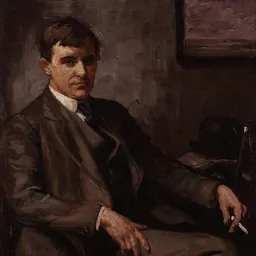
In May 1922, Hartt ("care of Smith's Weekly") reported to police the theft of two medals belonging to him ("a Victory war medal and a General Service medal") as well as a silver cigarette case, each of which had "Cecil L. Hartt" engraved on them. The artist James R. Jackson entered a portrait of Cecil Hartt in the 1922 Archibald Prize competition at the Art Gallery of New South Wales. In about December 1922, Hartt became art director at Smith's Weekly after the death of his colleague Alex Sass. Cecil Hartt and Iris ('Biddy') Brewer were married in late October 1923 at Mosman. The couple had a daughter named Diana, born in August 1926.
Hartt was elected as the first president of the Society of Australian Black and White Artists, formed in July 1924. He was re-elected to the position in 1925. In the following years, Hartt continued to be involved with the Society in various capacities, including on organising committees for the annual Black and White Artists' Ball.
Cecil Hartt was known to his friends and colleagues as "an utterly tolerant and uncritical person, kind and good-hearted". He stood a fraction under six feet tall and "fitted the popular conception of the typical lean Australian". It was subsequently reported that Hartt "had been despondent and unhappy" for several weeks before his death. He had said he "felt run down" and needed a holiday "somewhere in the country where he could rest and find inspiration". Hartt had left his home on Friday, 16 May to "ramble around in the bush". At the inquest into his death a note written by Hartt was submitted, which read: "I have been through hell in the last few days. I would be better out of the way".
The Coroner concluded Hartt, aged 45 years, had died from a self-inflicted gunshot wound "while temporarily insane". The artist was survived by his widow 'Biddy', their three-year-old daughter Diana and his son Lawrence (from his first marriage).
Cecil Hartt's remains were cremated on 22 May 1930 at Rookwood crematorium, in a simple ceremony attended by many of his former colleagues and friends. A full page in the 31 May 1930 edition of Smith's Weekly was dedicated to Hartt's memory; the page included poetry, a written appreciation of their former comrade, and a cartoon line-up of the most well-known of the characters he had created. Cecil L. Hartt (c. 1919), Diggerettes: Digger Jokes & Stories (Sydney: A. C. Sandford). Cecil L. Hartt (c. 1920), More Diggerettes: The Latest Collection of Digger Jokes and Stories (Sydney: A. C. Sandford). Cecil L. Hart (1924 & 1925; two editions), Souvenir of the M.C.C. XI 1924-25 : Sketches by Cecil L. Hartt (Sydney: R. C. Switson; Sydney: W. F. Brown).
Don’t just read it —
keep it.
Full-length biographies made to live with: read them, listen on the way to work, watch them tonight.
- E-book
- Audio
- Video
Instant download · yours to keep · every purchase keeps this site free
Important facts
People in Cecil Hartt's life
Named in this biography and alive at the same time






Related people
Same field, nearest in time

Contemporaries
People whose lives overlapped Cecil Hartt's


Frequently asked questions
Who was Cecil Hartt?
Australian artist
When was Cecil Hartt born?
Cecil Hartt was born in 1894 in Prahran.
When did Cecil Hartt die?
Cecil Hartt died on 17 May 1930 in Moruya, New South Wales.
What was Cecil Hartt's occupation?
Cecil Hartt was a cartoonist.
What nationality was Cecil Hartt?
Cecil Hartt was Australian.
Sources & further reading
Cite this page
APA: Biography.guide. (2026). Cecil Hartt. https://biography.guide/cecil-hartt/
MLA: "Cecil Hartt." Biography.guide, https://biography.guide/cecil-hartt/.
Chicago: "Cecil Hartt." Biography.guide. https://biography.guide/cecil-hartt/.
Data last updated: 2026-09-20 · Spot an error? Report a correction.
Page generated 2026-09-27 05:22 UTC