
About Cave Johnson Couts
Lived 1821 – 1874 (aged 52–53). Cave Johnson Couts was an American politician and military officer.
Early life and education Couts was born on November 11, 1821, in Springfield, Tennessee, to a family with strong political ties. His uncle, Cave Johnson, served as a U.S. Congressman and the Postmaster General. Couts graduated from the United States Military Academy at West Point in 1843
Career
Couts began his military service stationed at various posts across the United States, including Fort Jesup in Louisiana and Fort Washita and Fort Gibson in Indian Territory. In 1848, he was sent to California with his men, arriving in January 1849 after a difficult journey across the Sonoran Desert. His mission included assisting in the Boundary Survey between Upper California in the United States and Baja California in Mexico. He also helped manage relationships with local Native Americans and assisted Gold Rush emigrants;
In October 1851, Couts resigned his Army commission. and was elected Justice of the Peace from 1853 to 1863. In June 1853, Indian Affairs Superintendent Edward Fitzgerald Beale appointed Couts as an Indian subagent to the agent and neighboring ranchero Benjamin Davis Wilson upon the latter's recommendation. On August 10, 1856, Couts briefly became a special Indian agent. He checked up on the Indigenous people in San Diego County and wrote reports on their status and possible improvement to the Commissioner of Indian Affairs. At the Mission San Luis Rey de Francia and Rancho Monserate, he became the supervisor of the indigenous people there and employed 300 of them in construction jobs. The charges were dismissed as the district attorney had not posted his bond of office. Benjamin Ignatius Hayes, acting as Couts's counsel, argued that Mendoza had been a robber and a troublemaker, and that Couts had acted in self-defense; Couts was again acquitted.
After retiring from military service, Couts settled in San Diego County, becoming an influential rancher and agricultural pioneer. Bean acted while still vested with the authority of an alcalde. Believing himself the lawful owner, Bean asserted control over the building, and he and Couts occupied additional offices for private use. At the same time, Couts began constructing a two-story frame building adjacent to the courthouse. ruled in favor of the city, ordering Bean and Couts to relinquish their claims and pay court costs. Couts was permitted to retain the adjacent structure, known as the Colorado House hotel. He later shifted his focus to ranching and subdivided the building for commercial use. The town hall and courthouse remained in use until their destruction by fire on April 20, 1872.
Couts moved to Guajome in March 1853, and at his Rancho Guajome—a property he owned with his wife—Couts found that San Diego County soil and climate could grow many types of crops; Couts was the first in San Diego County to plant vast fruit orchards, and he proceeded to experiment with various crops.
Additionally, Couts indentured vast indigenous employees; more than half of his 32 permanent ranch employees were members of the local Luiseño tribe. Under the provisions of the local Indian Acts, Couts bound several Native workers to himself through convict leasing (and other forms of Penal labor in the United States) for vague "vagrancy" charges and debt peonage. As county judge, he declared indigenous children as orphans and indentured them to his wife, and as Indian subagent, he unconventionally installed mestizo Kumeyaay Indian rancher Manuel Cota as Luiseño chief and established a profitable partnership in Indian power and labor. Corporal punishment was common on his ranch. and La Jolla. At the peak of his success, Couts's ranch spanned approximately 20,000 acres. The execution marked one of early San Diego's sternest enforcements of law during the American transition.However, the cattle boom brought by the gold rush soon subsided, and the industry quickly declined starting in the late 1850s.
Death and legacy
By Spring 1874, Couts could no longer ranch, burdened by market declines and severe chest pain diagnosed as a terminal aortic aneurysm in San Francisco. Two weeks after losing consciousness, which is now preserved as the Guajome Regional Park in Vista, California, and is listed as a California Historical Landmark and on the National Register of Historic Places. His innovative agricultural techniques helped develop the region into a productive farming area. Cave Johnson Couts, From San Diego to the Colorado in 1849: The Journal and Maps of Cave J. Couts, ed. William McPherson (Los Angeles: A.M. Ellis, 1932)
Don’t just read it —
keep it.
Full-length biographies made to live with: read them, listen on the way to work, watch them tonight.
- E-book
- Audio
- Video
Instant download · yours to keep · every purchase keeps this site free
Important facts
People in Cave Johnson Couts's life
Named in this biography and alive at the same time

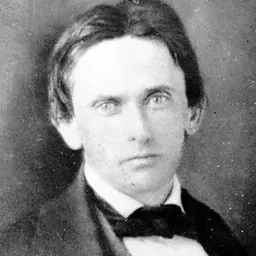
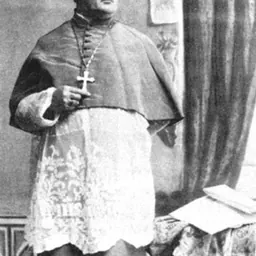
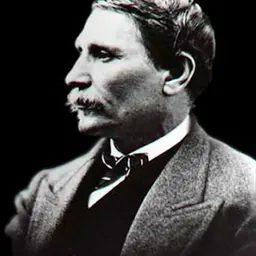
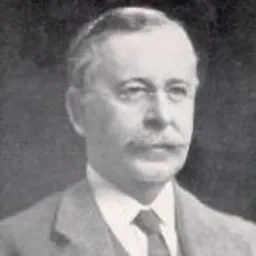
Related people
Same field, nearest in time





Contemporaries
People whose lives overlapped Cave Johnson Couts's


Frequently asked questions
Who was Cave Johnson Couts?
US military officer and judge
When was Cave Johnson Couts born?
Cave Johnson Couts was born in 1821 in Springfield.
When did Cave Johnson Couts die?
Cave Johnson Couts died in 1874 in San Diego.
What was Cave Johnson Couts's occupation?
Cave Johnson Couts was a politician and military officer.
What nationality was Cave Johnson Couts?
Cave Johnson Couts was American.
Sources & further reading
· Wikipedia: Cave Johnson Couts
Cite this page
APA: Biography.guide. (2026). Cave Johnson Couts. https://biography.guide/cave-johnson-couts/
MLA: "Cave Johnson Couts." Biography.guide, https://biography.guide/cave-johnson-couts/.
Chicago: "Cave Johnson Couts." Biography.guide. https://biography.guide/cave-johnson-couts/.
Data last updated: 2026-09-20 · Spot an error? Report a correction.
Page generated 2026-09-27 05:27 UTC