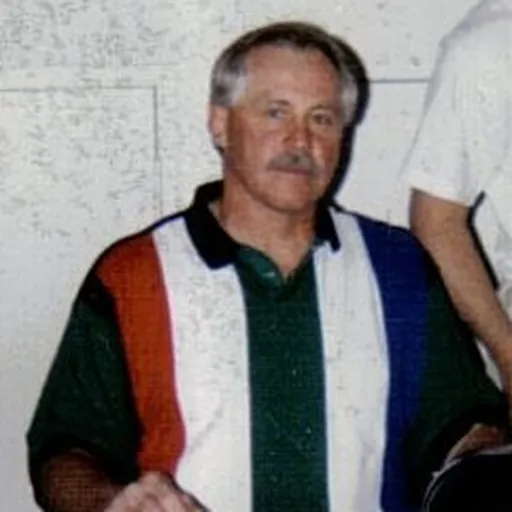
About Catfish Hunter
Lived 1946 – 1999 (aged 53). Catfish Hunter was an American baseball player.
James Augustus "Catfish" Hunter (April 8, 1946 – September 9, 1999) was an American professional baseball player in Major League Baseball (MLB). From to , he was a pitcher for the Kansas City / Oakland Athletics and New York Yankees. Hunter is the only pitcher since to win 200 games by age 31. He is often referred to as baseball's first big-money free agent, and was a member of five World Series championship teams.
Hunter was married to Helen Hunter and they had three children. Hunter retired at age 33 following the 1979 season, after developing persistent arm problems, and was inducted into the Baseball Hall of Fame in 1987. He was diagnosed with amyotrophic lateral sclerosis, also known as Lou Gehrig's disease, in his early 50s, and died of the disease about a year after his diagnosis. Hunter has been the subject of numerous popular culture references, including the Bob Dylan song "Catfish".
Early life The youngest son of eight children, Hunter was born and raised in Hertford in northeast North Carolina. He grew up on a farm and excelled in a variety of sports at Perquimans County High School. Hunter played linebacker and offensive tackle in football as well as shortstop, cleanup batter, and pitcher in baseball. His older brothers taught him to pitch,
During his senior year in November 1963, Hunter's right foot was wounded by a brother in a hunting accident; he lost one of his toes and shotgun pellets lodged in his foot. The accident left Hunter somewhat hobbled and jeopardized his prospects in the eyes of many professional scouts, but the Kansas City Athletics signed Hunter to a contract. Hunter was sent to the Mayo Clinic that year so that surgeons could work on his foot. He recovered in La Porte, Indiana, at the farm of Athletics owner Charles O. Finley.
Professional career Kansas City/Oakland Athletics Hunter signed with the A's on June 8, 1964, for a reported $75,000, but did not play professionally during the 1964 regular season due to foot surgery and the subsequent recovery from his hunting accident the previous fall. He made his professional baseball debut in the Florida Instructional League in the fall of 1964.
It is commonly cited that Finley gave Hunter the nickname "Catfish" in 1965 because he thought his 19-year-old pitcher needed a flashy nickname. However, news articles published mere days after his signing in 1964 reference the nickname (as well as that of John "Blue Moon" Odom, who signed at the same time).
Aside from the fall stint in the instructional league, Hunter never played in the minor leagues. He made his major league debut in May, 1965 and earned his first win on July 27 in Fenway Park over the Boston Red Sox. In 1966 and 1967, he was named to the American League All-Star team.
Prior to the 1968 season, Finley moved the A's from Kansas City to Oakland.
On Wednesday, May 8, against the Minnesota Twins, Hunter pitched the ninth perfect game in baseball history. It was the first regular season perfect game in 46 years in the American League since Charlie Robertson's perfect game in , (excluding Don Larsen's perfect game in the 1956 World Series).
Hunter continued to win games, and in 1974 received both The Sporting News'''s "Pitcher of the Year" award and the American League Cy Young Award after going 25–12 with a league-leading 2.49 earned run average. The A's also won their third consecutive World Series. Hunter's statistics while he was with the Athletics were impressive: four consecutive years with at least 20 wins, and three World Series championships without a loss. Twenty days later on December 16, arbitrator Peter Seitz decided in favor of Hunter, officially making him a free agent. Hunter recalled being scared after he was declared a free agent. "We don't belong to anybody", he told his wife. He had been courted by 23 of the 24 teams, including the A's but not the San Francisco Giants, and refused higher offers from the San Diego Padres and the Kansas City Royals. New York was closer to his home in North Carolina and the team played on natural grass.
Finley attempted to have the arbitration ruling overturned, but was unsuccessful after several appeals. Further details of Finley's history with Hunter gave the A's owner added negative publicity. Hunter became known as baseball's "first big-money free agent". He also became only the fourth (and last) American League pitcher to win 20 games in a season for five consecutive seasons (1971–1975). The others were Walter Johnson (10), Lefty Grove (7), and Bob Feller (5).
In 1976, Hunter won 17 games, led the Yankees in complete games and innings pitched, and was again named to the All-Star team. The Yankees won three straight pennants with Hunter from 1976 to 1978. In 1976, Hunter became the fourth major league pitcher to win 200 games before the age of 31 and the only one since Walter Johnson in 1915, preceded by Cy Young and Christy Mathewson. Hunter was also a competent hitter, with a career batting average of .226; in 1971 he hit .350 with 36 hits in 38 games. After the designated hitter was adopted by the American League in , Hunter had only two plate appearances in his final seven seasons, with one base hit in 1973.
Hunter won his Opening Day start in 1977, limiting the Milwaukee Brewers to three hits over seven shutout innings in a 3–0 victory on April 7. He left the game with a bruised foot and was eventually placed on the 21-day disabled list with the injury, not pitching again until May 5.
Arm injuries plagued Hunter beginning in 1978. In spring training, he was diagnosed with diabetes and combined with his chronic arm trouble the disease began to sap Hunter's energy. Following the 1979 season and the end of his five-year contract, Hunter retired from baseball at age 33. Hunter won 63 games in his five seasons with the Yankees. He retired with appearances in six World Series and with five World Series championships.
While with the Yankees, Hunter was a resident of Norwood, New Jersey, preferring to live outside of New York City.
Later life He returned to his farm in Hertford where he grew soybeans, corn, peanuts, and cotton, and was a spokesman for diabetes awareness. Hunter noticed arm weakness while hunting in the winter of 1997–1998. He was diagnosed with amyotrophic lateral sclerosis (ALS), or Lou Gehrig's disease. He was unconscious for several days after the fall, but he had returned home from that hospitalization when he died. Hunter is interred at Cedarwood Cemetery in Hertford, adjacent to the field where he played high school baseball.
Legacy MLBBioRet Align = right Image = OaklandRetired27.PNG Name = Hunter Number = 27 Team = Oakland Athletics Year = 1991 His number 27 was retired by the Oakland Athletics in a pre-game ceremony on June 9, 1991, the first in the franchise's 90-year history.
The Jim "Catfish" Hunter Memorial is located in Hertford. An annual softball event is held in Hertford in memory of Hunter. All proceeds from the weekend benefit ALS research. The tournament has raised over $200,000 since 1999.
On September 5, 2018, Hunter was inducted into the Oakland Athletics first Hall of Fame class, with his widow, Helen, in attendance to receive the posthumous honor.
Reception After Hunter's death, former teammate Reggie Jackson described Hunter as a "fabulous human being. He was a man of honor. He was a man of loyalty."
Popular culture Hunter has been the subject of multiple popular culture references. Bob Dylan wrote the song "Catfish" in 1975. The song was later released by Dylan, Joe Cocker, and Kinky Friedman. In 1976, Hunter was also the subject of the Bobby Hollowell song "The Catfish Kid (Ballad of Jim Hunter)", which was performed by Big Tom White.
Minor league pitcher Jason Kosow portrayed Hunter in the ESPN miniseries The Bronx is Burning'', which depicted the 1977 New York Yankees.
Career statistics
CategoryWLPctERAGGSCGSHOSVIPHERRHRBBKWPHBPTotal2241663.265004761814202,9581,2481,3803749542,0124949
Don’t just read it —
keep it.
Full-length biographies made to live with: read them, listen on the way to work, watch them tonight.
- E-book
- Audio
- Video
Instant download · yours to keep · every purchase keeps this site free
Important facts
People in Catfish Hunter's life
Named in this biography and alive at the same time




Related people
Same field, nearest in time


Contemporaries
People whose lives overlapped Catfish Hunter's


Frequently asked questions
Who was Catfish Hunter?
American baseball player (1946-1999)
When was Catfish Hunter born?
Catfish Hunter was born on 8 April 1946 in Hertford.
When did Catfish Hunter die?
Catfish Hunter died on 9 September 1999 in Hertford.
What was Catfish Hunter's occupation?
Catfish Hunter was a baseball player.
What nationality was Catfish Hunter?
Catfish Hunter was American.
Sources & further reading
Cite this page
APA: Biography.guide. (2026). Catfish Hunter. https://biography.guide/catfish-hunter/
MLA: "Catfish Hunter." Biography.guide, https://biography.guide/catfish-hunter/.
Chicago: "Catfish Hunter." Biography.guide. https://biography.guide/catfish-hunter/.
Data last updated: 2026-09-23 · Spot an error? Report a correction.
Portrait: Wikimedia Commons · author & licence
Page generated 2026-09-27 05:07 UTC