
About Catalina Parra
Born 1940. Catalina Parra is a Chilean painter.
Catalina Parra (born May 9, 1940)
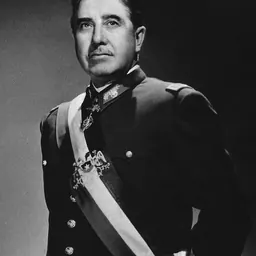
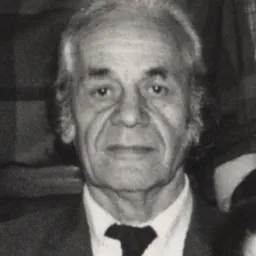
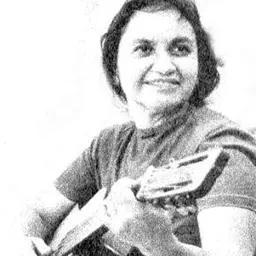
Early life Catalina Parra was born in Santiago, Chile to famous poet Nicanor Parra and his wife. Violeta Parra, her aunt, was also in the arts - she was a visual artist. Nicanor Parra, however, was most influential to Catalina and offered his liberal and political views on many subjects, which is primarily how Catalina views many subjects today. Catalina moved to Germany in 1968 when she was twenty-eight, but moved back to Chile five years later in 1973 during the dictatorship of General Augusto Pinochet, who ruled until 1990. She then trekked to New York City in 1980 due to his oppression and has lived there ever since.
Career With a career that spanned for a total of five decades, her many works have been influenced by a great number of events, personal occurrences, and movements in each of the places she has visited throughout the years. During Parra's movement to Germany in the late sixties, her works were influenced by the Fluxus Movement. Following the Fluxus Movement's way of thinking, she created Imbunches, which was a collection of mixed media artworks on a display board. This piece of art represented censorship and the government's use of terror as a method of control. Chile, her native country, was under a dictatorship at this time, and this influenced her way of thinking as well. Parra's move back to Chile under this dictatorship was extremely significant as well; her artwork combines her concern for Chile's political history with the Fluxus Movement's ideals.
Works Catalina Parra's works are extremely unusual and feature several different characteristics, yet reflect a common style. Each artwork features collage elements and includes a common mixed media style: thread, newspaper, magazine clippings, photos (either taken herself or from other sources), staples, and other various fabrics. Empty spaces and (often) ripped sections even have significance within her work.
Her most popular works are the Imbunches (1977), No Moaning. No Complaining. No Rehab. Just Laughs.(1999), and It's Indisputable (1992) collections, all of which feature multiple different collages revolving around a common theme – political, social, and economic issues. No Moaning. No Complaining. No Rehab. Just Laughs. is a work that encompasses her personal expression of the Chilean government through her newspaper clipping showing General Augusto Pinochet and Hugo Banzer of Bolivia hugging. This work addresses the possibility of strong relationships between and or within countries. The current event at the time (shown by the newspaper clipping) was the arrest of General Augusto Pinochet, former dictator of Chile, for a request issued by the government of Spain for the murder of Spanish citizens during his dictatorship. His role in the Caravan of Death was also prominent, as the event occurred while he was ruling. So although it does have deeper meaning, it also displays the fact that she was rebelling against his ideas and beliefs through the desecration of his figure in her work. Her collection Run Away, Run Away also examines the switch from dictatorship to democracy because of the actions of Pinochet and gives voice to many Chilean citizens. Through ads and titles created by The New York Times, Parra's collage collection attempts to show the emotions of the general's supporters and opponents. This work features Pinochet's face torn in half and "sewn" back together in the set of nine mixed media collages. Run Away, Run Away was a response to the legal attempts at Pinochet's past deeds and provided her views on this passionate issue. Her indirect views and art, as she had intended, gives the subliminal message to its viewers about the multiple topics she covers because she actually was at risk of being imprisoned upon proper interpretation of her antigovernment propaganda. which allowed her to move to New York City in the United States.
In 1990, Parra taught as an artist-in-residence at El Museo del Barrio, an art school in New York dedicated to teaching varying forms of art to disadvantaged youths. Parra was also recognized in the Latin American Women Artist Association, primarily for her role in educating disadvantaged youths and promoting minority rights. In 1995, Parra received a fellowship from the Civitella Ranieri Foundation in New York City.
In 2000, Parra was given the position of Agregada Cultural de Chile en Argentina (Aggregate of Culture of Chile in Argentina), she worked in this position until 2009, when she once again returned to New York, where she currently resides.
Don’t just read it —
keep it.
Full-length biographies made to live with: read them, listen on the way to work, watch them tonight.
- E-book
- Audio
- Video
Instant download · yours to keep · every purchase keeps this site free
Important facts
People in Catalina Parra's life
Named in this biography and alive at the same time

Related people
Same field, nearest in time

Contemporaries
People whose lives overlapped Catalina Parra's



Frequently asked questions
Who is Catalina Parra?
Chilean artist (born 1940)
When was Catalina Parra born?
Catalina Parra was born on 9 May 1940 in Santiago.
What is Catalina Parra's occupation?
Catalina Parra is a painter.
What nationality is Catalina Parra?
Catalina Parra is Chilean.
Sources & further reading
Cite this page
APA: Biography.guide. (2026). Catalina Parra. https://biography.guide/catalina-parra/
MLA: "Catalina Parra." Biography.guide, https://biography.guide/catalina-parra/.
Chicago: "Catalina Parra." Biography.guide. https://biography.guide/catalina-parra/.
Data last updated: 2026-09-20 · Spot an error? Report a correction.
Page generated 2026-09-27 05:12 UTC