
About Casto Méndez Núñez
Lived 1824 – 1869 (aged 45). Casto Méndez Núñez was a Spanish naval officer and politician.
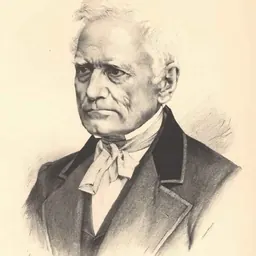
Casto Secundino María Méndez Núñez (1 July 1824 – 21 August 1869) was a Spanish Navy officer. He served in the First Italian War of Independence in Italy in 1849, the Spanish-Moro Conflict in the Philippines in 1861, and the Dominican Restoration War in the Caribbean in 1863–1864. Rising to the rank of contralmirante (counter admiral) he achieved international renown for his command of the Spanish Navy's Pacific Squadron during the Chincha Islands War in 1865–1866, becoming one of the major Spanish naval figures of the nineteenth century. In Spain, he is a popular hero, viewed as an exemplification of good character and Spanish patriotism.
Biography Early life Casto Méndez Núñez's birthplace in Vigo, Spain, photographed on 7 August 2011. Méndez Núñez was born in a house on the Plaza de la Constitución in Vigo, Spain, on 1 July 1824. His father was a postal worker. He was granted the right to wear the uniform of a guardiamarina (midshipman) on 1 February 1839. His translation was published in 1857. She departed Cádiz on 10 February 1859, rounded the Cape of Good Hope, and headed for the Philippines in the Spanish East Indies, stopping along the coast of Luzon on 21 June before arriving at Manila on 26 June 1859, completing the passage in four months and eleven days. Constancia attacks the Moro fort at Pagalungan on 17 November 1861. Painting by Rafael Monleón y Torres (1843–1900). Arriving on the scene with his entire division — Constancia, the schooner , the gunboats , , , and , six faluas, three merchant ships serving as transports, and a landing force of 850 Spanish Army and indigenous troops organized into four companies of infantry and an artillery battery of four guns and returned to action off Santo Domingo aboard her, establishing a blockade of Manzanillo and Monte Chisti. After returning to Havana, he relinquished command of Princesa de Asturias on 9 August 1864. The pilot disembarked at 18:00 and she set course for the Cape Verde Islands in good weather with a fresh northwesterly breeze. When Chile refused to settle, Pareja announced a blockade of Chilean ports, Berenguela′s commanding officer temporarily took command of the squadron. Antequera took command of Numancia. or on the afternoon of 9 March — Reina Blanca captured the Chilean sidewheel paddle steamer Paquete de Maule, which was bound from Lota, Chile, to Montevideo carrying naval personnel assigned to join the crews of the Peruvian ironclad turret ship and broadside ironclad there; sources disagree on the number of personnel aboard, claiming both a total of 134 men Numancia, Reina Blanca, and their three prizes departed the Gulf of Arauco on 12 March to rejoin the rest of the Pacific Squadron off Valparaíso, although he found the idea of attacking an undefended port repugnant. The squadron opened fire at 09:00. It inflicted US$10 million (equivalent to about US$224 million in 2011) in damage.
Méndez Núñez chose the heavily defended port of Callao for his next attack. He divided the squadron into two divisions, the first made up of Numancia, Berenguela, Reina Blanca, Vencedora, and three auxiliary steamers and the second of Villa de Madrid, Resolución, the screw frigate , Paquete de Maule, and three transport frigates and, after burning prize ships his squadron had captured, set off on 14 April 1866 for San Lorenzo Island off Callao, the second division getting underway at 09:00 and the first division at 16:00. The first division made the voyage under steam and arrived at San Lorenzo Island on 25 April, while the second division, making the journey under sail and delayed by the low speed of one of the transport frigates, arrived on 27 April 1866. He tried to continue, but collapsed after a few minutes, and was forced to turn over command of the squadron to Miguel Lobo Malagamba. Viewing his ships as too badly damaged to make an eastward passage around Cape Horn in winter, Méndez Núñez decided to steam west and led most of the squadron on a voyage across the Pacific, Indian, and Atlantic Oceans to Rio de Janeiro, Brazil, with Villa de Madrid as his flagship. However, Berenguela′s and Numancia′s temporary repairs at San Lorenzo Island were deemed inadequate for them to make the entire voyage safely, and Numancia also had exhausted her coal supply, so Méndez Núñez formed a separate division made up of Numancia, Berenguela, Vencedora, Marqués de la Victoria, the steamer Uncle Sam, and the sailing transport Matauara to proceed under sail to the Philippines, After the Ministry of the Navy received word that a combined Chilean Navy-Peruvian Navy squadron planned to cross into the Atlantic Ocean, Méndez Núñez received orders to return to Rio de Janeiro. The ships then proceeded to Havana, which they reached on 26 March 1867. He protested that Royal Orders gave him the right to request relief without resorting to a false claim of ill health, which he viewed as dishonorable. or 9
Santiago de Compostela and other Galician cities erected statues of Méndez Núñez.
Four Spanish Navy warships have been named Méndez Núñez:
An armoured frigate, converted from the screw frigate Resolución, renamed in 1870, and retired in 1888. , a light cruiser built in 1924 and retired in 1963. The former , a , in service in the Spanish Navy as Méndez Núñez from 1973 to 1992. , an commissioned in 2006.
The municipality of Mendez in the Province of Cavite in the Philippines was named in honour of Méndez Núñez.
Don’t just read it —
keep it.
Full-length biographies made to live with: read them, listen on the way to work, watch them tonight.
- E-book
- Audio
- Video
Instant download · yours to keep · every purchase keeps this site free
Important facts
People in Casto Méndez Núñez's life
Named in this biography and alive at the same time

Related people
Same field, nearest in time



Contemporaries
People whose lives overlapped Casto Méndez Núñez's


Frequently asked questions
Who was Casto Méndez Núñez?
Spanish admiral (1824–1869)
When was Casto Méndez Núñez born?
Casto Méndez Núñez was born on 1 July 1824 in Vigo.
When did Casto Méndez Núñez die?
Casto Méndez Núñez died on 21 August 1869 in Pontevedra.
What was Casto Méndez Núñez's occupation?
Casto Méndez Núñez was a naval officer and politician.
What nationality was Casto Méndez Núñez?
Casto Méndez Núñez was Spanish.
Sources & further reading
· Wikipedia: Casto Méndez Núñez
Cite this page
APA: Biography.guide. (2026). Casto Méndez Núñez. https://biography.guide/casto-mendez-nunez/
MLA: "Casto Méndez Núñez." Biography.guide, https://biography.guide/casto-mendez-nunez/.
Chicago: "Casto Méndez Núñez." Biography.guide. https://biography.guide/casto-mendez-nunez/.
Data last updated: 2026-09-20 · Spot an error? Report a correction.
Page generated 2026-09-27 05:27 UTC