
About Casta Álvarez
Lived 1776 – 1846 (aged 69–70). Casta Álvarez was a Spanish partisan.
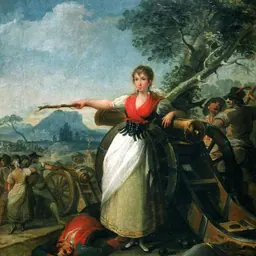
Casta Álvarez Barceló (1786 – 29 April 1846) was an Aragonese insurgent, who fought in the First siege of Zaragoza. This took place during the 1808 to 1814 Spanish War of Independence, or Guerra de la Independencia Española, part of the Peninsular War. She is known for inspiring the defenders of the city by single-handedly defeating an advancing French cavalry troop. Her story was popularised in a series of engravings entitled (Ruins of Zaragoza) published in 1812 and 1813. For her actions, she received a pension from Ferdinand VII of Spain and, at the centenary of the siege, her body was reinterred with honour.
Biography
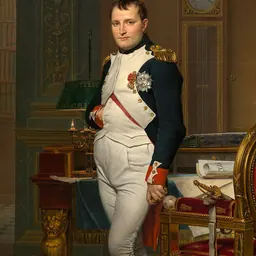
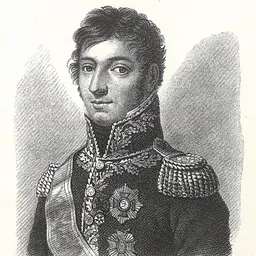
Álvarez Barceló was born of humble origins in 1786, the daughter of Manuela Barlo and Manuela Barlo, both natives of Figueruelas. She may have been a native of Zaragoza, or born in Orán in Algeria and moved to the city later in life. However, by 1808 she was a resident of the city. Following the Dos de Mayo Uprising in Madrid, French and Polish forces under Charles Lefebvre-Desnouettes were sent by Napoleon to put down the insurrection. On 15 June 1808, Lefebvre-Desnouettes arrived at Zaragoza ready to attack the city.
The attack on the city was particularly brutal, being a combination of hand to hand combat on the streets and a siege to starve the citizens, which led to a huge human toll from disease as well as the conflict itself. The defenders, led by José de Palafox y Melci, were ill-trained compared to the French and Polish troops and fought a desperate fight. Álvarez Barceló helped organise supplies and munitions for the citizens and defenders.
In addition to this crucial work, while operating near the Puerta del Carmen, she found herself in grave danger. Suddenly surrounded by French cavalry, rather than fleeing, she picked up a discarded musket and started firing. The French, surprised by the fierceness of this Spanish peasant and her skill with the weapon, retreated. Her actions inspired the defending troops and the French forces were repulsed. She subsequently also participated in the second siege of Zaragoza and once again her personality, as well as her military prowess, inspired the people of Zaragoza, who considered her a hero.
Once the city was occupied by the French forces, she moved with her parents to Cabañas de Ebro. After the conflict, she married a wealthy farmer in 1814 and lived the rest of her life in obscurity, dying a widow at the age of 60 on 29 April 1846. In recognition of her action, Álvarez Barceló was awarded the (Shield of Distinction) and (Shield of a Defender of the Fatherland), along with a pension from Ferdinand VII of Spain conferred on 30 May 1815.
Legacy Despite the fact that the Spanish were ultimately defeated at Zaragoza, Álvarez Barceló, along with other heroines of the conflict like Agustina de Aragón, became an important national icon. The inspiration from these female fighters is visible in Francisco Goya's work The Disasters of War. Her story was told in the reports of the day which spread across the continent of Europe, particularly inspiring contemporary British readers. Her image was popularised in the series of engravings by Juan Gálvez and Fernando Brambila entitled (Ruins of Zaragoza) published in Cádiz in 1812 and 1813. A portrait by Marcelino de Unceta from 1875 was also displayed in Zaragoza. In 1908, at the centennial of the siege, her body was re-interred in honour in the Chapel of the Anunciación del Santuario de Nuestra Señora del Portillo and a road was named after her.
Don’t just read it —
keep it.
Full-length biographies made to live with: read them, listen on the way to work, watch them tonight.
- E-book
- Audio
- Video
Instant download · yours to keep · every purchase keeps this site free
Important facts
People in Casta Álvarez's life
Named in this biography and alive at the same time



Related people
Same field, nearest in time

Contemporaries
People whose lives overlapped Casta Álvarez's


Frequently asked questions
Who was Casta Álvarez?
Spanish military personnel
When was Casta Álvarez born?
Casta Álvarez was born in 1776 in Oran.
When did Casta Álvarez die?
Casta Álvarez died on 26 April 1846 in Cabañas de Ebro.
What was Casta Álvarez's occupation?
Casta Álvarez was a partisan.
What nationality was Casta Álvarez?
Casta Álvarez was Spanish.
Sources & further reading
Cite this page
APA: Biography.guide. (2026). Casta Álvarez. https://biography.guide/casta-alvarez/
MLA: "Casta Álvarez." Biography.guide, https://biography.guide/casta-alvarez/.
Chicago: "Casta Álvarez." Biography.guide. https://biography.guide/casta-alvarez/.
Data last updated: 2026-09-24 · Spot an error? Report a correction.
Page generated 2026-09-27 05:01 UTC