
About Caspar Erich Schieler
Lived 1851 – 1934 (aged 82). Caspar Erich Schieler was a church historian and theologian.
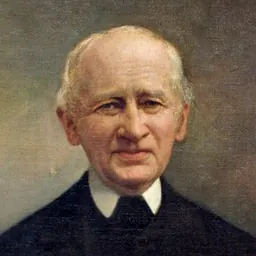
Caspar Erasmus Schieler (July 14, 1851 – January 13, 1934) was a German-American theologian, former Roman Catholic priest, professor, author, and minister in the Reformed Church in the United States. He taught moral theology and homiletics at the Episcopal Seminary of Mainz before emigrating to the United States following controversy surrounding his theological manual on confession.
Schieler is best known for his work Theory and Practice of the Confessional (1905), adapted from his 1894 German volume Die Verwaltung des Bußsakramentes. Translated into English by Herman Joseph Heuser and introduced by Archbishop Sebastian Gebhard Messmer, it became a landmark work as the first manual on penance and confession for priests published in English rather than Latin.
In English-language catalogs, Schieler has frequently been cited as **Caspar Erich Schieler**. Modern scholarship notes this as a century-old cataloging mistake that misread his middle initial "E." for "Erich", whereas primary documents and Schieler's own signatures confirm his name as "Erasmus".
Early life and education Schieler was born in Ober-Erlenbach, Grand Duchy of Hesse, on July 14, 1851, the son of Ludwig Joseph Schieler, a mason and building supervisor, and Margarete Krug. After attending the Gymnasium in Mainz, he studied Catholic theology at the Episcopal Seminary of Mainz. He was ordained a Catholic priest in Mainz Cathedral in 1876 by Bishop Wilhelm Emmanuel von Ketteler.
While serving in pastoral care, Schieler continued higher theological studies at the University of Würzburg, where he earned a doctorate in theology (Dr. theol.) in 1886. His dissertation on the 15th-century Dominican theologian Johannes Nider was published in 1885 under the title Magister Johannes Nider aus dem Orden der Prediger-Brüder.
Academic career and departure from the Catholic Church In 1887, following the reopening of the Episcopal Seminary of Mainz after the Kulturkampf, Schieler was appointed professor of liturgy. By grand-ducal decree, he was granted an exemption from the three-year state university requirement (*Triennium*) imposed by the May Laws. In 1890, he succeeded his mentor Christoph Moufang as professor of moral theology and homiletics, as well as director of the seminary library (now the Martinus-Bibliothek). The text generated intense controversy within ecclesiastical hierarchies. Shortly after its publication, Schieler resigned his professorship, left the priesthood, and emigrated to the United States, where he converted to Protestantism and joined the Reformed Church in the United States (RCUS).
Return to the United States and later ministry In autumn 1912, Schieler returned permanently to the United States with his wife and young son, Egon. He initially took charge of an RCUS mission congregation in Holyoke, Massachusetts.
Schieler subsequently returned to academia in the U.S., teaching at Mission House (now Lakeland University) in Wisconsin and later at Redfield College in Redfield, South Dakota, until the latter institution closed due to financial strain.
He served as pastor for several Midwestern German-American congregations, including parishes in: Hartsburg, Missouri Hamel, Illinois Johannisburg Township, Washington County, Illinois Marion, Waupaca County, Wisconsin
In 1933, Schieler was called to serve St. John's Church in Cappeln, Missouri. Shortly after taking the post, he underwent surgery at St. Joseph's Hospital in St. Charles, Missouri, where he died on January 13, 1934, at the age of 82.
Personal life and legacy Schieler had two sons who both became ordained ministers in the Reformed Church in the United States: Alfred Louis Schieler (1897–1988, from his first marriage) and Egon E. Schieler (1908–1978, from his second marriage). His grandson, Robert Schieler, also served as a minister in the church (which later merged into the United Church of Christ).
Despite his break with the Catholic Church, Schieler's primary contribution to Catholic pastoral literature remained widely utilized. In 1905, Benziger Brothers published Theory and Practice of the Confessional, translated by Herman Joseph Heuser. It filled a critical gap for early 20th-century English-speaking clergy who lacked a vernacular guide for sacramental administration.
Selected publications Magister Johannes Nider aus dem Orden der Prediger-Brüder: Ein Beitrag zur Kirchengeschichte des 15. Jahrhunderts (Mainz, 1885) St. Rochus-Büchlein (Mainz, 1885) Die Verwaltung des Bußsakramentes: Eine theoretisch-praktische Unterweisung für die Beichtväter (Paderborn, 1894) Bedenk es wohl! Ein Betrachtungsbüchlein für Christen (Dülmen, 1897) Mein Austritt aus der katholischen Kirche: Worte zur Aufklärung und Mahnung (Frankfurt am Main, 1901) Giordano Bruno, der Dichter-Philosoph und Märtyrer der Geistesfreiheit (Frankfurt am Main, 1901) Die Babel- und Bibelfrage in einem Vortrag beleuchtet (Danzig, 1903) Ein zweiter Vortrag über die Babel- und Bibelfrage (Danzig, 1903) Dr. Julius Rupp ehem. Privatdozent, Oberlehrer und Divisionsprediger zu Königsberg i. Pr. (Dresden, 1903) Theory and Practice of the Confessional: A Guide in the Administration of the Sacrament of Penance (New York, 1905; translated by Herman Joseph Heuser) Der kirchliche Liberalismus und die freien religiösen Gemeinden (Berlin-Schöneberg, 1910) Der Odd-Fellow-Orden ein notwendiger Kulturfaktor unserer Zeit (Kiel, 1910) Der Religionsunterricht: Reform oder Neugestaltung? (Bamberg, 1912)
Don’t just read it —
keep it.
Full-length biographies made to live with: read them, listen on the way to work, watch them tonight.
- E-book
- Audio
- Video
Instant download · yours to keep · every purchase keeps this site free
Important facts
People in Caspar Erich Schieler's life
Named in this biography and alive at the same time




Related people
Same field, nearest in time


Contemporaries
People whose lives overlapped Caspar Erich Schieler's




Frequently asked questions
Who was Caspar Erich Schieler?
German theologian (1851-1934)
When was Caspar Erich Schieler born?
Caspar Erich Schieler was born on 14 July 1851 in Ober-Erlenbach.
When did Caspar Erich Schieler die?
Caspar Erich Schieler died on 13 January 1934 in St. Charles.
What was Caspar Erich Schieler's occupation?
Caspar Erich Schieler was a church historian and theologian.
Sources & further reading
· Wikipedia: Caspar Erich Schieler
· DBpedia: Caspar Erich Schieler
Cite this page
APA: Biography.guide. (2026). Caspar Erich Schieler. https://biography.guide/caspar-erich-schieler/
MLA: "Caspar Erich Schieler." Biography.guide, https://biography.guide/caspar-erich-schieler/.
Chicago: "Caspar Erich Schieler." Biography.guide. https://biography.guide/caspar-erich-schieler/.
Data last updated: 2026-09-22 · Spot an error? Report a correction.
Page generated 2026-09-27 05:17 UTC