
Carter Harrison III
American politician (1825-1893); mayor of Chicago 1879-1887 & 1893
About Carter Harrison III
Lived 1825 – 1893 (aged 68). Carter Harrison III was an American politician, lawyer, jurist and mayor.
Carter Henry Harrison III (February 15, 1825 – October 28, 1893) was an American politician who served as mayor of Chicago, Illinois, from 1879 until 1887 and from 1893 until his assassination. He previously served two terms in the United States House of Representatives, and one term on the Cook County Board of Commissioners.
Harrison was a working-class aligned populist, and attained much political support among the labor unionists and Catholic white-ethnic immigrants of the city. While wealthy himself, Harrison fell into political disfavor among many of the city's business elites in his late political career. He was the father of Carter Harrison IV, who himself served five terms as the mayor of Chicago.
A 1994 survey of experts on Chicago politics assessed Harrison as one of the ten best mayors in the city's history (up to that time).
U.S. House of Representatives (1875–1879) Harrison represented Illinois's 2nd congressional district for two terms (from 1875 until 1879).
Unsuccessful 1872 campaign Early into his tenure on the county board, Harrison ran an unsuccessful campaign in 1872 as the Democratic nominee in Illinois's 2nd congressional district for election to the 43rd United States Congress. The district had a strong Republican lean. Harrison, while unsuccessful, managed to greatly outperform previous Democratic nominees in the district.
The congressional election coincided with the 1872 United States presidential election. Harrison (the Democratic congressional nominee) was listed on a local ticket that also included Liberal Republican Party presidential nominee Horace Greeley. He was defeated by Miles Kehoe for re-nomination at the district's Democratic nominating convention.
During his first mayoralty, he surpassed his predecessor Monroe Heath's title as the longest serving mayor Chicago had had up to that time.
Leadership and popularity Harrison has been described as a practitioner of charismatic authority. However, it was still a developing city. Harrison also forced utility companies operating in the central business district to bury their wires.
1884 Democratic National Convention Harrison was a delegate to the 1880 and 1884 Democratic National Conventions. Harrison was also alleged to have ordered the Chicago police to fill the convention hall's convention hall with as many men sympathetic to Cleveland's candidacy as they could find on the street. Harrison's loss of public favor had led the prospect of re-nominating him to lose losing support within city's Democratic Party. The Democratic Party voted at its convention to nominate DeWitt Clinton Cregier. However, Cregier declined the nomination, refusing to run.
Post-mayoralty
On July 26, 1887, Harrison embarked on international travels,
In 1891, Harrison became the owner and editor of the Chicago Times.
Unsuccessful 1891 mayoral campaign Harrison unsuccessfully sought to stage a comeback, running in the 1891 Chicago mayoral election. Failing to receive the Democratic nomination (with incumbent mayor DeWitt Clinton Cregier being renominated instead), Harrison ran an independent campaign for mayor. The election became a four-candidate race between Harrison, Creiger, Republican nominee Hempstead Washburne, and Citizens nominee Elmer Washburn (a former head of the United States Secret Service and Chicago Police Department). Hempstead Washburne won the election, receiving only a few hundred more votes than runner-up Cregier and a few thousand more votes than Harrison. Elmer Washburn placed a more distant fourth.
Second mayoralty (1893) Harrison was again elected mayor in 1893, in time for the World's Columbian Exposition being held in the city. Harrison stated that his desire was to show the world the "true" Chicago during the world's fair.
Harrison was sworn in for his fifth nonconsecutive term on April 17, 1893. Harrison's first acts after being sworn in were to immediately submit vetoes of several ordinances that the council had already passed, one which served the interests of the Midland Elevated Railway (which stockbroker James R. Keene held significant stake in) and another which would have granted the Hygeia Springs Company permission to supply water into the city (which would have advanced a controversial project by Wisconsin businessman James C. McElroy to pipe water from the famed springs in Waukesha, Wisconsin to the grounds of the world's fair). Mayor Washburne had similarly vetoed the same ordinances in his final act as mayor. All vetoes were sustained.
During the expsoition, Harrison entertained visiting dignitaries. On June 27, he hosted a breakfast at his personal residence for an official representative of the Spanish Monarchy. Harrison also delivered speeches during a number of themed days and other events of the expositon. At one event, he generated outrage by suggesting in a speech to a Canadian audience at a Dominion Day event that Americans would invite annexation of Canada to the United States. In the same remarks, however, he offered praise of the influence that the British Empire had, and its influence in the world's economy, and spoke in astonishment of the vast reaches of its empire.
On August 8, during an assembly of military surgeons of the United States National Guard, Harrison expressed his concern about unemployment in Chicago amid the Panic of 1893. He predicted that this situation, if not addressed with federal government funds, would inspire civil unrest in the city, remarking, "There are 200,000 people in Chicago today unemployed and almost destitute for money. If Congress does not give us plenty of money we will have riots that will shake the country." Indeed, significant arrest with national reverberations did ultimately arise in Chicago, during the Pullman Strike in 1894.
Assassination
On October 28, 1893, a few months into his fifth term and just two days before the close of the World's Columbian Exposition, Harrison was murdered in his home by Patrick Eugene Prendergast, an office-seeker who had supported Harrison's re-election under the idea that Harrison would reward him with an appointment to a post within his mayoral administration. Harrison was buried in Chicago's Graceland Cemetery. As part of his funeral services, Harrison lay in state in the City Hall. A celebration planned for the close of the Exposition was cancelled and replaced by a large public memorial service for Harrison. Prendergast was sentenced to death for the crime and hanged on July 13, 1894.
While Harrison died at a time when the elites, Protestants, and Republicans of all kinds greatly disliked him, he never lost his core supporters of labor unions, Catholics and immigrants. He was Chicago's first mayor to be elected five times; eventually his son Carter Harrison IV was also elected mayor five times.
Harrison's career and assassination are closely associated with the World's Columbian Exposition, and are discussed at some length as a subplot to the two main stories (about the fair and serial killer H. H. Holmes) in Erik Larson's best-selling 2003 non-fiction book The Devil in the White City.
Political views Harrison was a populist Democrat.
Harrison saw Chicago's strength as being in its neighborhoods, and viewed it as being a city of neighborhoods. She hailed from the Preston family, a distinguished southern family.
Children Harrison and his first wife, Sophie, had ten children together. Six of their children died either in infancy or early childhood.
The four children who survived to adulthood were Lina, Carter IV, William Preston, and Sophie. She and Owsley had a daughter who they also named Lina Harrison Owsley. This daughter of the Owsleys (granddaughter of Mayor Harrison) performed as an opera singer, studying opera under Hermann Devriès. In 1912, she married Paul Bartlett, a noted painter.
Carter IV served as mayor of Chicago from 1897 to 1905 and 1911 to 1915. He married Edith Ogden (who would garner note as the author of children's fairytale books) in 1887. Together, they had three children. Their firstborn died in infancy in 1889. Their other two children survived to adulthood: son Carter V (born in 1891) and daughter Edith II (born 1896).
Other personal details In September 1892, Harrison experienced what was described as a near-fatal accident in which he was thrown from a horse. He incurred injury, suffering a broken arm and significant bruising.
Legacy The Carter H. Harrison Medal is one of two medals "granted to sworn members of the fire and police departments who have performed distinguished acts of bravery in the protection of life or property", the other being the Lambert Tree Award.
A statue of Harrison is in Union Park on Chicago's Near West Side, about two blocks from the Ashland Avenue home where he lived and was murdered in 1893. It was erected in 1907. The plaque on the statue is a quote from Harrison's address to the World's Columbian Exposition, given hours before he died.
Electoral history Mayoral elections 1879
1881 Election box begin no change| title=1881 Chicago mayoral election (simple-majority needed for nomination)|- Candidate Formal ballot votes
Carter Harrison 51 Total !! 383
1876
1878 1878 Democratic nominating convention for Illinois's 2nd congressional district(simple-majority needed for nomination) CandidateInformal ballotFormal ballotUnanimous vote Miles Kehoe454478 Carter Harrison (incumbent) 33 34 0 Total 78 78 78
County Board of Commissioners election
Don’t just read it —
keep it.
Full-length biographies made to live with: read them, listen on the way to work, watch them tonight.
- E-book
- Audio
- Video
Instant download · yours to keep · every purchase keeps this site free
Important facts
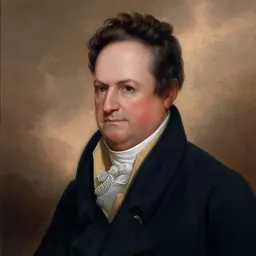
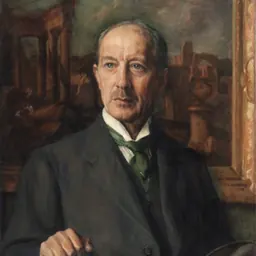
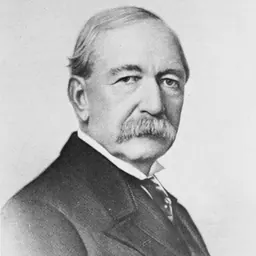
People in Carter Harrison III's life
Named in this biography and alive at the same time



Related people
Same field, nearest in time






Contemporaries
People whose lives overlapped Carter Harrison III's





Frequently asked questions
Who was Carter Harrison III?
American politician (1825-1893); mayor of Chicago 1879-1887 & 1893
When was Carter Harrison III born?
Carter Harrison III was born on 15 February 1825 in Lexington.
When did Carter Harrison III die?
Carter Harrison III died on 28 October 1893 in Chicago.
What was Carter Harrison III's occupation?
Carter Harrison III was a politician, lawyer, jurist and mayor.
What nationality was Carter Harrison III?
Carter Harrison III was American.
Sources & further reading
· Wikipedia: Carter Harrison III
· DBpedia: Carter Harrison III
Cite this page
APA: Biography.guide. (2026). Carter Harrison III. https://biography.guide/carter-harrison-iii/
MLA: "Carter Harrison III." Biography.guide, https://biography.guide/carter-harrison-iii/.
Chicago: "Carter Harrison III." Biography.guide. https://biography.guide/carter-harrison-iii/.
Data last updated: 2026-09-26 · Spot an error? Report a correction.
Page generated 2026-09-27 05:13 UTC