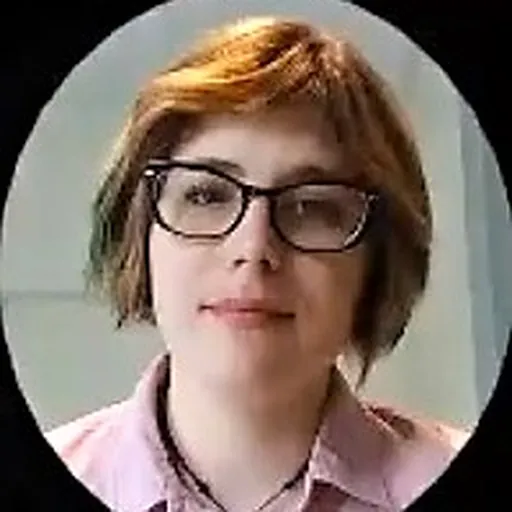
Carsen Stringer
Computational neuroscientist
About Carsen Stringer
Carsen Stringer was an American computational neuroscientist.
Carsen Stringer is an American computational neuroscientist and Group Leader at the Howard Hughes Medical Institute Janelia Research Campus. Stringer uses machine learning and deep neural networks to visualize large scale neural recordings and then probe the neural computations that give rise to visual processing in mice. Stringer has also developed several novel software packages that enable cell segmentation and robust analyses of neural recordings and mouse behavior.
Early life and education In 2009, Stringer pursued her undergraduate degree in Applied Mathematics and Physics at the University of Pittsburgh. She worked under the mentorship of Jonathan Rubin to design prostheses based on passive dynamic walking. Stringer then moved to the United Kingdom in 2013 to conduct her graduate studies at the University College London. Her recordings were performed in the rodent visual cortex and she used a variety of machine learning and dimensionality reduction techniques to explore the network level mechanisms that give rise to neural dynamics. She married Pachitariu before he started his lab at Janelia research campus, after which Stringer was awarded her own lab at Janelia research campus.
Stringer is now a Group Leader at Janelia and leads the Stringer Lab. The Stringer Lab also aims to fit biologically inspired deep network models to neural activity data gathered from the visual cortex to gain a better understanding of stimulus encoding in the visual cortex. One goal of the Stringer Lab is to understand how complex behaviors and sensory information are coded in the brain to drive decision making. Since sensory coding in the cortex can be affected by noise correlations from intrinsic population dynamics, Stringer created a model that generated intrinsic correlated variability to probe what might underlie the variability in these cortical dynamics. It has a low computational load and can be run in Python and Matlab to allow detection of over 10,000 cells. Stringer and her team frequently retrain the model with user-provided images which constantly improves the tool allowing for unbiased and efficient detection of cellular objects. Through this tool, Stringer explored whether neural "noise" previously reported during stimulus presentation is actually behaviorally driven as opposed to coding for previous sensory experiences. By monitoring facial expressions in mice and extracting them using Facemap, Stringer found that one third of population activity in the visual cortex could be predicted by a multidimensional model of the mouse's facial patterns. This tool enables visualization of high-dimensional data. It sorts neural spikes or calcium signals and ranks them by similarity to enable visualization in a graphical user interface. She helped to elucidate that non-negative deconvolution (NND) was the best approach when inferring spike times from calcium imaging. Her work is critical as it shines a light on the many ways that calcium imaging analyses can produce biases that lead to inaccurate scientific interpretations. Spontaneous behaviors drive multidimensional, brainwide activity. CARSEN STRINGER, MARIUS PACHITARIU, NICHOLAS STEINMETZ, CHARU BAI REDDY, MATTEO CARANDINI, KENNETH D. HARRIS. SCIENCE19 APR 2019 Computational processing of neural recordings from calcium imaging data. Carsen Stringer and MariusPachitariu. 2019. Current Opinion in Neurobiology 2019, 55:22–31 Robustness of Spike Deconvolution for Neuronal Calcium Imaging. Marius Pachitariu, Carsen Stringer, Kenneth D. Harris. Journal of Neuroscience 12 September 2018, 38 (37) 7976–7985; Suite2p: beyond 10,000 neurons with standard two-photon microscopy. Marius Pachitariu, Carsen Stringer, Mario Dipoppa, Sylvia Schröder, L. Federico Rossi, Henry Dalgleish, Matteo Carandini, Kenneth D. Harris. bioRxiv 061507; Carsen Stringer, Marius Pachitariu, Nicholas A Steinmetz, Michael Okun, Peter Bartho, Kenneth D Harris, Maneesh Sahani, Nicholas A Lesica. Inhibitory control of correlated intrinsic variability in cortical networks. eLife 2016;
Don’t just read it —
keep it.
Full-length biographies made to live with: read them, listen on the way to work, watch them tonight.
- E-book
- Audio
- Video
Instant download · yours to keep · every purchase keeps this site free
Important facts
Related people
Same field, nearest in time


Frequently asked questions
Who was Carsen Stringer?
computational neuroscientist
What was Carsen Stringer's occupation?
Carsen Stringer was a computational neuroscientist.
What nationality was Carsen Stringer?
Carsen Stringer was American.
Sources & further reading
Cite this page
APA: Biography.guide. (2026). Carsen Stringer. https://biography.guide/carsen-stringer/
MLA: "Carsen Stringer." Biography.guide, https://biography.guide/carsen-stringer/.
Chicago: "Carsen Stringer." Biography.guide. https://biography.guide/carsen-stringer/.
Data last updated: 2026-09-21 · Spot an error? Report a correction.
Portrait: Wikimedia Commons · author & licence
Page generated 2026-09-27 05:00 UTC