
Caroline M. Nichols Churchill
American feminist
About Caroline M. Nichols Churchill
Lived 1833 – 1926 (aged 92). Caroline M. Nichols Churchill was an American women's rights activist, autobiographer, journalist, editor, suffragist and writer.
Caroline Maria Nichols Churchill ( Nichols; pen name, C. M. Churchill; December 23, 1833 – 1926) was a Canadian-born writer and newspaper editor in the United States, best known as the editor of the Queen Bee, a feminist publication prominent during the Colorado Suffrage movement. As a travel writer and editor, Churchill aimed to promote female independence in the post Civil War West, culminating ultimately in the right to vote in the state of Colorado. Her publications Over the Purple Hills, Over the Evergreen Hills, and Little Sheaves detailed the growth of California as well as her experiences in Texas, Missouri, Kansas, Indian Territory and later Colorado. In 1988, she was inducted into the Colorado Women's Hall of Fame.
Early life Caroline (nickname, "Kate") Maria Nichols was born in 1833 in Pickering, Upper Canada, located about 40 miles from Toronto. Not much is known about her immediate family apart from the fact that her parents were Americans. Her formal schooling was very limited, amounting to several months to one year at most. She was mainly a self-taught learner who spent the long winters reading or sewing and mending for families in the nearby area. Outside St. Cloud, she lived an isolated pioneer life of a frontierswoman, experiencing Native American raids and warfare. Once while teaching in a rural school, she and others took shelter from an Indian attack. During the long months, she became an avid reader of the editor and Washington Correspondent Jane Grey Swisshelm, whom she later credited in The Queen Bee for opening her eyes to "the wrongs in which women suffer from the absolute power of the ruling class". In her 1909 autobiography, Active Footsteps, she refers to her coughing fits and weak lungs; some commenters on her life have taken this to mean she had tuberculosis, but it may have been another condition such as allergies. For Churchill, this profession allowed her to make a cultural contribution to a mainly male-dominated literary world.
Published books Before her work as an editor, Churchill was known as a travel writer and roving essayist. Her published works, Little Sheeves (1874) and Over the Purple Hills, or Sketches from Travel in California (1883) give illustrations of her experiences travel as an unaccompanied woman in the post-Civil War West.
The publication of Little Sheeves and Over the Purple Hills marked the emergence of Churchill as a public persona and literary figure, an area usually restricted to women. Her works and opinions broadened the public opinion of social ideas of what women of a certain social class could accomplish. As one of the first female travelers, she pioneered and vocalized freedoms for women before her work on legal enfranchisement began. She worked to overturn an 1872 San Francisco bill that punished prostitutes but excluded any consequences for their male clientele. While many westerners held negative views of Chinese immigrants, Churchill remained a defender of their rights in her writings throughout her life. Her writing reflected a belief that all peoples should have an equal opportunity to lead a life free from bodily harm and repression. In Denver, she found a population – both male and female – who showed interest in progressive ideas on women's issues, which prompted her to begin her newspaper the same year. She used the byline "C.M. Churchill" for all her articles in this newspaper.
She named her paper Colorado Antelope, which was supposed to mimic the forward strides of the movement toward Women's suffrage in the United States by describing a small animal that was hard to catch. The motto of the paper, "Come let us reason together," showed Churchill's attitudes on women's rights in the nineteenth century, and expressed her dedication to the "interests of humanity, woman's political equality and individually."
The paper was – as declared by Churchill – an instant success, after selling twenty-five hundred copies in the first three months and thus was able to reduce the subscription price from one dollar and fifty cents to one dollar a year. The paper had grown in circulation, and Churchill was able to increase publications from monthly to weekly editions.
Suffrage activities
The late nineteenth century in Colorado was host to a number of forces that ultimately led to suffrage – including the Women's Christian Temperance Union, the Farmer's Alliance populist political party, the merger of NWSA and AWSAA into NAWSA. However, what was most influential in regards to Churchill was that by 1890 in Colorado, most women met in cities and were able to meet and discuss the incendiary topics she frequently discussed in The Queen Bee. Social democratic politics in the west was focused on suffrage, temperance, and populism – such as the Farmer's Alliance – in which Churchill consistently challenged, questioned, and at times affirmed.
Churchill and her writings that demanded equal suffrage were similar, but far more critical than most of the sentiments expressed by many of the women's clubs in Colorado at the time. Many of these clubs who aimed for suffrage practiced a "domestic ideology", or maintain that there were separate spheres of influence and importance for men and women. These clubs recognized the failings of the first suffrage referendum in 1887 – when the Colorado Constitution was first written and enfranchisement to women denied – and sought to align their politics with the voting body of men – keeping quite on any individual racial sentiments regarding the vast number of ethnic populations in the state.
Churchill was willing to not only question the racial subtext which underlay the women's suffrage movement, but to constantly question, challenge, and applaud the actions of men in the state of Colorado. This distrust in the church led to many more critical articles regarding the church, including her harshly unsympathetic views towards Mexican immigrants, on which she blamed a negative Catholic influence.
Throughout the entire suffrage movement, leading up to the 1893 Colorado women's suffrage referendum, Churchill continued to speak her mind, even if it was against the general practices of many women campaigning for the vote – she was insistent that she would not "curry favor" to the larger majority. While she remained an outsider of the movement, she continued to vocalize her thoughts and often, pioneering support for immigrants who were continually mistreated or abused.
Later life
Churchill's fame was most noted up to the suffrage amendment in Colorado in 1893. After women gained the right to vote, subscriptions for The Queen Bee declined. Churchill ceased to be a public presence or persona, and the last of her known efforts are pleas for more readers in 1895, when she announced a brief hiatus of the publication. The Queen Bee did not print another issue.
Aside from her public persona and writings, little is known about Churchill's personal life in Colorado or elsewhere. Historians are unclear about many facts in her later life. Today, Churchill is celebrated by western historians as a key figure in the western suffrage movement and a pioneer as a female journalist.
Selected works Little Sheeves (1874) Over the Purple Hills, or Sketches from Travel in California (1883) Active Footsteps (1909)
Don’t just read it —
keep it.
Full-length biographies made to live with: read them, listen on the way to work, watch them tonight.
- E-book
- Audio
- Video
Instant download · yours to keep · every purchase keeps this site free
Important facts
People in Caroline M. Nichols Churchill's life
Named in this biography and alive at the same time
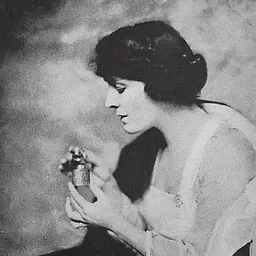
Related people
Same field, nearest in time

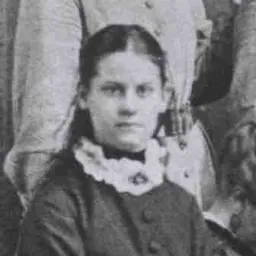


Contemporaries
People whose lives overlapped Caroline M. Nichols Churchill's
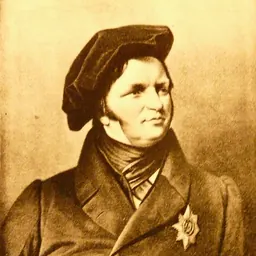
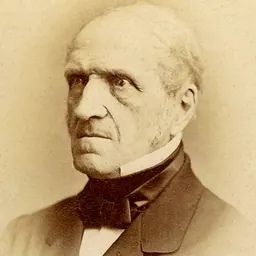



Frequently asked questions
Who was Caroline M. Nichols Churchill?
American feminist (1833-1926)
When was Caroline M. Nichols Churchill born?
Caroline M. Nichols Churchill was born on 23 December 1833 in Pickering, Whitby.
When did Caroline M. Nichols Churchill die?
Caroline M. Nichols Churchill died on 14 January 1926 in Colorado Springs.
What was Caroline M. Nichols Churchill's occupation?
Caroline M. Nichols Churchill was a women's rights activist, autobiographer, journalist, editor, suffragist and writer.
What nationality was Caroline M. Nichols Churchill?
Caroline M. Nichols Churchill was American.
Sources & further reading
· Wikipedia: Caroline M. Nichols Churchill
· DBpedia: Caroline M. Churchill
Cite this page
APA: Biography.guide. (2026). Caroline M. Nichols Churchill. https://biography.guide/caroline-m-nichols-churchill/
MLA: "Caroline M. Nichols Churchill." Biography.guide, https://biography.guide/caroline-m-nichols-churchill/.
Chicago: "Caroline M. Nichols Churchill." Biography.guide. https://biography.guide/caroline-m-nichols-churchill/.
Data last updated: 2026-09-25 · Spot an error? Report a correction.
Page generated 2026-09-27 05:13 UTC