
Caroline Levine
American literary critic
About Caroline Levine
Born 1970. Caroline Levine is an American scholar of English, university teacher and literary theorist.
Caroline Levine (born 1970) is an American scholar and literary critic. She is the David and Kathleen Ryan Professor of Humanities at Cornell University.
Early life and education Levine was born in 1970 in Syracuse, New York.
Levine earned her A.B. from Princeton University in 1992, choosing Comparative Literature as a major because she disliked the nationalist history approach to English literature.
Career Levine assumed her position as David and Kathleen Ryan Professor of the Humanities at Cornell University in 2016 Prior to her work at Cornell, Levine taught at the University of Wisconsin–Madison from 2002 to 2016 and was chair of the English Department from 2013 to 2016. She held previous appointments in the English Department at Rutgers University–Camden (1998–2002) and Wake Forest University (1997–1998).
Levine's published works are in the fields of literary theory, cultural studies, Victorian literature, environmental humanities, narrative theory, world literature, and infrastructure studies.
Levine has published twenty academic articles on Victorian literature , including four articles on George Eliot , four articles on Elizabeth Barrett Browning , two articles on John Ruskin , as well as articles on Charlotte Brontë , Charles Dickens , Wilkie Collins , John Clare , Elizabeth Gaskell , and Henry Mayhew . She has said her interest in the Victorian period began with its interest in collectives, such as the "shared utterance" in poems by Alfred Lord Tennyson or Elizabeth Barrett Browning. , a role she views as essential to democratizing literature. She also co-founded the Mellon World Literatures Workshop at the University of Wisconsin-Madison.
Shift to Climate Activism and Public Humanism Levine is an activist and public intellectual working to address climate change and sustainability. In the course of her career, she has retooled formalist methods to address the climate crisis.
While traditional literary criticism often prizes "anti-instrumentality"—the idea that art should be studied for its own sake rather than for a practical goal—Levine argues that the climate crisis has made this kind of over-analysis a luxury human beings can no longer afford.
Levine still considers herself a literary critic because she uses the methodological tools of her training and researches historical conditions, analyzing the artfulness of how social worlds are designed. She moves fluidly between nineteenth-century literature and modern climate policy because she sees both through the lens of form. She is a member of TIAA-Divest and Citizens Climate Lobby and was a leader in the successful effort to make Cornell University divest from fossil fuels.
Personal life Levine was previously married to the American scholar Professor Jon McKenzie, Director of StudioLab and Professor of Practice at Cornell University, whom she has described as the most serious pleasure in her life.
Levine has two sons , was an interdisciplinary literary study that began as doctoral research, funded by a British Marshall Commission fellowship.
Levine's second monograph, Provoking Democracy: Why We Need the Arts (2007) , was spurred by contemporary culture wars and legal battles over art funding and obscenity. Levine set out to use her expertise in narrative theory to explain why public outrages were a sign of health for democracy rather than a sign of its decay. She argued that the avant-garde and provocative art are not a threat to democracy but a functional necessity for it, reframing starving artists and transgressive artists as democratic heroes whose role is to protect the public sphere from conformity. Rebutting the idea that art should reflect the will of the majority, she claimed that democracy requires art that challenges, shocks, and unsettles mainstream values. Provoking Democracy is less about one time period than about how the idea of the rebellious artist survived and evolved across different centuries. The artists Levine examined span the 1800s to the 2000s, including D.H. Lawrence, John Ruskin, Elizabeth Barrett Browning, Charlotte Brontë, Bertolt Brecht, Constantin Brâncuși, Richard Serra, and Andreas Gursky.
Levine's third monograph, Forms: Whole, Rhythm, Hierarchy, Network (2015) , argued that aesthetic patterns (which Levine calls "forms" ("In literary studies, the word form typically refers to the patterns, shapes, and structures that organize literary texts, such as plot and metre.) I deliberately define form more broadly than that—as any shape or configuration of materials, any arrangement of elements, any ordering or patterning (Levine, Forms 1–6). Politics, according to this definition, is very much a matter of form." -Levine Forms was the focus of a forum in PMLA in 2017.
A methodological guide for scholars, students, and citizens, Levine's fourth monograph, The Activist Humanist: Form and Method in the Climate Crisis (2023) , argued for pivoting humanities scholarship toward practical, large-scale activism that influences public, structural change. Building on the theory developed in Forms, Levine proposed applying formalist methods—i.e., the analysis of organizational patterns—to social and physical infrastructures to build systems necessary for collective survival and climate justice. Levine urged all academics to come together and use their influence to avert global catastrophe. At the end of the book, Levine included a practical workbook, titled "Three Weeks to Political Action," which provided a guide for starting structural change.
Reception and critiques Levine's work has been praised for originality, clarity, and connecting form, politics, and the climate. Recurring criticisms, however, include a lack of historical context, treating capitalism as "one of many" patterns rather than a dominant force, and an unclear roadmap for practical activism.
Professor Philip V. Allingham (Lakehead University) observed that Levine's Serious Pleasures of Suspense neglected material, historical, and production-context factors that shaped how Victorian readers actually experienced suspense and narrative doubt. According to Allingham, Levine largely ignored the role of Victorian publishers, serialization, paratextual elements like illustrations, intertextuality, and how these shaped reception.
In her review of Provoking Democracy: Why We Need the Arts, Susana Smith Bautista, Ph.D., argued that Levine's elevation of the avant-garde artist as a democratic hero who challenges the mainstream rather than integrating with it pedagogically validates the very snob stereotype of the artist that the book set out to refute. In Bautista's view, Levine also underplayed the role of institutions like museums and glossed over how markets and politics amplify certain forms of provocation. and The Times Literary Supplement.
Professor Carolyn Lesjak (Simon Fraser University) observed that Forms offers limited ways to make real changes within the existing system rather than challenging the system itself. Lesjak contended that by treating all organizational patterns as equal, Levine ignores the underlying influences of global capitalism and the climate crisis. According to Lesjak, Levine's focus on small-scale collisions between forms makes it look like people have more freedom than they actually do. Lesjak argued that Levine chooses piecemeal "fixes" over a deeper analysis of how power and economic exploitation function.
Asking the rhetorical question, "Is this what critics do?", Professor Sheila Liming (Champlain College) questioned whether Levine's core activity of mapping and describing how forms collide qualifies as literary criticism. She suggested that the method might be too self-reflexive and descriptive to drive deep interpretation.
Reception and critiques of The Activist Humanist The Activist Humanist was excerpted and critiqued in The Chronicle of Higher Education.
Professor Anne Pasek (Trent University) argued that The Activist Humanist does not provide an adequate step-by-step guide or quality-control standards for analyzing social structures, suggesting that without clear rules for what makes a "strong" or "weak" interpretation, Levine's approach works better as an inspiring idea than as a practical, teachable system. She has acknowledged that some humanities scholars believe her "practical humanism" may overlook the supposed true value of the humanities, potentially turning them into a watered-down social science.
Dialogue with Sarah Cole on Activism In a 2024 discussion hosted by the Columbia Climate School, Levine and Professor Sarah Cole, Dean of the School of the Arts and Parr Professor of English and Comparative Literature at Columbia University, discussed the integration of political action into humanist work. Cole argued for a distinction between academic instruction and political organizing:
Levine responded by advocating for a shift from academic awareness toward direct engagement:
Quote Some argue that... we should just read literature and look at art. But I think that studying art and literature has always had a political impulse behind it. A lot of people have argued that [the humanities] raises our consciousness... ut that doesn't give us tools for taking action, so I argue against that position. Most people now know that glaciers are melting, for example, but they don't know how to stop that process. It's time to move beyond raising awareness: we need to figure out what effective actions ordinary people can take. And my research makes it clear that small-scale individual actions... aren't making enough of a difference. We need organized collective action to reduce the world's dependence on fossil fuels. — Caroline Levine 2015 James Russell Lowell Prize from the MLA
Levine was a 1992 Senior Prize recipient at Princeton, winning the Moses Taylor Pyne Honor Prize, awarded annually to that member of the senior class who has most clearly manifested scholarship, strength of character, and effective leadership.
Flavorwire named Forms as one of the 10 Must-Read Academic Books for 2015.
Levine was elected to the American Philosophical Society in 2026. Provoking Democracy: Why We Need the Arts. Oxford: Blackwell, 2007. "Manifestos" series. Forms: Whole, Rhythm, Hierarchy, Network. Princeton: Princeton University Press, 2015. The Activist Humanist: Form and Method in the Climate Crisis. Princeton: Princeton University Press, 2023.
Anthologies Norton Anthology of World Literature. New York: W.W. Norton & Co., 2024.
Edited Books From Author to Text: Re-reading George Eliot's Romola. Aldershot: Ashgate Press, 1998. Narrative Middles: Navigating the Nineteenth-Century British Novel. Columbus: Ohio State University Press, 2011. Dr. Jekyll and Mr Hyde by Robert Louis Stevenson. New York: W.W. Norton & Co., 2021.
Edited Special Issues of Journals "Gender, Genre and George Eliot," Women's Writing 3:2. 1996. "What Counts as World Literature?", MLQ 74:2 (June), with co-authored introduction. 2013. "Television for Victorianists," special issue of Romanticism and Victorianism on the Net 63 (April), with introduction. 2013.
Don’t just read it —
keep it.
Full-length biographies made to live with: read them, listen on the way to work, watch them tonight.
- E-book
- Audio
- Video
Instant download · yours to keep · every purchase keeps this site free
Important facts
People in Caroline Levine's life
Named in this biography and alive at the same time






Related people
Same field, nearest in time

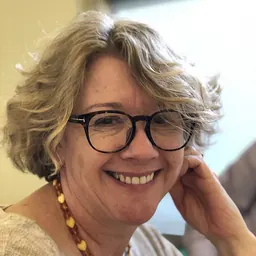
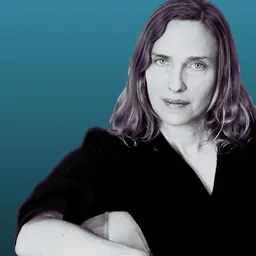
Contemporaries
People whose lives overlapped Caroline Levine's
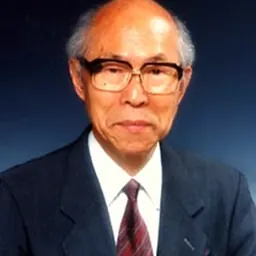
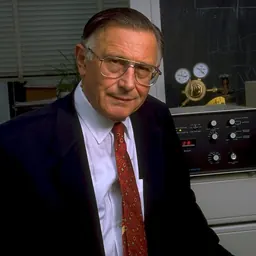
Frequently asked questions
Who is Caroline Levine?
American literary critic
When was Caroline Levine born?
Caroline Levine was born on 12 December 1970.
What is Caroline Levine's occupation?
Caroline Levine is a scholar of English, university teacher and literary theorist.
What nationality is Caroline Levine?
Caroline Levine is American.
Sources & further reading
Cite this page
APA: Biography.guide. (2026). Caroline Levine. https://biography.guide/caroline-levine/
MLA: "Caroline Levine." Biography.guide, https://biography.guide/caroline-levine/.
Chicago: "Caroline Levine." Biography.guide. https://biography.guide/caroline-levine/.
Data last updated: 2026-09-20 · Spot an error? Report a correction.
Page generated 2026-09-27 05:32 UTC