
Caroline Earle White
American animal rights advocate
About Caroline Earle White
Lived 1833 – 1916 (aged 82–83). Caroline Earle White was an American animal rights advocate.
Caroline White ( Earle; 1833–1916) was an American philanthropist and anti-vivisection activist. She co-founded the Pennsylvania Society for the Prevention of Cruelty to Animals (PSPCA) in 1867, founded its women's branch (WPSPCA) in 1869, and founded the American Anti-Vivisection Society (AAVS) in 1883.
Background
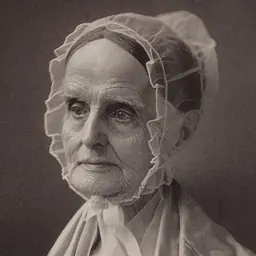
Early life and education Caroline Earle was born in Philadelphia on September 28, 1833, to Quaker parents Thomas Earle and Mary Hussey. Thomas Earle was a successful Philadelphia lawyer who was devoted to the abolitionist cause and often represented both free and fugitive African Americans. Earle also wrote the new constitution for Pennsylvania and was a candidate for vice president when the Anti-Slavery party had its first presidential ticket in 1840. Earle’s mother, Mary Hussey, was a cousin to Lucretia Mott and was an abolitionist and a suffragist.
Animal advocacy
Pennsylvania Society for the Prevention of Cruelty to Animals
As a child, White often witnessed drivers beating their exhausted horses as they labored under heavy freight down Philadelphia’s streets. Later she recalled how such sights depressed and troubled her that she could no longer walk down certain streets.
Also inspired by the RSPCA, wealthy American Henry Bergh founded the American Society for the Prevention of Cruelty to Animals on April 10, 1866. In the summer of 1866, Caroline Earle White visited Henry Bergh in New York; she was seeking advice on how to begin a Philadelphia chapter of the SPCA. Bergh told her she should begin like he did, obtaining patronage of the city’s most prominent individuals. White drafted a petition calling for the creation of a Philadelphia chapter of SPCA, and secured dozens of signatures and pledges of financial support. Unknown to her, at the same time two other Philadelphians were trying to organize a Philadelphia SPCA: M. Richards Muckle, business manager of the Philadelphia Public Ledger, and S. Morris Waln. Finally brought together by Henry Bergh, S. Morris Waln provided financial support while White and Muckle, with Richard White’s assistance, drafted the group’s charter and corresponding laws. On June 21, 1868, the Pennsylvania Society for the Prevention of Cruelty to Animals was founded. S. Morris Waln was elected president, but White was excluded from an official position. Her husband served on the board of managers and most likely spoke for her.
Women's Humane Society Although women played major roles in American humane organizations; establishing, funding, and volunteering, they were barred from true leadership roles. To remedy their lack of autonomy many women began to form women’s branches of preexisting groups. White founded the Women’s Humane Society (also known as the Women’s Pennsylvania Society for the Prevention of Cruelty to Animals or WPSPCA) in 1869. Early on the WPSPCA took on many animal issues, such as homeless dogs and cats, by opening America’s first animal shelter in 1869. The shelter also employed three cruelty officers, men authorized to prevent and punish animal abuse. White viewed the 28-hour law as the crowning achievement of her life. The WPSPCA also advocated against blood sports such as; fighting dogs and roosters, animal baiting (tethering an animal and allowing other animals to attack), gander pulling (riders on horseback attempt to decapitate a bird that has been greased and poised), pigeon shoots, and fox hunts.
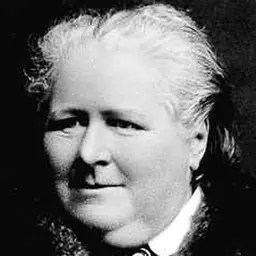
Frances Power Cobbe, British antivivisectionist and feminist, advised White to create an organization that would address the use of animals in testing, research and education. In 1883, she founded the American Anti-Vivisection Society (AAVS), the first of its kind in the United States. Although the group harbored an absolutist stance, AAVS initially pursued a more flexible approach to attempt to end the practice. The board of directors was mainly composed of physicians.
White died at her summer home in Nantucket, Massachusetts, on September 7, 1916.
Selected publications
An Answer to Dr. Keen's Address Entitled "Our Recent Debts to Vivisection" (1886)
Don’t just read it —
keep it.
Full-length biographies made to live with: read them, listen on the way to work, watch them tonight.
- E-book
- Audio
- Video
Instant download · yours to keep · every purchase keeps this site free
Important facts
Family & relationships
People in Caroline Earle White's life
Named in this biography and alive at the same time



Related people
Same field, nearest in time



Contemporaries
People whose lives overlapped Caroline Earle White's



Frequently asked questions
Who was Caroline Earle White?
American animal rights advocate
When was Caroline Earle White born?
Caroline Earle White was born in 1833 in Philadelphia.
When did Caroline Earle White die?
Caroline Earle White died in 1916.
What was Caroline Earle White's occupation?
Caroline Earle White was an animal rights advocate.
What nationality was Caroline Earle White?
Caroline Earle White was American.
Sources & further reading
· Wikipedia: Caroline Earle White
· DBpedia: Caroline Earle White
Cite this page
APA: Biography.guide. (2026). Caroline Earle White. https://biography.guide/caroline-earle-white/
MLA: "Caroline Earle White." Biography.guide, https://biography.guide/caroline-earle-white/.
Chicago: "Caroline Earle White." Biography.guide. https://biography.guide/caroline-earle-white/.
Data last updated: 2026-09-20 · Spot an error? Report a correction.
Page generated 2026-09-27 05:28 UTC