
About Carol Kramer
Lived 1943 – 2002 (aged 59). Carol Kramer was an American archaeologist, known for Ethnoarchaeology.
Carol Kramer (May 3, 1943 – December 3, 2002) was an American archaeologist known for conducting ethnoarchaeology research in the Middle East and South Asia. Kramer also advocated for women in anthropology and archaeology, receiving the Squeaky Wheel Award from the Committee on the Status of Women in Anthropology in 1999. Kramer received her Ph.D. from the University of Pennsylvania in 1971.
Kramer returned to fieldwork in 1995 as a site supervisor for excavations in Gordion, Turkey, and returned in 1996 to explore the opportunity of conducting ethnoarchaeology research in Yassihöyük and other villages near the area of Gordion, Turkey. and in Ian Hodder's The Present Past: An Introduction to Anthropology for Archaeologists. Alok Shrotriya notes in an article, “Ceramic Ethno-archaeology and its Applications,” that Kramer carried out ethnoarchaeological research specifically for studying ancient artifacts.
Professional career Kramer began her teaching career in 1971 at Queens College. From 1974 to 1990, Kramer switched to teaching at Lehman College and then the Graduate Center at the City University of New York. Together, Kramer and Longacre helped to guide Louise Senior's ceramic research published as “The Estimation of Prehistoric Values Cracked Pot Ideas in Archaeology,” in James Skibo, William Walker, and Axel Nielsen's Expanding Archaeology (1995).
Kramer presented her research widely at professional organizations.
Advocacy for women in anthropology and archaeology Kramer advocated for the professional development of women in anthropology and archaeology. In 1980, Kramer and her anthropological colleagues, including Roger Sanjek, Rayna Rapp, Carole Vance, and Glenn Peterson, drafted the “Resolution to Implement the 1972 American Anthropological Association Resolution on Fair Practices in the Employment of Women." Stark and Kramer's commentary discussed the state of gender equality in anthropology by looking at gender disparities in the number of graduate students, Ph.D. recipients, funding receipts, and faculty members.
From 1973 to 1975, Kramer served as a member of the Committee on the Status of Women in Anthropology (COSWA) and the host and discussion leader at the COSWA's roundtable discussing professional development.
Nan Rothschild wrote an obituary for Carol Kramer that was published in the American Anthropologist in March 2004.
In April and May 2015, artist Marjolijn de Wit created an exhibition displayed in the Asya Geisberg Gallery in New York City, New York titled “Pots Are Not People." The exhibition title refers to Kramer's article “Pots and People” published in Mountains and Lowlands: Essays in the Archaeology of Greater Mesopotamia in 1977. De Wit builds on Kramer's argument that “archaeological discoveries signify diverse and complex notions of economy and locale, as opposed to assuming a more static idea of culture."
The Carol Kramer Papers are currently housed at the National Anthropological Archives. These papers include Kramer's field notes, correspondence, teaching files, photographs, sound recordings, maps, and botanical specimens representing her ethnoarchaeological fieldwork in Shahabad (also known as Aliabad), Iran and Rajasthan, India. Her papers also include photographs and field notes from her research on the Hasanlu Project at Dalma Tepe, Iran.
Selected bibliography 1971 "The 1971 Excavations at She Gabi, Iran," Archaeology 26: pages 224–227. 1974 "Seh Gabi, 1973," Archaeology 27: pages 274–277. 1977 "Pots and Peoples," in Mountains and Lowlands: Essays in the Archaeology of Greater Mesopotamia, edited by L.D. Levine and T.C. Young Jr. Malibu: Undena Publications. 1979 Ebert, James, and Carol Kramer. "An Ethnoarcheological Approach to Reasessing the Meaning of Variability in Stone Tool Assemblages, Implications of Ethnography for Archaeology:" pages 59–74. 1979 Kramer, Carol. Ethnoarchaeology: implications of ethnography for archaeology. Columbia University Press. 1979 Kramer, Carol. "An archaeological view of a contemporary Kurdish village: domestic architecture, household size, and wealth." Ethnoarchaeology: Implications of Ethnography for Archaeology: pages 139–163. 1980 Kramer, Carol. "Estimating prehistoric populations: an ethnoarchaeological approach." L’archéologie de l'Iraq: perspectives et limites de l’interprétation anthropologique des documents, París, CNRS: pages 315–327. 1982 Village Ethnoarchaeology: Rural Iran in Archaeological Perspective. New York: Academic Press. 1982 Kramer, Carol. "Ethnographic households and archaeological interpretation: a case from Iranian Kurdistan." American Behavioral Scientist 25, number 6: pages 663–675 1983 Kramer, Carol. "Spatial organization in contemporary southwest Asian villages and archaeological sampling." TC Young et al: pages 347–68. 1985 Kramer, Carol. "Ceramic ethnoarchaeology." Annual review of anthropology: pages 77–102 1985 Kramer, Carol. "Ceramic production and specialization." Paléorient: pages 115–119 1988 "The Status of Women in Archaeology," Anthropology Newsletter 29, number 9: pages 11–12. (co-authored with Miriam Stark) 1991 “Ceramics in Two Indian Cities,” in Ceramic Ethnoarchaeology, edited by William Longacre. Tucson: University of Arizona Press. 1992 Kramer, Carol, and John E. Douglas. "Ceramics, caste, and kin: Spatial relations in Rajasthan, India." Journal of Anthropological Archaeology 11, number 2: pages 187–201 1994 Kramer, Carol. "Scale, organization, and function in village and town." Archaeological Views from the Countryside: village communities in early complex societies: pages 207–212. 1997 Pottery in Rajasthan: Ethnoarchaeology in Two Indian Cities. Washington, D.C.: Smithsonian Institution Press. 2001 Ethnoarchaeology in Action. Cambridge: Cambridge University Press. (co-authored with Nicholas David)
Don’t just read it —
keep it.
Full-length biographies made to live with: read them, listen on the way to work, watch them tonight.
- E-book
- Audio
- Video
Instant download · yours to keep · every purchase keeps this site free
Important facts
People in Carol Kramer's life
Named in this biography and alive at the same time
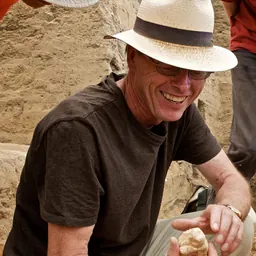






Related people
Same field, nearest in time
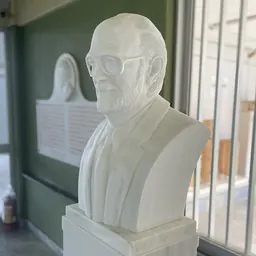
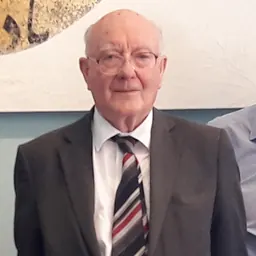

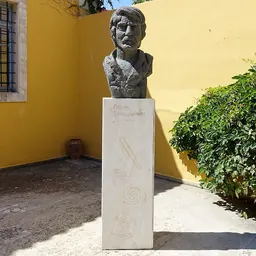
Contemporaries
People whose lives overlapped Carol Kramer's


Frequently asked questions
Who was Carol Kramer?
American archaeologist
When was Carol Kramer born?
Carol Kramer was born on 3 May 1943 in New York City.
When did Carol Kramer die?
Carol Kramer died on 3 December 2002 in Tucson.
What was Carol Kramer's occupation?
Carol Kramer was an archaeologist.
What was Carol Kramer known for?
Carol Kramer was known for Ethnoarchaeology.
What nationality was Carol Kramer?
Carol Kramer was American.
Sources & further reading
Cite this page
APA: Biography.guide. (2026). Carol Kramer. https://biography.guide/carol-kramer/
MLA: "Carol Kramer." Biography.guide, https://biography.guide/carol-kramer/.
Chicago: "Carol Kramer." Biography.guide. https://biography.guide/carol-kramer/.
Data last updated: 2026-09-20 · Spot an error? Report a correction.
Page generated 2026-09-27 05:01 UTC