
About Carlota O'Neill
Lived 1905 – 2000 (aged 95). Carlota O'Neill was a Spanish and Mexican journalist, writer, playwright and novelist.
Carlota Alejandra Regina Micaela O'Neill y de Lamo (27 March 1905 – 20 June 2000) was a Spanish writer and journalist. Her husband, Captain Virgilio Leret Ruiz, was executed after opposing the July 1936 military uprising in Melilla which led to the Civil War. She spent three years and nine months in prison and some years later went into Venezuela and Mexico. She also wrote under the pseudonyms Carlota Lionell and Laura de Noves.
Biography Early years Carlota Alejandra Regina Micaela O'Neill y Lamo was born on 27 March 1905 in Madrid, the daughter of Enrique O'Neill Acosta, a Mexican diplomat of Irish descent, and Regina de Lamo y Jiménez (also known as Nora Avante), a Spanish writer, pianist, passionate defender of unionism and of cooperativism, and a collaborator of Lluís Companys. She had one sister, (known by the pseudonym Regina Flavio), also a writer, as well as several half-brothers from a previous marriage of her father's. She was the aunt of the politician and writer Lidia Falcón O'Neill. Her uncle Carlos Lamo y Jiménez was the sentimental companion of the writer and journalist Rosario de Acuña.
Her family moved to Barcelona, where she met Virgilio Leret, a soldier. She had two children with him, Maria Gabriela (Mariela) and Carlota (Loti). Carlota and Virgilio were married when they were expecting their second daughter, with the sole purpose of protecting the legal status of their children. A feminist and leftist, Carlota O'Neill wrote dramatic works (Nosotros, with the Central Proletarian Theater; her work Al Rojo premiered in Madrid on 11 February 1933) and founded and directed the magazine Nosotras in 1934. This newspaper was promoted by the Catholic Propagandists Association and the collaborators were qualified as traitors by defenders of the Spanish Republic
Freedom and migration After her release from prison, she moved to her sister's home in Barcelona, Enriqueta, mother of Lidia Falcón, who worked in the Francoist censorship. Carlota O'Neill, thanks to the help of (Provincial Press Secretary of Barcelona and therefore responsible for censorship there), transferred her daughters to a school in Barcelona, Christ the King. Years later, O'Neill's daughter would remember this aid as qualifying him as a "good person" despite having fought on the side that had assassinated her father, Virgilio Leret. (In fact, Bernabé, a former Republican, chose not to go into exile and had been subjected to a purge process and even a court martial. He overcame the latter and was incorporated by Diego Ramírez Pastor, into the editorial staff of El Correo Catalán as a literary critic and editorial writer.)
During this period, she as Laura de Noves, her mother as Nora Avante, and her sister as Regina Flavio, started to write, mainly romance novels, to begin to write to contribute to the family economy. Her writings were promoted by the Francoist regime, thanks to the relationship of her sister with José Bernabé Oliva
When her daughters grew up, she decided to go to Venezuela with knowledge of francoist regime and later moved to Mexico, her father's country. In Mexico she wrote, years after the events, a book in which she recounts her experience in the Spanish Civil War, her term in the Victoria Grande prison, where she remained until 1940, the military trials she was subjected to, her struggle to regain custody of her daughters once she got out of prison, and her travel to Venezuela. This invention was patented in the Industrial Property Register of Madrid on 28 March 1935, with the number 137,729. The president of the republic, Manuel Azaña, named Leret a professor at the Four Winds School of Mechanics and commissioned Hispano-Suiza Aviation to construct a prototype in September 1936. Leret did not become a teacher and the prototype was not built. Leret's design was at the forefront of aeronautical advances that were registered in Europe.
Carlota kept alive the memory of her husband and spread his story, collected in her book Una mujer en la guerra de España. A point made in the book is that, after the execution of Virgilio Leret, his belongings were sent to her in prison. According to the author, these included three copies of the engine plans, which she sent away by clandestine means to be kept in the house of the father of another inmate. Meanwhile the Leret family in Spain, documents show, has copy number 3.
In 1940, she handed over the plans and the memoir of the invention to Commander James Dickson, United Kingdom air attache in Madrid, in the hope that Leret's work would be of help to the Allies in the Second World War. In 1971, she asked the British government what happened to the engine drawings delivered 30 years earlier at their embassy in Madrid, but received no response.
Works As Carlota O'Neill Romance novels ¡No tenéis corazón! (1924) Eva Glaydthon (1924) Historia de un beso (1925) Pigmalión (1925)
Other works ¿Qué sabe usted de Safo?: amó a las mujeres y a los hombres (1960) "Amor": diario de una desintoxicación (1963) La verdad de Venezuela (1968) Los muertos también hablan (1973) Teatro (1974) Romanza de las rejas: prosa poética (1977) Cinco maneras de morir: diálogos (1982) Circe y los cerdos; Cómo fue España encadenada; Los que no pudieron huir (1997)
Autobiography Una mujer en la guerra de España/Una mexicana en la guerra de España (1964)
As Carlota Lionell Biographical novella La triste romanza de amor de Franz Schubert (1942)
As Laura de Noves Biographical novellas E. D'araquy (1942) El amor imposible de Gustavo Adolfo Bécquer (1942) Elisabeth Vigée-Lebrun: pintora de reinas (1944)
Romance novels Rascacielos (1942) Beso a usted la mano señora (1943) Esposa fugitiva (1943) Al servicio del corazón (1945) En mitad del corazón (1949) …y la luz se hizo ¿Quiere usted ser mi marido? La señorita del antifaz Las amó a todas No fue vencida Patricia Packerson pierde el tren Vidas divergentes
Chiquita series Chiquita modista: manual de modistería práctico (together with Elena Ramos) (1955) Chiquita en sociedad: guía y orientación para comportarse en el trato social (1955) Chiquita se casa (1955)
Don’t just read it —
keep it.
Full-length biographies made to live with: read them, listen on the way to work, watch them tonight.
- E-book
- Audio
- Video
Instant download · yours to keep · every purchase keeps this site free
Important facts
Family & relationships
People in Carlota O'Neill's life
Named in this biography and alive at the same time
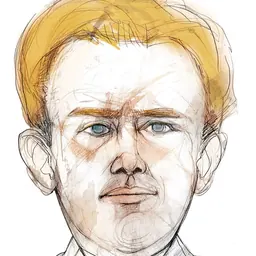
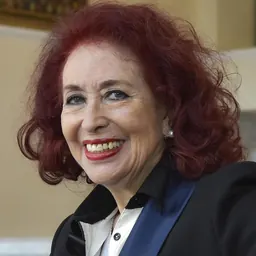
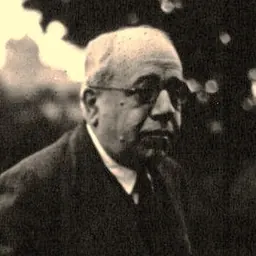
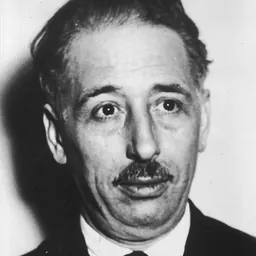



Related people
Same field, nearest in time



Contemporaries
People whose lives overlapped Carlota O'Neill's




Frequently asked questions
Who was Carlota O'Neill?
Spanish-Mexican writer and journalist
When was Carlota O'Neill born?
Carlota O'Neill was born on 27 March 1905 in Madrid.
When did Carlota O'Neill die?
Carlota O'Neill died on 20 June 2000 in Caracas, El Hatillo, Miranda, Venezuela.
What was Carlota O'Neill's occupation?
Carlota O'Neill was a journalist, writer, playwright and novelist.
What nationality was Carlota O'Neill?
Carlota O'Neill was Spanish and Mexican.
Sources & further reading
Cite this page
APA: Biography.guide. (2026). Carlota O'Neill. https://biography.guide/carlota-o-neill/
MLA: "Carlota O'Neill." Biography.guide, https://biography.guide/carlota-o-neill/.
Chicago: "Carlota O'Neill." Biography.guide. https://biography.guide/carlota-o-neill/.
Data last updated: 2026-09-22 · Spot an error? Report a correction.
Page generated 2026-09-27 05:24 UTC