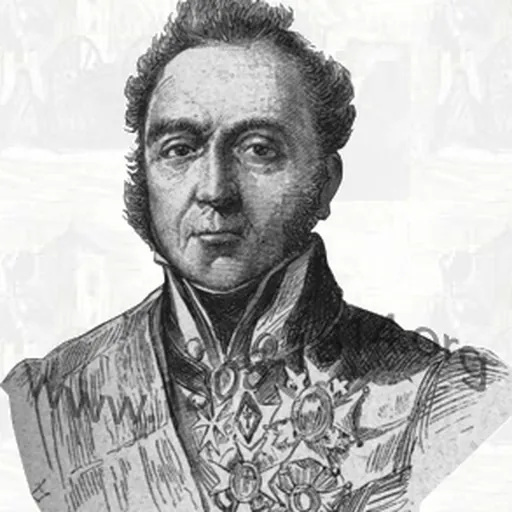
About Carlos de España
Lived 1775 – 1839 (aged 63–64). Carlos de España was a French and Spanish military personnel and governor.
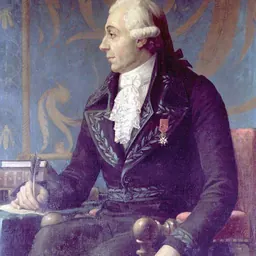
Carlos de España, 1st Conde de España was a French-born Spanish general who saw distinguished service in the Peninsular War, and as governor of Barcelona, was an opponent of Spanish liberals. In his letters and dispatches, Wellington refers to him as Carlos de España.
Early career He was the son of French General Henri Bernardo d’Espagnac, 2nd Marquis d' Espagnac de Ramefort, and Clara Carlota de Cabalby. He fought with his father in the 1792 campaign against the revolution in the Army of the Princes. After its failure, he went to Holland and then to England. In 1793, he fought in Flanders with his brothers Andrew and Arnold in the Royal Emigrants Regiment, and later that year he joined his father in Spain, accompanied by Andrew. Between 1794 and 1796, he fought in Catalonia in the ranks of the Royal Legion, later called the Queen's Battalion. The Bourbon Regiment was formed from the remnants of all the émigré units, and he joined it with the rank of captain. With this regiment, he went to Majorca, where he met Dionisia Rossiñol, whom he married on January 20, 1804. They had three children. Following that battle, he was promoted to field marshal.
In March 1812, he was wounded again at the Siege of Badajoz,
Following Salamanca, Wellington appointed him governor of Madrid,
He was again wounded at the Siege of Pamplona in 1813.
For his services, King Ferdinand VII of Spain granted him the title of Conde de España (Count of Spain) in 1819.
Post-war career Exiled to the Balearic Islands during the Trienio Liberal (1820-1823), he supported the reaction embodied by the Royalist Urgel Regency. He also represented his sovereign in Paris, Vienna, and at the Congress of Verona (1822) in the negotiations undertaken with the Quintuple Alliance. He returned to Spain with the French armies during the 1823 expedition and was appointed Captain General and Viceroy of Navarre in 1823 and of Aragon in 1824-1825, where he suppressed the ultra-conservative rebellion of Jorge Bessières. Ferdinand VII rewarded him in 1826, by granting him the title of Grandee of Spain and appointing him Captain General of Catalonia (1827-1832). The Count distinguished himself there by the ruthlessness with which he suppressed the 1827 revolt of the Aggrieved. His body was thrown into the river with a stone around his neck.
Don’t just read it —
keep it.
Full-length biographies made to live with: read them, listen on the way to work, watch them tonight.
- E-book
- Audio
- Video
Instant download · yours to keep · every purchase keeps this site free
Important facts
Related people
Same field, nearest in time



Contemporaries
People whose lives overlapped Carlos de España's



Frequently asked questions
Who was Carlos de España?
Spanish general
When was Carlos de España born?
Carlos de España was born on 15 August 1775 in Foix.
When did Carlos de España die?
Carlos de España died in 1839 in Organyà.
What was Carlos de España's occupation?
Carlos de España was a military personnel and governor.
What nationality was Carlos de España?
Carlos de España was French and Spanish.
Sources & further reading
Cite this page
APA: Biography.guide. (2026). Carlos de España. https://biography.guide/carlos-de-espana/
MLA: "Carlos de España." Biography.guide, https://biography.guide/carlos-de-espana/.
Chicago: "Carlos de España." Biography.guide. https://biography.guide/carlos-de-espana/.
Data last updated: 2026-09-23 · Spot an error? Report a correction.
Portrait: Wikimedia Commons · author & licence
Page generated 2026-09-27 05:05 UTC