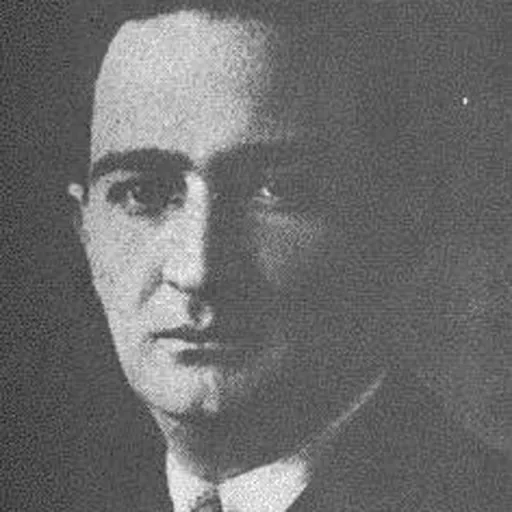
About Carlos Arango Vélez
Lived 1897 – 1974 (aged 77). Carlos Arango Vélez was a Colombian lawyer.
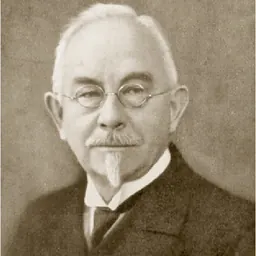
Carlos Arango Vélez (Bogotá, February 13, 1897 – ibidem, October 12, 1974) was a Colombian jurist and Liberal Party politician.
Arango Vélez held several public offices, such as Mayor of Bogotá (1935–1936), Minister of War (1931), and Parliamentarian, where he stood out as a skilled orator. He was defeated by Alfonso López Pumarejo in his 1942 run for President of Colombia. Following his loss, he became increasingly close to the progressive sector of conservatism.
He was father-in-law to Colombian president Misael Pastrana Borrero.
Life Carlos Arango Vélez was born in Bogotá on February 13, 1897, in the affluent home of two parents from the Atlantic Coast of Colombia who settled in the city.
Arango Vélez completed his basic studies at the University of the Rosary, then studied Law at the National University. He received postgraduate degrees in Criminal Law in Rome and in Sociology in Florence, Italy.
He began his political career as a secretary, and was later put in charge of the Colombian Consulate in Rome from 1914 to 1918 under the presidency of conservative José Vicente Concha.
Separation from and return to the Liberal Party
In 1933, Arango Vélez decided to separate himself from the official liberalism (of the Colombian Liberal Party), due to some political actions that compromised President Olaya with the conservatives. In response, he joined the National Leftist Revolutionary Union (, UNIR) founded, primarily, by the influential liberal lawyer Jorge Eliécer Gaitán. Emblem the National Leftist Revolutionary Union, a party that Arango was a part of between 1933 and 1935. To promote UNIR, Arango Vélez and Gaitán founded the newspaper El Unirismo and sought agrarian reform, which the new president, Alfonso López Pumarejo, would implement in 1936.
However, the harassment that the movement suffered from Liberals and Conservatives alike, allegations of closeness to communists that marginalized it, and its failure in the 1935 parliamentary elections led Arango Vélez and Gaitán to dissolve the movement and return to the official ranks of the Liberal Party.
Mayorship of Bogotá (1935–1936) For his return to the Liberal Party, Arango Vélez was appointed Superior Mayor of Bogotá by President López Pumarejo, holding the position from October 1935 to March 1936 (Gaitán would later do the same between 1936 and 1937). During his mayoralty, he gave an award-winning speech on Russian socialist Rosa Luxemburg at the Teatro Colón. and the Santista sector of the Liberal Party, led by former president Eduardo Santos, who were the minority in the party. In addition to the support of Jorge Eliecer Gaitán himself, he brought together communists and radical liberals. Despite this coalition of support, former president López Pumarejo defeated Arango Vélez by close to an 8-point margin.
Relationship with the Conservative Party Despite his defeat as a dissident liberal in 1942, his loyalty to conservatism made him a key player during the government of Ospina Pérez, who was elected president of Colombia in 1946 after the chaotic second government of López, who was forced to resign in 1945, leaving power in the hands of Pérez, his Interior Minister.
As a result of the division of the Liberal Party, one sector supporting Gabriel Turbay's official candidacy, one Jorge Eliécer Gaitán's, and another Darío Echandía's, which never materialized, the conservatives regained power after losing it in 1930. Within the Ospina government, he held the position of Vice President of Colombia in 1946.
His ties with the conservatives did not stop there; in 1951, his eldest daughter married Misael Pastrana, whom she met in 1950, when Arango Vélez was acting as Colombia's Ambassador to the Holy See and Pope Pius XI under then president-elect Laureano Gómez. In office, with the support of his now son-in-law, he renegotiated the terms of the papal concordat.
His remains were taken to the chapel at the traditional Gimnasio Moderno school, and currently rest in the Central Cemetery of Bogotá.
Family Arango Vélez was the son of Carmelo Arango Martínez and his wife, Cristina Vélez Racero, both born on the Atlantic Coast of Colombia.
Marriage Arango Vélez married María Vega Jaramillo, who was a member of several prominent families at the time of Colombia's Independence, with blood ties to Jorge Tadeo Lozano and even Antonio Nariño and Domingo Caycedo.
María "Maruja" Vega was the granddaughter of Clementina Portocarrero Caycedo, Colegio Carlos Arango Vélez, a Primary School in Bogotá.
Published works
Lo que yo se de la guerra, 1933.
Don’t just read it —
keep it.
Full-length biographies made to live with: read them, listen on the way to work, watch them tonight.
- E-book
- Audio
- Video
Instant download · yours to keep · every purchase keeps this site free
Important facts
People in Carlos Arango Vélez's life
Named in this biography and alive at the same time





Related people
Same field, nearest in time

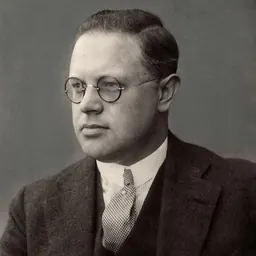
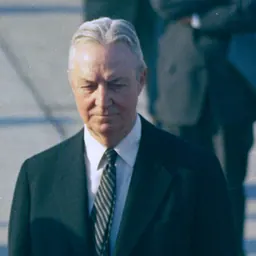

Contemporaries
People whose lives overlapped Carlos Arango Vélez's
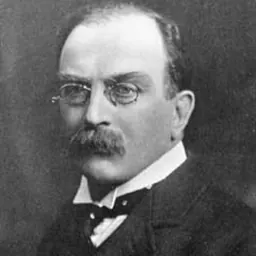

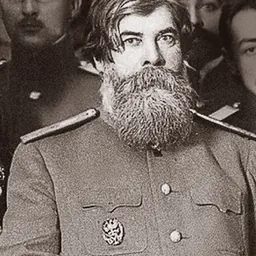

Frequently asked questions
Who was Carlos Arango Vélez?
Colombian politician and lawyer (1897–1974)
When was Carlos Arango Vélez born?
Carlos Arango Vélez was born on 13 February 1897 in Bogotá.
When did Carlos Arango Vélez die?
Carlos Arango Vélez died on 12 October 1974 in Bogotá.
What was Carlos Arango Vélez's occupation?
Carlos Arango Vélez was a lawyer.
What nationality was Carlos Arango Vélez?
Carlos Arango Vélez was Colombian.
Sources & further reading
· Wikipedia: Carlos Arango Vélez
· DBpedia: Carlos Arango Vélez
Cite this page
APA: Biography.guide. (2026). Carlos Arango Vélez. https://biography.guide/carlos-arango-velez/
MLA: "Carlos Arango Vélez." Biography.guide, https://biography.guide/carlos-arango-velez/.
Chicago: "Carlos Arango Vélez." Biography.guide. https://biography.guide/carlos-arango-velez/.
Data last updated: 2026-09-23 · Spot an error? Report a correction.
Portrait: Wikimedia Commons · author & licence
Page generated 2026-09-27 05:04 UTC