
About Carlos Alberto Pueyrredón
Lived 1887 – 1962 (aged 74). Carlos Alberto Pueyrredón was an Argentine historian.
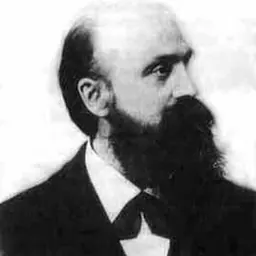
Carlos Alberto Pueyrredón (18 July 1887 – 16 June 1962) was an Argentine jurist, historian and politician who served as intendente (mayor) of the City of Buenos Aires from 1940 to 1943, appointed by President Roberto M. Ortiz. A member of the conservative National Democratic Party (PDN), Pueyrredón also served as a National Deputy for Buenos Aires Province.
Early life and career Carlos Alberto Pueyrredón was born on 18 July 1887 in Buenos Aires, son of Julio Pueyrredón and Victoria Lynch García. His father was a political leader within the Mitrist faction and a scion of the Pueyrredón family; Carlos Alberto was a grand-nephew of Juan Martín de Pueyrredón and a nephew of Honorio Pueyrredón.
He finished his primary and secondary education at an English school and the Nacional Norte de Buenos Aires. Afterwards, he enrolled at the University of Buenos Aires Faculty of Law, where he graduated as a lawyer in 1910. He joined the ranks of the Radical Civic Union (UCR) aged 19, later switching allegiance to the Antipersonalist UCR and finally to the National Democratic Party.
Appointed by President Ramón S. Castillo, he served as Mayor of Buenos Aires from 6 December 1940, to 11 June 1943. His administration implemented fiscal reforms that stabilized municipal finances while undertaking significant social and cultural initiatives. Key infrastructure projects included the inauguration of Hospital Fernández and the advancement of Hospital Argerich's construction. His cultural legacy included the acquisition and conversion of the Noel family residence into the Isaac Fernández Blanco Museum, housing important decorative art collections. Additionally, he purchased the historic Saavedra Zelaya estate on Avenida General Paz, which was rapidly restored and inaugurated as the Museo Histórico Brigadier General Cornelio de Saavedra within two months, largely through the efforts of his wife.
Work as historian Pueyrredón's bibliography comprises 144 publications, including books, pamphlets, articles, and scholarly works. His research focused on precursors to independence, particularly the Venezuelan revolutionary Francisco de Miranda and his ideological influence in the Río de la Plata region.
Personal life He married Silvia María Dolores Saavedra Lamas in 1915, establishing a family that would include four children: Silvia P. de Elizalde (1916–1987), Julio Alberto (1918–2007), Victoria (1920–2008), and Inés P. de Amadeo. He died in Buenos Aires on 16 July 1962, predeceasing his wife, who passed away in 1975.
Don’t just read it —
keep it.
Full-length biographies made to live with: read them, listen on the way to work, watch them tonight.
- E-book
- Audio
- Video
Instant download · yours to keep · every purchase keeps this site free
Important facts
People in Carlos Alberto Pueyrredón's life
Named in this biography and alive at the same time

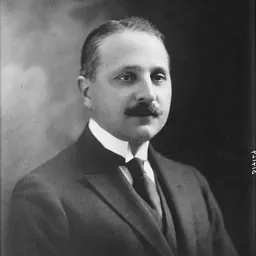

Related people
Same field, nearest in time

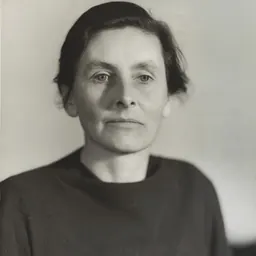
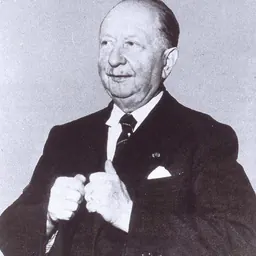
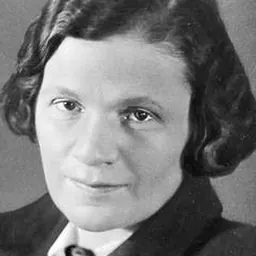
Contemporaries
People whose lives overlapped Carlos Alberto Pueyrredón's





Frequently asked questions
Who was Carlos Alberto Pueyrredón?
Argentinian historian
When was Carlos Alberto Pueyrredón born?
Carlos Alberto Pueyrredón was born on 18 July 1887 in Buenos Aires.
When did Carlos Alberto Pueyrredón die?
Carlos Alberto Pueyrredón died on 16 June 1962.
What was Carlos Alberto Pueyrredón's occupation?
Carlos Alberto Pueyrredón was a historian.
What nationality was Carlos Alberto Pueyrredón?
Carlos Alberto Pueyrredón was Argentine.
Sources & further reading
· Wikipedia: Carlos Alberto Pueyrredón
· DBpedia: Carlos Alberto Pueyrredón
Cite this page
APA: Biography.guide. (2026). Carlos Alberto Pueyrredón. https://biography.guide/carlos-alberto-pueyrredon/
MLA: "Carlos Alberto Pueyrredón." Biography.guide, https://biography.guide/carlos-alberto-pueyrredon/.
Chicago: "Carlos Alberto Pueyrredón." Biography.guide. https://biography.guide/carlos-alberto-pueyrredon/.
Data last updated: 2026-09-20 · Spot an error? Report a correction.
Page generated 2026-09-27 05:28 UTC