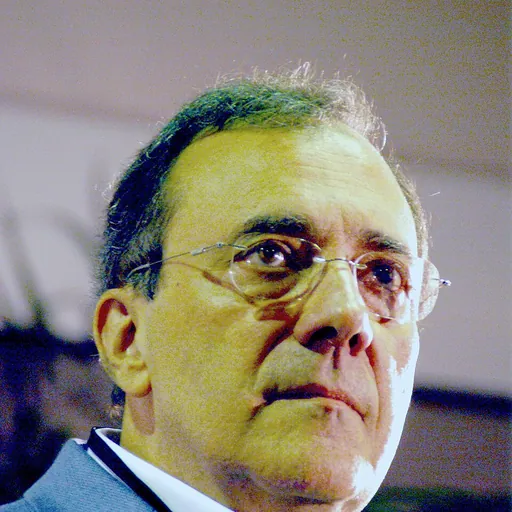
About Carlos Alberto Montaner
Lived 1943 – 2023 (aged 80). Carlos Alberto Montaner was a Cuban and Spanish journalist, writer and university teacher.
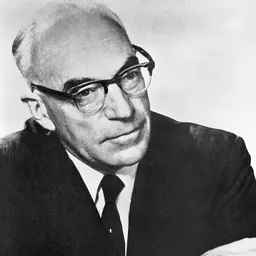
Carlos Alberto Montaner Suris (3 April 1943 – 29 June 2023) was an exiled Cuban author and journalist known for his criticism of Fidel Castro and the Cuban government. He was published widely in Latin American newspapers, and produced fiction and non-fiction books about Latin America. Montaner was a political analyst for CNN en Español.
Background Montaner was born in 1943 in Havana, Cuba. After the Cuban Revolution of 1959, Montaner, along with others identified then as counter-revolutionaries, was imprisoned by the Cuban government on charges of participating in terrorist attacks and of working with the CIA. Soon after his arrest, he managed to escape from prison and fled Cuba permanently. In 1970 he relocated to Spain from the United States. In 2007 the regional government of Madrid awarded the Prize for Tolerance to Montaner, a distinction that is awarded to those who have fought for freedom and respect for human rights.
Career After earning a master's degree at the University of Miami, Montaner taught American literature at the Interamerican University of Puerto Rico from 1966 to 1970. During those years he published four books: Los combatientes (1968), Galdós humorista (1969), Póker de brujas (1970), and Instantáneas al borde del abismo (1970). The last two were also published in English.
Montaner began his career in journalism in 1968, working with Joaquín Maurín, a Spanish exile who had founded the American Literary Agency in New York City at the end of the 1940s with the objective of disseminating democratic ideas in the United States and Latin America. Maurín was a noted Marxist theorist whose thinking had evolved toward liberal democracy after the Spanish Civil War.
Montaner began writing a weekly column which soon became available throughout the rest of Latin America. He also came to be in demand as a lecturer throughout the continent, speaking on the defense of liberty, economic development, and the role of culture in the evolution of societies.
1970s By 1970, his success as a columnist and speaker had made it possible for him to move to Madrid and dedicate his life to his columns and books. He established a publishing house, Editorial Playor, in 1972. His first novel, Perromundo, was published in 1972 and was subsequently made into a movie. His book Informe secreto sobre la revolución cubana was published in 1975, and was followed a year later by 200 años de gringos, celebrating the bicentennial of the United States and contrasting the evolution of the United States with that of Latin America. This contrast between the levels of development in the Americas and the reasons for it would occupy much of his attention thereafter.
As Spain moved rapidly toward democracy after the death of Franco, he joined the Liberal Club of Madrid.
1980s In the 1980s, Montaner began a weekly television commentary that was aired by satellite throughout Latin America. He also produced three books: Fidel Castro y la revolución cubana, subsequently published in English, Italian, and Russian; La agonía de América; and 1898: La trama.
In 1980 he received the ABC Prize for Journalism, awarded by the then Spanish premier Adolfo Suárez. By then, his columns were being published in a number of newspapers in the United States, and the Miami Herald invited him to join its editorial board. He also edited the opinion page of El Nuevo Herald between 1987 and 1989.
1990s In 1990, comments Montaner made on the television show Portada on the Univision network were perceived as offensive to Puerto Ricans. The president of Univision, Joaquin Blaya, supported Montaner, who explained his comment in an article later published in the Wall Street Journal. The controversy resulted in El Diario La Prensa dropping Montaner as a weekly columnist.
Montaner received an honorary doctoral degree from the Universidad Francisco Marroquín.
His daughter Gina Montaner was married to journalist Jorge Ramos; they had one daughter, Paola (born 1987).
Death On 6 May 2023, Montaner announced that he was suffering from a neurodegenerative illness for which there was no cure. Montaner died from the illness on 29 June 2023, at the age of 80.
Don’t just read it —
keep it.
Full-length biographies made to live with: read them, listen on the way to work, watch them tonight.
- E-book
- Audio
- Video
Instant download · yours to keep · every purchase keeps this site free
Important facts
People in Carlos Alberto Montaner's life
Named in this biography and alive at the same time


Related people
Same field, nearest in time


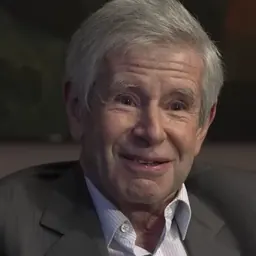
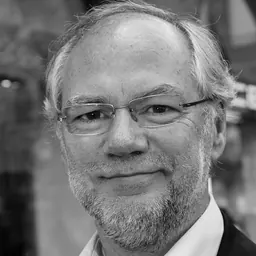

Contemporaries
People whose lives overlapped Carlos Alberto Montaner's
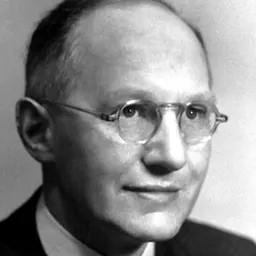
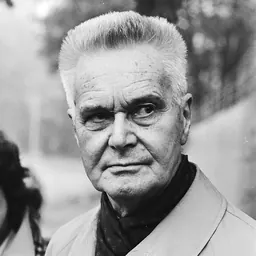

Frequently asked questions
Who was Carlos Alberto Montaner?
Cuban writer (1943–2023)
When was Carlos Alberto Montaner born?
Carlos Alberto Montaner was born on 3 April 1943 in Havana.
When did Carlos Alberto Montaner die?
Carlos Alberto Montaner died on 30 June 2023 in Madrid.
What was Carlos Alberto Montaner's occupation?
Carlos Alberto Montaner was a journalist, writer and university teacher.
What nationality was Carlos Alberto Montaner?
Carlos Alberto Montaner was Cuban and Spanish.
Sources & further reading
· Wikipedia: Carlos Alberto Montaner
· DBpedia: Carlos Alberto Montaner
Cite this page
APA: Biography.guide. (2026). Carlos Alberto Montaner. https://biography.guide/carlos-alberto-montaner/
MLA: "Carlos Alberto Montaner." Biography.guide, https://biography.guide/carlos-alberto-montaner/.
Chicago: "Carlos Alberto Montaner." Biography.guide. https://biography.guide/carlos-alberto-montaner/.
Data last updated: 2026-09-22 · Spot an error? Report a correction.
Portrait: Wikimedia Commons · author & licence
Page generated 2026-09-27 05:03 UTC