
About Carlo Ponti
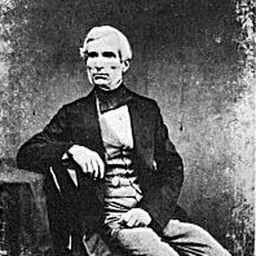
Lived 1823 – 1893 (aged 69–70). Carlo Ponti was a Swiss photographer.
Carlo Ponti Venice. Doge's Palace and St. Mark's Column Carlo Ponti (–1893) was a Swiss-born optician and photographer active in Venice from about 1848.
Early life Carlo Ponti was born in Sagno in Canton Ticino, Switzerland, between 1822 and 1824. He moved as an adult to Paris to train for about five years in the workshop of optician Robert-Aglaé Cauchoix, before settling in Venice after 1848.
Career Ponti opened an optician's shop in Piazza San Marco 52, near the Caffè Florian,
In 1866 Carlo Ponti became official photographer to King Victor Emanuel II of Italy, when Venice was incorporated into the Italian nation. The prestige of his royal appointment brought further business in other cities including Paris, London, Liverpool, Berlin, Stuttgart, Lyons, New York, Chicago, Philadelphia, Boston, Montreal, and San Francisco. He obtained a patent in January 1862 and commenced marketing it.
A larger version, the megalethoscope, was produced for him by cabinetmaker Demetrio Puppolin, whose name is inscribed on different models, some highly decorated with pearl inlay and marquetry. His invention was awarded the Grand Prix at the International Exhibition in London in 1862.
Both devices enlarged photographic views through a wide, thick magnifying lens to create an illusion of the subjects' plasticity, perspective depth and modelling. The albumen plates for some versions of the megalethoscope are curved with slotted wooden braces for optical correction of lens aberrations, and pinprick perforations and mechanically thinned areas on the albumen prints have been made for viewing the photographic images under reflected and transmitted light to suggest day or night lighting, fantastic effects (diavoletti) and to add colours.
This degree of animation of megalethoscope views was applied to the representation of events, and as a way to re-enact history, such as a daylight view of an empty St Mark's Square that could be transformed with backlighting into a night scene showing illuminations and lively crowds celebrating of the annexation of the Veneto by the rest of Italy. Another of the transparencies shows the burning of the Hôtel de Ville, Paris during the Paris Commune. Sets of images take the viewer on a simulated trip along the Grand Canal at night, a popular Venetian tourist experience. Ponti's success benefitted from his familiarity with, and repetition of, traditional painted views, and his distribution network through commercial studios beyond Venice, including that of Francis Frith in the United Kingdom and Pompeo Pozzi in Milan.
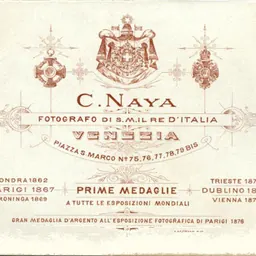
Ponti's rights to these devices lapsed after 1866, due to administrative confusion after the Third Italian War of Independence, when Venice, along with the rest of the Veneto, became part of the newly created Kingdom of Italy. Despite Ponte's legal battles between 1868 and 1876 to prevent it, Carlo Naya began to manufacture and sell the Aletoscopio, which Ponti tried to counter by issuing variations of the instrument under other names including Amfoteroscopio, Dioramoscopio, Pontioscopio, Cosmorama Fotografico. He became totally blind during his latter years, and died in Venice on 16 November 1893.
Exhibitions 1855: Exposition Universelle, Paris
Posthumous 1979: Fotografia italiana dell'Ottocento. Florence 1995, 2 March–5 June: Italien: Sehen und Sterben: Photographien zer Zeit des Risorgimento (1845-1870). Reiss-Museum der Stadt Mannheim
Collections Museé Suisse de l’Appareil Photographique, Vevey: an example of the Megaletoscopio and albumen prints Fototeca della Soprintendenza per il Patrimonio Storico, Artistico e Demoetnoantropologico, Brera, Milan Wilfried Wiegand Collection, Frankfurt am Main Department of Photography, J. Paul Getty Museum, Malibu Musée D'Orsay George Eastman House Carlo Montanaro Archive
Gallery
Don’t just read it —
keep it.
Full-length biographies made to live with: read them, listen on the way to work, watch them tonight.
- E-book
- Audio
- Video
Instant download · yours to keep · every purchase keeps this site free
Important facts
People in Carlo Ponti's life
Named in this biography and alive at the same time




Related people
Same field, nearest in time

Contemporaries
People whose lives overlapped Carlo Ponti's




Frequently asked questions
Who was Carlo Ponti?
Italian photographer and optician
When was Carlo Ponti born?
Carlo Ponti was born in 1823 in Sagno.
When did Carlo Ponti die?
Carlo Ponti died on 16 November 1893 in Venice.
What was Carlo Ponti's occupation?
Carlo Ponti was a photographer.
What nationality was Carlo Ponti?
Carlo Ponti was Swiss.
Sources & further reading
· DBpedia: Carlo Ponti (photographer)
Cite this page
APA: Biography.guide. (2026). Carlo Ponti. https://biography.guide/carlo-ponti-photographer/
MLA: "Carlo Ponti." Biography.guide, https://biography.guide/carlo-ponti-photographer/.
Chicago: "Carlo Ponti." Biography.guide. https://biography.guide/carlo-ponti-photographer/.
Data last updated: 2026-09-26 · Spot an error? Report a correction.
Page generated 2026-09-27 05:16 UTC