
Carlo Fecia di Cossato
Italian military commander
About Carlo Fecia di Cossato
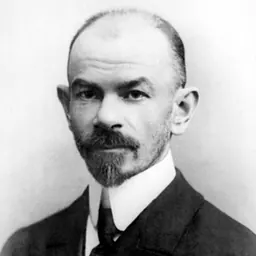
Lived 1908 – 1944 (aged 35). Carlo Fecia di Cossato was an Italian submariner.
Carlo Fecia di Cossato (25 September 1908 – 27 August 1944) was an officer in the Regia Marina (Italian Royal Navy), in command of submarines and torpedo boats during World War II. He was credited with the confirmed sinking of 23 enemy ships (16 Allied ships before the Armistice of Cassibile, with the submarine , and 7 German vessels after the armistice, with the torpedo boat ). He was also a recipient of the Knight's Cross of the Iron Cross and of the Gold Medal of Military Valor, the highest decoration of the Italian Armed Forces.
Fecia di Cossato was born in Rome, Italy, on 25 September 1908. He graduated from the Naval Academy in Livorno in 1928 and assumed his duties as an officer at the Italian Naval Detachment in China. In the early 1930s, he was an officer on two submarines and his service included participation in the Spanish Civil War. In February 1943, at the end of the mission near Brazil he was transferred to Italy, where he was given command of a squadron of torpedo boats. Immediately after graduation, he was assigned on the submarine Bausan.
In 1929, after promotion to sub-lieutenant, Fecia di Cossato was assigned to the Italian Naval Detachment in Beijing and sent to China on the scout cruiser Libia.
Early sinkings
On April 7, 1941 Tazzoli left Bordeaux for its first mission under Fecia di Cossato. After reaching a patrol area off the coast of West Africa, on April 12 the submarine attacked two British cruisers with torpedoes, but no hits were obtained. On April 15, Tazzoli sank the British steamer Aurillac (4,733 GRT) with torpedoes and gunfire. On May 7, Tazzoli sank the Norwegian steamer Fernlane (4,310 GRT) and two days later the Norwegian tanker Alfred Olsen (8,817 GRT). The latter required two days of pursuit, all remaining torpedoes and a hundred artillery rounds, forcing Tazzoli to return to base after sinking it. and on August 19 he sank the Norwegian tanker Sildra (7,313 GRT) about fifty miles off Freetown. He returned to base on September 11 and was awarded a Bronze Medal of Military Valor and an Iron Cross Second Class. Tazzoli and three other Betasom submarines (Torelli, Calvi and Finzi) thus sailed from Bordeaux after disembarking nonessential personnel and loading substantial supplies of food and water. At the rendezvous with the German U-boats, Tazzoli took onboard about 70 survivors, including Atlantis executive officer Ulrich Mohr. On the following day, the submarine reached Saint-Nazaire, where the survivors were landed. For his part in the rescue of the survivors from the two German ships, Grand Admiral Karl Dönitz awarded Fecia di Cossato the Iron Cross First Class.
In American waters
On 11 February 1942, after the United States' entry into the war, Tazzoli under Fecia di Cossato left for a new mission, off the coasts of America. On 6 March the submarine sank the Dutch steamer Astrea (1,406 GRT), and on the following day the Norwegian motor ship Torsbergfjord (3,156 GRT). On 9 March Tazzoli sank the Uruguayan steamer Montevideo (5,785 GRT), on 11 March the Panama-flagged steamer Cygnet (3,628 GRT), on 13 March the British steamer Daytonian (6,434 GRT) and two days later the British tanker Athelqueen (8,780 GRT).
In command of Aliseo
In February 1943 Fecia di Cossato left the command of Tazzoli, was promoted to commander and was then given command of the brand new Ciclone-class torpedo boat and of the 3rd Torpedo Boat Squadron. He assumed command of Aliseo on 17 April 1943. In May 1943 Fecia di Cossato learned that Tazzoli, having been converted into a transport submarine, had disappeared with all hands after sailing towards the Far East; the loss of his old crew deeply affected him.
On 22 July 1943 Aliseo left Pozzuoli together with the German torpedo boat TA11 and two submarine chaser, escorting the steamers Adernò and Colleville towards Civitavecchia. On the morning of 23 July, the convoy was attacked by Allied aircraft; one of the attacking planes was shot down, while one of the Axis escorting planes was damaged and forced to ditch. Aliseo was strafed, and suffered minor damage to her deck and rudder.
The Armistice and the battle of Bastia
When the armistice between Italy and the Allied forces was announced, on the evening of 8 September 1943, Aliseo was moored in the harbour of Bastia, in Italian-occupied Corsica. The harbour was packed with several vessels, both Italian and German; besides Aliseo, these included her sister ship , the Italian merchant ships Sassari and Humanitas, and a small German flotilla which included the submarine chasers UJ 2203 (former French survey vessel Austral) and UJ 2219 (former Belgian yacht Insuma) and five Marinefährprahme (F 366, F 387, F 459, F 612 and F 623).
The local Italian and German commanders soon reached a "gentlemen’s agreement" according to which the German forces would be allowed to safely retreat to mainland Italy.
Aliseo picked up 25 German survivors, then proceeded towards Portoferraio, as ordered, together with the damaged Ardito.
The ships remained on the roads till 18 September, when they entered the harbour in order to receive water and food supplies; on 20 September they left Palermo and reached Malta, where Aliseo delivered part of the foodstuff she had been given to the Italian warships that had arrived there in the previous days.
Co-belligerence, insubordination, and death
Based in Taranto, Aliseo carried out numerous escort missions during the co-belligerence between Italy and the Allies, always under Fecia di Cossato's command. In June 1944, the new government chaired by Ivanoe Bonomi refused to swear loyalty to the king; on 22 June Fecia di Cossato, a staunch monarchist, refused in turn to swear loyalty to the new government, which he considered illegitimate. On the same day, Fecia di Cossato was relieved of command, charged with insubordination and imprisoned. His huge popularity, however, led to immediate unrest among the crews of his and other ships, who refused to put to sea and demanded that he be freed and reinstated in his role. Shortly thereafter, Fecia di Cossato was released from prison, but he was given a mandatory three months' leave.
With the armistice and the following events, Fecia di Cossato had seen the ideals that had guided him throughout his life – the Fatherland, the monarchy, the Regia Marina – crumble around him. He perceived the events of 8 September 1943 as a "shameful surrender" for the Royal Italian Navy, which, he felt, had produced no positive effects for Italy; the country was now divided and occupied by opposing foreign armies, and the armistice and the change of sides would become a stain on Italy's honour and reputation for a long time ("We have been unworthily betrayed and we discovered to have committed an ignominious act without any result"). Fecia di Cossato felt that his personal honour was stained by the surrender; furthermore, he was worried by the rumours that, despite their participation in the co-belligerence against the Germans, the surviving ships of the Italian Navy would still be handed over to the Allies at the end of the war. He was also haunted by the loss of his old crew on Tazzoli; in the letter he wrote before committing suicide, he also wrote: "For months, all I've done is think about my crew, who rest honourably at the bottom of the sea. I think that my place is with them". Since his family lived in German-occupied Northern Italy, out of his reach, he had to live in a friend's house in Naples. On 21 August 1944, as his mandatory leave was nearing its end, Fecia di Cossato wrote a last letter to his mother, explaining the reasons for his extreme gesture; on 27 August 1944 he committed suicide by shooting himself in his friend's house in Naples.
He is buried in Bologna.
Commemoration
A Sauro-class submarine, commissioned in 1980 and decommissioned in 2005, was named after him.
Don’t just read it —
keep it.
Full-length biographies made to live with: read them, listen on the way to work, watch them tonight.
- E-book
- Audio
- Video
Instant download · yours to keep · every purchase keeps this site free
Important facts
People in Carlo Fecia di Cossato's life
Named in this biography and alive at the same time


Related people
Same field, nearest in time



Contemporaries
People whose lives overlapped Carlo Fecia di Cossato's



Frequently asked questions
Who was Carlo Fecia di Cossato?
Italian military commander (1908-1944)
When was Carlo Fecia di Cossato born?
Carlo Fecia di Cossato was born on 25 September 1908 in Rome.
When did Carlo Fecia di Cossato die?
Carlo Fecia di Cossato died on 27 August 1944 in Naples.
What was Carlo Fecia di Cossato's occupation?
Carlo Fecia di Cossato was a submariner.
What nationality was Carlo Fecia di Cossato?
Carlo Fecia di Cossato was Italian.
Sources & further reading
· Wikipedia: Carlo Fecia di Cossato
· DBpedia: Carlo Fecia di Cossato
Cite this page
APA: Biography.guide. (2026). Carlo Fecia di Cossato. https://biography.guide/carlo-fecia-di-cossato/
MLA: "Carlo Fecia di Cossato." Biography.guide, https://biography.guide/carlo-fecia-di-cossato/.
Chicago: "Carlo Fecia di Cossato." Biography.guide. https://biography.guide/carlo-fecia-di-cossato/.
Data last updated: 2026-09-26 · Spot an error? Report a correction.
Page generated 2026-09-27 05:14 UTC