
About Carlo Acutis
Lived 1991 – 2006 (aged 15). Carlo Acutis was an Italian student, schoolchild, programmer and website designer.
Carlo Acutis (3May 1991 – 12October 2006) was an English-born Italian Catholic teenager known for his devotion to the Eucharist and his use of digital media to promote Catholic devotion. Born in London and raised in Milan, he developed an early interest in computers and video games, teaching himself programming and web design and assisting his parish and school with digital projects.
Active in parish life, he served as a catechist and helped inspire several people to convert to Catholicism. He later created a website documenting Eucharistic miracles and Marian apparitions. He was diagnosed with acute promyelocytic leukaemia and died at the age of fifteen. Since his death, his relics have been displayed in Assisi, and his exhibitions on Eucharistic miracles have travelled worldwide.
In 2020, he was beatified by the Catholic Church after its recognition of a 2013 miracle in Campo Grande attributed to his intercession. A second miracle in Italy was attributed to him in 2024, making him eligible for canonisation. Acutis was canonised on 7September 2025, alongside Pier Giorgio Frassati. Acutis is the first millennial to become a Catholic saint, and has been referred to as the "patron saint of the Internet" and "God's influencer".
A commentator for the Catholic Review has written that skepticism for Acutis' canonisation cause exists among some of the faithful and the secular world, noting that his short life offered few extraordinary actions. A report by The Economist interviewed childhood friends of Acutis, who recalled him as kind but not necessarily pious or religious. Questions have also been raised about financial support provided by Acutis's family, suggesting that it may have accelerated the process. Fr. Nicola Gori, Acutis' postulator, stated that money did not influence the cause.
Early life Carlo Acutis was born on 3 May 1991 in London as the eldest child of Italian parents Andrea Acutis and Antonia Salzano, members of wealthy Italian families. His grand-father was businessman Carlo Giuseppe Maria Acutis. Acutis's parents worked in London and Germany before he was born, and moved back to Italy and settled in Milan shortly after his birth in May 1991. His parents were in family businesses: his father's family worked in the Italian insurance industry, and his mother's ran a publishing company. Acutis's maternal great-grandmother was born in the United States and came from a family of landowners in New York. Aside from a few visits to a day care centre, most of Acutis's early care came from nannies.
In September 1997, Acutis attended his first primary school, the San Carlo Institute in Milan. As the school was at a distance from their home, three months later he transferred to the Marcelline Tommaseo Institute, run by the Sisters of St. Marcellina. Upon completing middle school, Acutis went on to the Jesuit Instituto Leone XIII high school.
Religious life His baptism took place on 18 May 1991, two weeks after his birth, in the Church of Our Lady of Dolours, Chelsea. His paternal grandfather, Carlo, was his godfather, and his maternal grandmother, Luana, was his godmother. Neither of his parents were religious.
Acutis was three years old when his maternal grandfather, Antonio Salzano, died. Several days earlier, he had been present when his grandfather received the Anointing of the Sick; his grandfather was said to have appeared to him in a dream asking for prayer. Shortly after his death, Acutis put on his coat while his grandmother was minding him and asked to be taken to church. When she asked him why, he said he wanted to pray for his grandfather, who, he declared, "had gone to see Jesus".
When Acutis displayed an interest in Catholic religious practice, his questions were answered by the family's Polish babysitter. In the summer, Acutis would stay with his mother's parents in Centola, a town in the Salerno province of Campania. After spending the day at the beach, he would join a number of older women in the local parish church to pray the rosary. His family also owned a boat at Santa Margherita Ligure, near the Basilica of St. Margaret of Antiochia. On 16 June 1998, when he was seven years old, Acutis received his First Holy Communion at the convent of Sant'Ambrogio ad Nemus, Milan. Acutis was also a frequent communicant, often in the Ambrosian Rite, and attended Eucharistic Adoration. His attendance at the latter has led him to often be depicted with a monstrance. He was confirmed five years later on 24 May 2003 at Santa Maria Segreta Church in Milan.
The Acutis family employed a Hindu immigrant from Mauritius, Rajesh Mohur, to work in their household. He and Acutis became friends. In time, after speaking with Acutis about Christianity, Mohur asked to be baptised. A friend of Mohur's, Seeven Kistnen, also converted and was baptised after meeting with Acutis and hearing him speak about the faith. Mohur's mother, visiting from Mauritius, attended Mass with Mohur and Acutis, who talked with her at length afterwards, and she too asked to be baptised.
Acutis showed an interest in the lives of saints, especially Francis of Assisi, Anthony of Padua, Padre Pio, Francisco and Jacinta Marto, Dominic Savio, Tarcisius, Bernadette Soubirous,
Work with computers and technology When Acutis was 14, his parish priest asked him to create a webpage for his parish, Santa Maria Segreta in Milan. After this, a priest at his high school asked him to create a website to promote volunteering. For this work, he won a national competition called (Italian, "You will be a volunteer"). Acutis created a website dedicated to cataloguing each reported Eucharistic miracle in the world and maintaining a list of the Marian apparitions recognised by the Catholic Church. Acutis launched the website in 2004 and worked on it for two and a half years, involving his entire family in the project. It was unveiled on 4 October 2006, the Feast of St. Francis, only days before his death. Because he was hospitalised, Acutis was not able to attend the debut of his exhibition at Rome's Church of San Carlo Borromeo. The exhibition was also presented at his high school, the Leo XIII Institute. Depictions of Acutis often show him with a laptop computer, as a symbol of his method of evangelization.
Illness and death On about 1October 2006, Acutis developed an inflammation of the throat. His parents took him to a doctor, who diagnosed him with parotitis and dehydration, which a second doctor, a family friend, confirmed. A few days later, Acutis's pain worsened and he had blood in his urine. By the Sunday, 8October, he was too weak to get out of bed for Mass. Acutis was brought to a clinic specialising in blood diseases, and was diagnosed with acute promyelocytic leukaemia. He was given little chance of recovery. He was rushed to intensive care and put on a ventilator. After a sleepless night, Acutis was transferred to San Gerardo Hospital north of Milan — one of only three hospitals in Italy equipped to treat his condition.
The hospital staff called in their chaplain to administer the anointing of the sick. When a nurse came in to care for Acutis, he asked her not to wake his parents since they were already very tired and he did not want to worry them more. Acutis offered his suffering both for Pope Benedict XVI and the Catholic Church, saying: "I offer to the Lord the sufferings that I will have to undergo for the Pope and for the Church." The doctors treating his final illness had asked him if he was in great pain, to which he replied: "There are people who suffer much more than me."
Funeral and enshrinement His parents brought his body home to lie in repose, and people came to pay their last respects for four days. A crowd of strangers attended his funeral, including young people who had abandoned the Church, and those who returned for a memorial Mass three months later.
It was Acutis's final wish to be buried in Assisi. On 6April 2019, his body was brought to the Sanctuary of the Spoliation and venerated at its final resting place. Overnight, the procession stopped at the Cathedral of San Rufino and the diocesan choir sang a ("Not me, but God"), a hymn especially composed for the occasion by Marco Mammoli.
While Acutis's body may appear incorrupt behind the glass of his casket, it is actually encased in wax moulded to look like his final appearance – a common style of presenting saints' bodies so pilgrims can see how the person looked shortly after death. The rector of Santa Maria Maggiore in Assisi, where Carlo's tomb is housed, said that Acutis's body was discovered "fully integral", though not intact.
Legacy
Due to his enjoyment of video games in life, Acutis has been described as the "first gamer saint". A website was created for his canonisation cause. Others were created for educators, young people, and prayer groups, and for each of the four exhibitions that he inspired.
Part of Acutis' popularity has been linked to how easily young people can identify with him, symbolized in the red polo shirt he is often shown wearing. The preface to the print version of the exhibit was written by Cardinal Angelo Comastri and has been translated into 18 languages. It has travelled to more than 10,000 places, including churches, congressional palaces, youth clubs, and welcome centres. The exhibit was also brought to the canonisation of Francisco and Jacinta Marto in Fátima, Portugal. The International Exhibition of Eucharistic Miracles by Carlo Acutis, led by the youth of the Lourdes Forane Parish, Thiruvananthapuram, was held on 20 September 2025, as part of the canonisation process of Carlo Acutis.
The documentary Carlo Acutis: Roadmap to Reality focuses on Acutis's faith, digital experience, and the love of Eucharist that offer hope to the youth.
Beatification process
The call for Acutis to be beatified began soon after his death. Nicola Gori, who authored Carlo Acutis: The First Millennial Saint, served as the postulator for Acutis's beatification process. In this dual role, Gori was responsible for advancing the cause within the Vatican and compiling the necessary documentation.
On 12 October 2012, the sixth anniversary of his death, the Archdiocese of Milan opened his cause for canonisation. The opening of the diocesan investigation was held on 15 February 2013, with Cardinal Angelo Scola inaugurating the process. Scola said Acutis was not called to be "a movie star, but a star in Heaven" and that Acutis was "a new treasure in the Ambrosian church".
On 13 May 2013, the Congregation for the Causes of Saints issued a nihil obstat stating there was nothing preventing the cause from moving forward. He was then named a Servant of God. The Lombardy Episcopal Conference approved the petition for the official canonisation cause to proceed in 2013.
Beatification On 14 November 2019, the Vatican's Medical Council of the Congregation for the Causes of Saints expressed a positive opinion about a miracle in Brazil attributed to Acutis's intercession. In 2020 the Catholic Church recognised the curing of a child's pancreatic disease as a miracle attributed to Acutis's intercession. His doctors subsequently confirmed a normal appearing pancreas by ultrasound. After a detailed investigation, Pope Francis confirmed the miracle's authenticity in a decree on 21 February 2020, leading to Acutis's beatification.
However, within a month of the decree, the beatification ceremony was postponed due to the COVID-19 pandemic in Italy, during which the country was placed on lockdown. It was rescheduled for 10 October 2020 and was held in the Upper Church of the Basilica of Saint Francis of Assisi in Assisi, Italy, with Cardinal Agostino Vallini presiding on the Pope's behalf. The postulator for Acutis's cause was Nicola Gori.
Canonisation
On 23 May 2024, Pope Francis recognised a second miracle attributed to the intercession of Acutis. The miracle attributed to his intercession occurred in 2022, when a Costa Rican woman named Valeria Valverde had fallen off her bike in Florence, Italy, and suffered a brain haemorrhage with doctors giving her a low chance of survival. Her mother, Lilliana, prayed for the intercession of Acutis and visited his tomb. The same day, Valverde began to breathe independently again and was able to walk the next day with all evidence of the haemorrhage having disappeared.
On 1 July 2024, Pope Francis presided at an ordinary consistory of cardinals, which approved the canonisation of 15 people, including Carlo Acutis. On 20 November 2024, it was announced that Acutis would be canonised in the 2025 Jubilee during the Jubilee of Teenagers from 25 to 27 April 2025, with the Diocese of Assisi confirming it would be on Sunday, 27 April. However, following Pope Francis's death on 21 April 2025, Easter Monday, the Vatican announced the ceremony would have to be postponed for the papal funeral and subsequent conclave.
On 13 June 2025, Pope Leo XIV announced at a general consistory that Acutis would be canonised alongside Pier Giorgio Frassati. The canonisation took place in St. Peter's Square on 7 September 2025, presided over by Pope Leo. His parents and siblings attended and his younger brother Michele did one of the readings during Mass.
Criticism of process A commentator in the Catholic Review noted that in his opinion skepticism for Acutis's canonisation cause existed among some of the faithful and the secular world. In a March 2025 issue of The Economist John Phipps discusses the life of Acutis, noting that even those with a deep devotion to him struggle to pinpoint his specific actions that led to his canonisation. Phipps wrote, "Nothing in his sparse life story explains that this ordinary-seeming teenage boy is about to become the first great saint of the 21st century."
Shrines and relics
Since the beatification ceremony on 10 October 2020, his relics have been on display with his tomb in the Church of Santa Maria Maggiore. The relic of the heart is preserved in the cathedral of San Rufino in Assisi, in the altar dedicated to the Blessed, which was inaugurated on 16 October 2022.
A relic containing some locks of his hair is exposed for public veneration in the Church of San Francis in Rabat, on the island of Gozo, Malta. Similar relics are preserved and exhibited, since 11 September 2023, in Alife, at the sanctuary of the Madonna delle Grazie, and at the Parish of San Tommaso Apostolo in Rome, in the Infernetto district. A relic "ex capillis" is exhibited at the parish of San Gennaro in Benevento since 20 April 2025.
The church of Our Lady of Dolours in London, where Acutis was baptised, has a shrine near the font, converted from a former confessional box, where one of his hairs is held in a relic-holder.
The Catholic Church has condemned the unauthorised sale of relics purportedly belonging to Acutis. Items such as locks of hair were reportedly auctioned online for substantial sums, prompting the Diocese of Assisi to call for police intervention. Church officials condemned the sale of the relics. Italian prosecutors began an investigation into the sale of the relics.
On September 7, 2025, the world's first church dedicated to Saint Carlo Acutis was consecrated in Pallikkara, a village near Kochi, India
Don’t just read it —
keep it.
Full-length biographies made to live with: read them, listen on the way to work, watch them tonight.
- E-book
- Audio
- Video
Instant download · yours to keep · every purchase keeps this site free
Important facts
People in Carlo Acutis's life
Named in this biography and alive at the same time
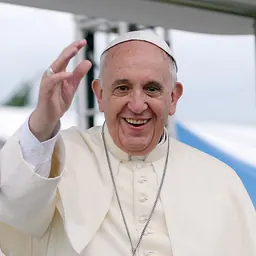
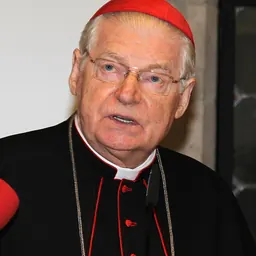
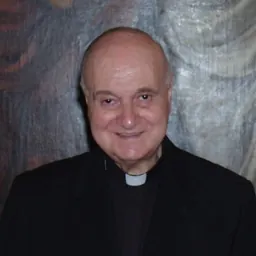



Related people
Same field, nearest in time

Frequently asked questions
Who was Carlo Acutis?
Italian Catholic saint
When was Carlo Acutis born?
Carlo Acutis was born on 3 May 1991 in London.
When did Carlo Acutis die?
Carlo Acutis died on 12 October 2006 in Monza.
What was Carlo Acutis's occupation?
Carlo Acutis was a student, schoolchild, programmer and website designer.
What nationality was Carlo Acutis?
Carlo Acutis was Italian.
Sources & further reading
Cite this page
APA: Biography.guide. (2026). Carlo Acutis. https://biography.guide/carlo-acutis/
MLA: "Carlo Acutis." Biography.guide, https://biography.guide/carlo-acutis/.
Chicago: "Carlo Acutis." Biography.guide. https://biography.guide/carlo-acutis/.
Data last updated: 2026-09-20 · Spot an error? Report a correction.
Page generated 2026-09-27 05:24 UTC